Showing posts with label Deal Me In. Show all posts

Tuesday, 25 July 2017

The Best Short Stories of Guy de Maupassant

Guy de Maupassant has oft been declared the master of the short story. I personally think that honour belongs to William Trevor, but I'm not going to quibble about that right now.

As it wasn't so much his short story ability that attracted me at this point, but more his membership of the literary naturalism club. A club that included the likes of (the founder) Emile Zola and Thomas Hardy - two of my favourite authors.


Henri René Albert Guy de Maupassant was born on the 5th August 1850 and died at the age of 42 on the 6th July 1893. Most of his 300 short stories (and six novels) were set during the Franco-Prussian war of 1870/71 - an era I'm not very familiar with, but am slowly learning about thanks to Zola.

I find it very easy to get mixed up by all the wars happening in Europe during this century - who started what and why. I'm also prone to getting my Napoleon's and French Republic's mixed up. Given that the imbalance of power in Europe, that this war created, is often cited as one of the causes of WWI, I feel that I should understand it better. 

The shock of France's quick defeat as well as the hardship and hunger suffered by the population during the Prussian blockade, created a ongoing desire for revenge and right-wing politics in France.

Charles Édouard Armand-Dumaresq - Le Général Faidherbe au combat de Biefviller-lès-Bapaume, 3 Janvier 1871
Boule de Suif (or Dumpling or Ball of Fat), Deux Amis (Two Friends) and La Maison Tellier (Madame Tellier's Establishment) are the first three stories in my Best Of. They all focus on the resistance of the French population to the German occupation.

In Boule de Suif we have a cast of characters, who would never normally interact with each other in 'real life', brought together in a diligence (I love that word - after reading about the care and attention that the hostler took to hitch his horses to the coach, I wonder if that is that where the phrase 'due diligence' comes from).


The journey is slow and uncomfortable. Each character represents a particular stereotype of rural French society. From Monsieur and Madame Loiseau (wholesale wine merchants) who sit 'right at the back, in the best seats of all' to Cornudet, 'the democrat, the terror of all conservative people'. 

The coach also contains four more people who 'represent Society - the strong, established society of good people with religion and principle', two nuns 'fingering their long rosaries and murmuring paternosters and aves' and last, but certainly not least, Elisabeth Rousset, or Boule de suif, 'who belonged to the courtesan class'.

To my mind, Elisabeth is the true hero of this story. Her generosity and kindness are not only not repaid by her so called 'betters', but she shows up their utter lack of principle and total hypocrisy. Despite their superior views on her profession, they show themselves up to be little more than pimps.

Two Friends is set in Paris during the siege. Monsieur Morissot and Monsieur Sauvage represent two different political views - Imperialism and Republicanism 'under a king we have foreign wars; under a republic we have civil war'. Whilst out walking and fishing they both lament the futility of war and agree on one thing 'that they would never be free'. 

Once again de Maupassant presents us with brave, patriotic Frenchmen as opposed to the brutal, dull-witted German soldiers who confront them.


La Maison Tellier has another prostitute as protagonist. The bawdy nature of her working life is contrasted with the religious event that her brother invites her to in a sleepy rural village.

It's a bit of an odd story with a whole houseful of ladies of the night being transported to a child's first communion. I wasn't quite sure what the point of it was, except, perhaps, as a bit of fun. Madame Tellier herself, observes towards the end, 'everything has its right time, and we cannot always be enjoying ourselves'.

La Maison Tellier. Illustrations d'Edgar Degas. Paris: Ambroise Vollard, 1933
De Maupassant's realism is all about the showing. His descriptions of the environment and the people are just lovely. Class and political ideology feature in all of his stories with hypocrisy often being the common ground. The three stories I've read so far have a fairly clear point, counterpoint and final conflict/resolution. However, working out why someone did what they did, is entirely up to the reader, which is exactly what de Maupassant wanted.

For most of his career he was wary of looking too deeply into characters’ motivations. “The man who goes in for pure psychology can only substitute himself for all his characters,” Maupassant wrote, “for it is impossible for him to change his own organs, which are the only intermediaries between the outside world and ourselves.” Better, he thought, to report what people do and say, and say to themselves, than to ask what makes them tick.                              (Lorin Stein, 2010)

I'm looking forward to meandering my way through the final fourteen stories in this collection. But for now, I'm thrilled that I snuck these three stories in, just in time, for my Paris in July challenge with Tamara @Thyme for Tea. As well as my Deal Me In Short Story challenge with Jay @Bibliophilopolis -  theses three stories see me finally move onto the next suit of cards in my euchre pack. Slow and steady, slow and steady!

Tuesday, 25 April 2017

The Australian Dream: Blood, History and Becoming by Stan Grant

The Australian Dream: Blood, History and Becoming by Stan Grant is the feature essay in Issue 64 (2016) of the Quarterly Essay.


Journalist Stan Grant received a lot of unexpected publicity in 2016 when a speech he gave at the Sydney Recital Hall in 2015 about the Australian dream and what it actually looks like to the Indigenous population, suddenly 'went viral'. His speech promptly 'became all things to all people'.

The Australian Dream essay formed part of his response to this media frenzy after a year of 'contemplation, reassessment and revelation'.

He also wrote a book called Talking To My Country which became 'his very personal meditation on what it means to be Australian, what it means to be indigenous, and what racism really means in this country'. It was published by Harper Collins in March 2016 and has been on our bestsellers list at work throughout the past year.

Grant was born in 1963, a time in Australian history, when Aboriginals were still 'counted among the flora and fauna, not among the citizens of this country'. During this era Grant's family became part of the 'burgeoning Indigenous middle class: confident, self-assured'. He successfully finished his schooling, went to uni and went on to travel the world.

However hard it has sometimes been, and whatever grievances I still hold, becoming more engaged with mainstream Australia has made my life richer. (pg15)

It would be almost impossible to write an essay like this without referencing the many appalling statistics about Aboriginal health, incarceration rates and drug and alcohol use. Grant discusses candidly and with sorrow these figures as well as the many programs set up over the years that have failed to create any meaningful change for the '20 per cent of the Indigenous population (who) live in remote areas, but their disadvantage is so acute that it obscures the successful lives of others'.

The report Mapping the Indigenous Program and Funding Maze (2016) reveals that 550 000 people identified themselves as being Indigenous in the 2011 Census and that '65% (360 000) are in employment and living lives, not noticeably different from the rest of Australia'.

'Indigenous people are fewer than 3% of the total Australian population, yet compromise 9% of players in the AFL. In the NRL, they constitute around 12%'.

'There are around 30 000 Indigenous university graduates in Australia; in 1991 there were fewer than 4000'.

Many of these figures surprised me. Media reporting on Indigenous health and issues usually focuses on the problems. Grant also noticed this which led him to explore the meaning and interpretation of history, the role of unreliable memory and the way that holding onto suffering and trauma actually has the tendency to 'sustain victimhood'.

He is keen to find a way to change the story - from one of sadness, displacement and loss - to one of 'resilience, pride, intelligence and dreams'.

Part of that story talks about the diversity and differences ('we are not all the same') that began to occur within Aboriginal groups during the 'assimilation phase' of the 1940's to 1970's. Those that 'threw off the heavy hand of government control' are just as big a part of the Indigenous story as those who were 'left behind'. All these groups were 'products of history, economy, timing and luck'.

Grant rails against the 'identity police' who demand conformity within the Indigenous community and he cautions against idealising 'people in remote communities living outside mainstream Australian life.'
We are products of the same dispossession; my son's ancestors endured a similar history of injustice, exclusion and suffering to that endured by the forebears of the boys of Don Dale. We are products of Australia: its misery and its glory. Colonisation shattered the world of my ancestors. (pg59)
Just 20 per cent of the Indigenous population live in remote areas, but their disadvantage is so acute it obscures the successful lives of others. (pg64)

This article and Grant's initial speech has been an attempt to balance the story - to factor in the some of the success stories that have grown out of the years of injustice.
One thing is undeniable: tens of thousands of Indigenous people are transforming their lives through their own efforts.

This review is part of my Deal Me In Short Story challenge with Jay @Bibliophilopolis.

Saturday, 11 February 2017

On Fairy Stories by J R R Tolkien

Thanks to my #HLOTRreadalong2017 and rereading of The Hobbit, I have been introduced to several new-to-me bloggers who have proven to be a wealth of knowledge about Middle Earth, Tolkien and high fantasy.

Early on in our discussions about The Hobbit, Nick @One Catholic Life recommended reading Tolkien's essay titled On Fairy Stories (1947) to fully appreciate and understand Tolkien's writing.

That was all the prompting I needed!

I found an online pdf from brainstorm services and began my fantastical journey (link above).

Originally presented in 1939 at the University of St Andrew, Scotland as a lecture, Tolkien eventually published On Fairy Stories, with some tweeking, in 1947.

I propose to speak about fairy-stories, though I am aware that this is a rash adventure. Faerie is a perilous land, and in it are pitfalls for the unwary and dungeons for the overbold. And overbold I may be accounted, for though I have been a lover of fairy-stories since I learned to read, and have at times thought about them, I have not studied them professionally. I have been hardly more than a wandering explorer (or trespasser) in the land, full of wonder but not of information. 
The realm of fairy-story is wide and deep and high and filled with many things: all manner of beasts and birds are found there; shoreless seas and stars uncounted; beauty that is an enchantment, and an ever-present peril; both joy and sorrow as sharp as swords. In that realm a man may, perhaps, count himself fortunate to have wandered, but its very richness and strangeness tie the tongue of a traveller who would report them. And while he is there it is dangerous for him to ask too many questions, lest the gates should be shut and the keys be lost.

What a beautiful, inspiring beginning!

You don't need to study the meaning and purpose of fairy tales professionally to know that they have been important throughout history in telling us 'important things about reality'. The reason they resonate so strongly with us (as children and as adults) is because of the inherent truths behind the fantastic. Fairy tales speak to our deepest fears and ugliest emotions. They provide road maps for our inner lives and they give us hope for a way forward.

Just like Bilbo's and Frodo's quests, the journey through a fairy tale is not just a physical one.

Tolkien goes on to tell us that there are many things that are NOT fairy stories - travellers' tales (Gulliver's Travels, The Time Machine), dream stories (Alice in Wonderland) and beast fables (Brer Rabbit, Peter Rabbit, The Three Little Pigs) are all interesting tales, but they are not part of the faerie world.

A “fairy-story” is one which touches on or uses Faerie, whatever its own main purpose may be: satire, adventure, morality, fantasy. Faerie itself may perhaps most nearly be translated by Magic — but it is magic of a peculiar mood and power, at the furthest pole from the vulgar devices of the laborious, scientific, magician. There is one proviso: if there is any satire present in the tale, one thing must not be made fun of, the magic itself. That must in that story be taken seriously, neither laughed at nor explained away.

A genuine fairy story is also innately 'true'. Not all the characters are 'beautiful or even wholesome', they deal in the 'terrors of the world'. They also give us hope and the joy of a happy ending.


I think it's fair to say that although Tolkien is using the phrase 'faerie' in his essay, we would now use the words high fantasy to more accurately describe what he is talking about here.

The phrase 'high fantasy' was coined in 1971 by Lloyd Alexander. Its definition according to wikipedia is a
 fantasy set in an alternative, fictional ("secondary") world, rather than "the real", or "primary" world. The secondary world is usually internally consistent, but its rules differ from those of the primary world. By contrast, low fantasy is characterized by being set in the primary, or "real" world, or a rational and familiar fictional world, with the inclusion of magical elements.

Therefore, The Hobbit and Lord of the Rings are high fantasy (as is The Game of Thrones series) while Harry Potter and The Chronicles of Narnia are low fantasy.


I got rather tangled up by Tolkien's attempt to describe the relationship between fairy stories and mythology and religion. He referred to it at one point as a 'pot of soup' where 'dainty and undainty' bits have been added in throughout time. King Arthur was his prime example, of a once historical figure, who got added to the pot to later emerge completely mythologised with magical qualities.

Tolkien also spends a lot of time discussing what a writer needs to do to create a successful fantasy story. In some ways, this is the crux of the essay. As the father of high fantasy, Tolkien's thoughts on how to build a believable secondary world with an 'inner consistency of reality' were ground-breaking and insightful.

What really happens is that the story-maker proves a successful “sub-creator.” He makes a Secondary World which your mind can enter. Inside it, what he relates is “true”: it accords with the laws of that world. You therefore believe it, while you are, as it were, inside. The moment disbelief arises, the spell is broken; the magic, or rather art, has failed. You are then out in the Primary World again, looking at the little abortive Secondary World from outside.


Fantasy is a natural human activity. It certainly does not destroy or even insult Reason; and it does not either blunt the appetite for, nor obscure the perception of, scientific verity. On the contrary. The keener and the clearer is the reason, the better fantasy will it make.

Fairy stories offer the adult reader 'fantasy, recovery, escape, consolation'. They also offer desire, aspiration, solace, enchantment and the consolation of a happy ending - the eucatastrophic. Tolkien actually made up a word to describe that wonderful feeling we all get when a truly satisfying happy ending is presented to us in literature. How cool is that! Although, I confess, it's a word I had never heard of until this week. The joy comes when the reader gets that 'sudden glimpse of the underlying reality or truth' within the story.

The consolation of fairy-stories, the joy of the happy ending: or more correctly of the good catastrophe, the sudden joyous “turn” (for there is no true end to any fairy-tale): this joy, which is one of the things which fairy-stories can produce supremely well, is not essentially “escapist,” nor “fugitive.” In its fairy-tale—or otherworld—setting, it is a sudden and miraculous grace: never to be counted on to recur. It does not deny the existence of dyscatastrophe, of sorrow and failure: the possibility of these is necessary to the joy of deliverance; it denies (in the face of much evidence, if you will) universal final defeat and in so far is evangelium, giving a fleeting glimpse of Joy, Joy beyond the walls of the world, poignant as grief.

This is clearly the case with The Hobbit.

We're all thrilled by Smaug's dramatic death, but it is not the end of the story or the drama. Another battle still has to be fought and won. Not everyone we have come to care about survives. The spoils have to be divvied up and Bilbo has to get home again. And, of course, home has not been waiting, unchanged, for Bilbo to return to. Time has changed The Shire too - so that Bilbo's anticipated joy of homecoming is tinged with frustration and regret.

Eucatastrophe and dyscatastrophe.
That's life.


Fantasy is also tinged with the possibility of wish fulfilment. Imagine if we were to discover that the world of Harry Potter and Hogwarts was really real?
That's the hope that a truly good fantasy gives its readers - it could be true, if only it were true, oh what if it were really true!? What if I too could get a letter of admittance into this world, or find that special wardrobe to enter or that rabbit hole to fall down.

It would seem that this element of desire to enter the magical story world was reserved for those labelled as low fantasy. Although, there are enough people out there who have learnt to speak Elvish in the hope of finding Middle Earth one day, to suggest that high fantasy has it's own group of wishful thinkers!

However, I think that Tolkien was probably referring to a different kind of consolation. A more Catholic version of joy and truth.

The peculiar quality of the ”joy” in successful Fantasy can thus be explained as a sudden glimpse of the underlying reality or truth. It is not only a “consolation” for the sorrow of this world, but a satisfaction, and an answer to that question, “Is it true?
Tolkien's On Fairy Stories is the kind of essay to keep on giving to the interested reader. He was a very thoughtful, considered man who took the craft of writing very seriously.

I strongly urge all of you who are along for the #HLOTRreadalong2017 to take the time to read this essay too. It's not too long or too wordy. It is, in fact, a fabulous insight into the mind of a great writer.

This essay is part of my #DealMeIn 2017 challenge ♠♠K♠♠ and my #HLOTRreadlong2017.


Saturday, 4 February 2017

Travelers' Tales Mexico by James O'Reilly & Larry Habegger

I do like to hunt down books that are set in the country or region that I'm visiting.

Our recent trip to Tulum on the Yucatan Peninsula in Mexico though proved to be a bit of a challenge. I couldn't find any fiction (in print) for this area, although I did find a Moon travel guide dedicated to Tulum.

I eventually unearthed Travelers' Tales Mexico edited by James O'Reilly and Larry Habegger and bought it hoping that some of the tales would be about the Yucatan.

Only one of the tales had an obvious reference to the Yucatan Peninsula, The Underground World of the Yucatan (1994) by Richard Bloom.  ♠♠7♠♠

He gave us a brief history about the formation of cenotes - 'sinkholes with trapped water' and their importance to the original inhabitants of the region - before introducing us to Leonardo Pacheco Cohuich, a guide at Las Grutus de Loltun, Dzitnup & Las Grutus de Balankanche. We learnt a little Mayan and Toltec history as well as touching on the meaning of some of the local cave paintings.

Sadly, we did not have time to visit this particular site ourselves, and the essay was too short to do more than tease and tantalise this particular reader! However, we did pop in for a refreshing swim at Gran Cenote near Tulum after a hot morning walking around Coba Archaeological ruins.


Crossing the Linguistic Frontera (1994) by Joel Simon promised a little more Yucatan flavour with it's subtitle, A Yucatan bus trip becomes a window into Mexican life. Simon and his wife, learnt a lot about patience, the meaning of the word 'full' and the Mexican approach to time and schedules.

Lessons we also learnt during our travels around Cuba, more so than during our brief time in Tulum. ♠♠8♠♠

One of the lengthier tales was Welcoming the Spirits on Janitzio Island  (1994) by Jeff Greenwald which described the Day of the Dead, Dia de los Muertos, ritual as celebrated in one particular community.

It was a poignant and informative piece that also highlighted some of the problems with over the top tourism. ♠♠9♠♠

Finding Frida Kahlo (1990) by Alice Adams has convinced me that I would love to return to Mexico to learn more about Kahlo and see more of her art in situ. ♠♠10♠♠

While the last two pieces that I read - The Evolution of La Frontera (1992) by Richard Rodriguez ♠♠J♠♠ & The Border (1994) by William Langewiesche ♠♠Q♠♠ were selected to help me understand the complicated relationship between Mexico and its northern neighbour. Given that we were in Mexico during Trump's inauguration, the relationship between these two countries was much in the news and on our minds.

During our travels, we also realised that despite being critical and thoughtful users of news and media services throughout most of our lives, we had still absorbed, quite unconsciously, a very North American view of Mexico. It only took a few short days, and a couple of fortuitous conversations with Mexicans to see that our preconceived ideas were based on misinformation and prejudice.

Mexico is a much bigger, more complex and nuanced country than we had been led to believe. We experienced no danger, no drugs and only one trickster. We ate delicious, fresh, locally sourced food, saw some amazing sites and learnt so much about Mayan history, that my head is still spinning!

Chichen Itza - one of the Mayan Archaeological Zones that we explored.

Travelers' Tales Mexico was a great way to get a little insight into the Mexican way of life.
The only beef I had with the layout of the book were the text boxes on the side. Although they were usually linked to the main idea of the essay, they distracted from the reading of said essay. Should one read them on the page as they appeared, or remember to come back at the end of the essay? Neither approach was very satisfactory. The first broke the rhythm of the essay, while the second was often hard to remember to do!

I didn't read all the essays this time around, but I did read all the text boxes - they covered everything from stuff to do, history, food, places, language, stories and useful tips.

Hopefully we will return to Mexico one day, to give me an excuse to read more of these essays in depth, but for now, the six tales above form the first part of my #DealMeIn short story challenge (full details here).

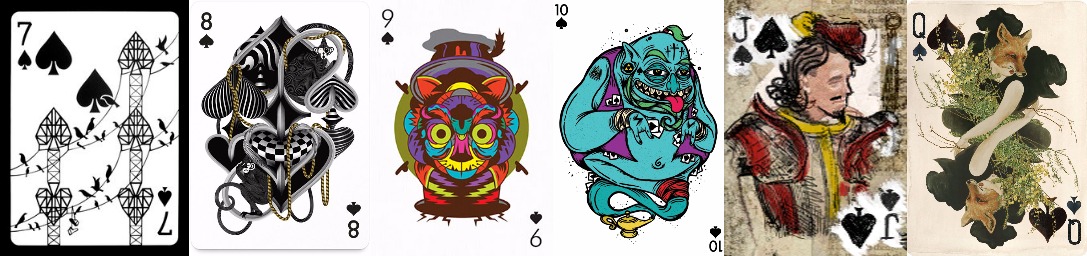
I'm playing with an Australian euchre pack - 32 cards - & I had a lot of fun searching out different designs on google!

Monday, 26 December 2016

2017 plans and projects...

The past year or so I have avoided joining in any year long reading challenges. Although I love their sense of community and fellowship, by the end of the year, I find that keeping up with where I'm at and what I need to do next just becomes burdensome.

My plan for 2016 was to only join in one-off events (like First Book of the Year, Dewey's 24hr readthon or the Classics Club Spin), flexible join-in-when-you-can memes (like Top Ten Tuesday or 6 Degrees of Separation) and spontaneous readalongs.

I even created my own flexible once a month-ish meme - Brona's Salon - with it's aim of gathering like-minded bookish people together to discuss their latest read and to have a good old bookish gossip.

Challenges were out; chats were in!

And I loved it.

I enjoyed reading and blogging and chatting about books all year.
My ability to join in waxed and waned (as I knew it would) but it never worried me. I knew my reading or blogging mojo would return before too long.

My plan for 2017, therefore, will be more of the same.

I'm on the lookout for one-off or irregular, flexible memes and readalongs.
(Anyone looking for a challenge or twenty to join in can visit Novel Challenge or Toady for lots of great ideas. They're both constantly adding new challenges and readalongs, so check back regularly for updates.)

I was delighted to discover that Becky @Becky's Book Reviews is planning on hosting a Share-A-Tea challenge in 2017. A 'challenge' all about enjoying a lovely cup of tea whilst reading your book and sharing it.


Which books count towards the challenge? Any book that you primarily read while drinking tea. Not every single page needs to have been read while drinking tea. (I'm not that strict!!!) But this challenge is all about celebrating SLOWING DOWN and SAVOURING the moments. 
How many books? Is there a set minimum? This challenge is about QUALITY and not quantity. It's not about reading fifty books or even twelve books. This is an anti-rush reading challenge. Enjoy where you are in a book, and, engage fully in it. Live in the book. 
This challenge has a focus on SHARING.

I have been a hoping-to-get-into-the-game-sideline-supporter of the Slow Movement for quite some time now. The idea of a challenge that savours the process with no minimums required sounds perfect!

My most likely approach to this challenge will be pictorial via instagram, twitter and litsy (Brona) #ShareATea2017.


First Book of the Year hosted by Sheila @BookJourney is a lovely world-wide meme that features book bloggers with the book they're reading on New Year's Day. Sign up and fill out the form to join in. It's not too late to jump on board.

2016 Book of the Year collage featuring me on the beach with my NY book!


The only other plan/wish/hope for 2017 is to tackle my TBR pile.

Thanks to Adam @Roofbeam Reader I will hopefully read (or reread) a few of the classics on my TBR pile (my post for his Classics Book A Month Club is here) and Bev @My Reader's Block has kindly let me join her Mount TBR Reading Challenge with a smaller, more do-able peak - Australia's own Mt Kosciosko with just 6 books.


Another one that has caught my eye thanks to it's long term, freewheeling nature is The World From My Armchair challenge devised by Paul @Halfman Halfbook.


I have no intention of reading a travel book from every single country in the world, but I know I will inevitably read some and this might help me keep track.


The Deal Me In 7.0 Short Story Challenge is also tempting. 

I read a lot of short story collections throughout each year - fiction and non-fiction and never know whether to review them as one collection or review each one individually. Given that I sometimes fail to read the whole collection, this challenge might help to keep me focused on the individual stories I do actually read. 

Jay has several variations on this challenge if a short story a week seems like too big an ask. 


In my younger days I was a rather keen euchre player, so the 32 card euchre pack appeals to me (FYI: most Australians play euchre using the cards 7 up and score to 11, using one 5 and one 6 playing card to keep track). 


Naturally (as I'm the editor for the History, Memoir, Biography page) I will also be reading plenty of Australian Women Writers in 2017.
The 2017 sign up post is here.


Given that I smashed my AWW reading challenge during 2016 with 44 books completed and reviewed (and a 45th on my current reading pile), I think I will need my very own customised reading level for 2017!

To clarify this figure - one of the books was mostly read in 2015, but finished in January in 2016 and 16 of the books were picture books or junior fiction and 4 books were YA/teen.

For 2017 I plan to read 40+ AWW books to achieve MY BRILLIANT CAREER!


For someone who is not joining in any challenges in 2017, I think that should be enough, don't you?