Showing posts with label Wondrous Words Wednesday. Show all posts

Wednesday, 13 August 2014

Wondrous Words Wednesday

WWW is a great opportunity for me to actually look up & define those few tricky words that occur in the book that I'm currently reading.

This week it's Sense and Sensibility by Jane Austen for Austen in August.

"A small court was the whole of its demesne in front; and a neat wicket gate admitted them into it." pg 30

demesne
noun
historical

A piece of land attached to a manor and retained by the owner for their own use.


"But I have no inclination for the law, even in this less abstruse study of it."  pg 87

abstruse
adjective
  1. difficult to understand; obscure.


"Mrs Ferrars looked exceedlingly angry, and drawing herself up more stiffly than ever, pronounced in retort this bitter phillippic...." pg 187

philippic

noun
LITERARY: A bitter attack or denunciation, especially a verbal one

"The impertinence of these kind of scrutinies, moreover, was generally concluded with a compliment, which though meant as its douceur, was considered by Marianne as the greatest impertinence of all. "  pg 197
douceur
French 
noun
  1. a financial inducement; a bribe.

Wednesday, 30 July 2014

Wondrous Words Wednesday

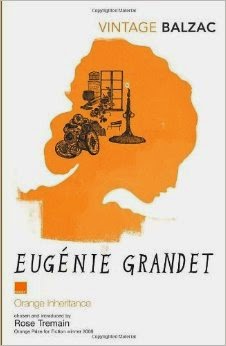
I'm reading Eugénie Grandet by Balzac for Paris in July & Dreaming of France.

And I've come across quite a few unknown words...so it's time to jump on board Wondrous Words Wednesday again!

The early chapters of Eugénie are about establishing the scene. Researching this post, especially hunting down the pictures, has really helped me to embed myself in the town of Samaur.

"...lovers of the Middle Ages will here find the ouvrouére of our forefathers in all its naive simplicity."

It wasn't easy to find a definitive definition for ouvrouére,but the closest I found came through a French/English translation site where one of the possibilities was 'open mindedness' & this seemed to fit the context. 

"...Monsieur Grandet (who was supposed to have worn the Phrygian cap)..."

Wikipedia:
"The Phrygian cap is a soft conical cap with the top pulled forward, associated in antiquity with the inhabitants of Illyria, a region of North West Ballkan peninsula. In early modern Europe it came to signify freedom and the pursuit of liberty. In revolutionary France, the cap or bonnet rouge was first seen publicly in May 1790, at a festival in Troyes adorning a statue representing the nation, and at Lyon, on a lance carried by the goddess Libertas. To this day the national emblem of France, Marianne, is shown wearing a Phrygian cap."

"The two pillars and the arch, which made the porte-cochére (see previous entry for this word) on which the door opened, were built, like the house itself, of tufa - a white stone peculiar to the shores of the Loire, and so soft that it lasts hardly more than two centuries. Numberless irregular holes, capriciously bored or eaten out by the inclemency of the weather, gave an appearance of the vermiculated stonework of French architecture...."
Tufa stone - Balzac's description was detailed but I couldn't picture it.
Now I can!
Verticulated block
Samaur by Willmore 1833

pellitory
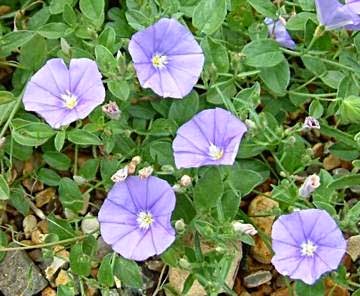
bindwind
"...a variety of chance growths had sprung up - yellow pellitory, bindwind, convolvuli, nettles, plantain..."

convolvulus


nettle
plantain


Wednesday, 14 May 2014

Wondrous Words Wednesday

I'm reading The Reef by Edith Wharton as part of my Wharton Review month.

I've just passed the half way mark and so far, Edith has thrown up a few curly words that I thought I would share on Wondrous Words Wednesday.

Today I have used The Oxford online dictionary for my definitions.


"but these traces of his passage had made no mark on the featureless dulness of the room, its look of being the makeshift setting of innumerable transient collocations."


1. The habitual juxtaposition of a particular word with another word or words with a frequency greater than chance:
eg. 'the words have a similar range of collocation'
  • 1.1 A pair of words that are habitually juxtaposed:‘strong tea’ and ‘heavy drinker’ are typical English collocations
2. The action of placing things side by side or in position:
eg. 'the collocation of the two pieces'

"From the escutcheoned piers at the entrance of the court a level drive, also shaded by limes..."

1. A shield or emblem bearing a coat of arms.
2. escutcheon plate A flat piece of metal for protection and often ornamentation, around a keyhole, door handle, or light switch.


"There's the whole pusillanimous truth of it!"

Showing a lack of courage or determination; timid.


"Through the crepuscular whiteness the trees hung in blotted masses."


  • 1Resembling or relating to twilight.
  • 1.1Zoology (Of an animal) appearing or active in twilight.
"Arguments, expedients, palliations, evasions, all seemed to be slipping away from him..."

VERB

  • 1 Make (a disease or its symptoms) less severe without removing the cause:treatment works by palliating symptoms pharmaceutical drugs palliate, they do not cure

  • 2Disguise the seriousness of (an offence):there is no way to excuse or palliate his dirty deed
  • 2.1Allay or moderate (fears or suspicions):this eliminated, or at least palliated, suspicions aroused by German unity
Palliation
NOUN


"in the ladylike and lachrymal sense of the term"

• formal or • literary Connected with weeping or tears:that hysterical, then lachrymal, then guilt-ridden hour
This ended up being a lengthier post than first anticipated, but I think that crepuscular could become my new favourite word as I sit on my front verandah watching the sunsets.

Wednesday, 7 May 2014

Wondrous Words Wednesday

For Wharton Review month I am reading a Wharton biography (by Hermione Lee) and autobiography (A Backward Glance).

Both books have provided a lovely excursion into the language usage of the time, both in New York and Paris.

On pg 8 of the biography, Lee writes about Wharton receiving the Légion d'honneur and being described in France as...

une des personnalités les plus connues de la colonie américaine

one of the most famous personalities of the American colony


And on pg 32, we find out about the possibility of 

"an intramural affair between Lucretia (Edith's mother) and her sons' cultured young English tutor".

According to google intramural means "situated or done within the walls of a building."

Edith then talks about her time in Paris as a child on pg 39 of A Backward Glance.

"The carriage, of the kind called a daumont, (below) was preceded by outriders, and swayed gracefully on its big C-springs to the rhythm of four high-stepping and highly-groomed horses, a postilion on one of the leaders, and two tremendous footmen perched high at the back. But all I had eyes for was the lady herself, leaning back as ladies of those days leaned in their indolently-hung carriages, flounces of feuille-morte (dead leaves!!) taffetas billowing out about her, and on her rich auburn hair a tiny black lace bonnet with a tea-rose above one ear."


I can imagine a little girl being thrilled by such a splendid spectacle driving by.

I also imagine the 'dead leaves' taffeta was like the dress, second from right, below.


Wednesday, 19 February 2014

Wondrous Words Wednesday

Ohhhh I'm reading the most delightfully sweet, romantic book right now and I want to share the love as loudly and as often as I can.

Last year I reviewed The Ladies of Missalonghi by Colleen McCullough.
It has been a favourite comfort read of mine for quite some time, but research for my post led me to discover the plagiarism charges against McCullough for similarities to The Blue Castle by L. M. Montgomery (of Anne of Green Gables fame).

I had never heard of The Blue Castle but my desire to read it blossomed then and there.

I'll write a longer post when I finish it, but for now here are some lovely old-fashioned words for Wondrous Words Wednesday.

pg 8 "The other picture was a faded, passe-partouted engraving of Queen Louise coming down a stairway."

Passe-Partout (or passepartout) is the French term for a mat, paper or, more usually, cardboard sheet with a cutout, which is placed under the glass in a picture frame. A picture is placed beneath it, with the cutout framing it. 
The passe-partout serves two purposes: first, to prevent the image from touching the glass, and second, to frame the image and enhance its visual appeal. The cutout in the passe-partout is usually beveled to avoid casting shadows on the picture.

pg 25 "On the steep mountain trails around her Blue Castle only gaily caparisoned steeds might proudly prance."


caparison is a covering, or cloth, laid over a horse or other animal, especially a pack animal, or horse of state.


pg 31 "Just where Lover's Lane debouched on the street, an old car was parked."


Debouch from French origin meaning to cause to emerge, and is a term used in river, stream, and glacier geography.


pg 51 "Uncle Herbert's house, a large, pretentious peppered with meaningless bay windows and excrescent porches."


Excrescence (architecture), an outgrowth of the main body of a building that does not harmonize well with the main body.

pg 155 "Some nights the whole outer world seemed given over to the empery of silence."


empery (archaic) Absolute power or authority.

(with thanks to Wikipedia for tonights definitions.)


Wednesday, 15 January 2014

Wondrous Words Wednesday

I'm currently devouring The Luminaries by Eleanor Catton. It's an absorbing historical mystery whodunnit.

Yes, it's big and yes, it's wordy, but I'm loving it for that very reason.

Given the number of astrological elements that give structure to this story, I'm surprised that I'm over half way through before striking a word that confused me completely.

On pg 531 we find "But the doubled fish of Pisces, that mirrored womb of self and self-awareness, is an ourobouros of mind - both the will of fate, and the fated will."

Firstly, I should point out that this sentence is NOT indicative of the rest of the story. This was the first section that waxed lyrical about the astrological signs. So please don't be put off by this example - it doesn't reflect the writing style or the story from the other 530 pages!

Ourobouros (or ouroboros) is an ancient symbol of a snake or dragon eating it's own tail. It signifies birth, death, renewal and the cyclical nature of self & nature.

As you can imagine, most cultures, religions and philosophies have adopted this symbol at some point to symbolise eternal life, unity of all things, the balance of opposites, the beginning & end of time, infinity & wholeness.

Wondrous Words Wednesday is hosted by Bermuda Onion.


Wednesday, 14 August 2013

Wondrous Words Wednesday - Mansfield Park

Wondrous Words Wednesday is a lovely meme hosted by Bermuda Onion each week to highlight new (to us) words that we come across in our daily reading.

This week I'm rereading Mansfield Park for Austen in August with Adam and with Melissa from Avid Reader's Musings.

This week I have used the Free Dictionary for my definitions.

eclairissement  -  "Mr Rushworth had set off early with the great news for Sotherton; and she had fondly hoped for such an immediate eclaircissement as might save him the trouble of ever coming back again."

n.
French.
clarification; explanation; enlightenment.

menus plaisirs - "You would look rather blank, Henry, if your menus plaisirs were to be limited to seven hundred a year."

This phrase comes from the French royal palace.The Menus-Plaisirs du Roi was the department responsible for the  "lesser pleasures of the King", which meant in practice that it was in charge of all the preparations for ceremonies, events and festivities, down to the last detail of design and order.

negus - "creeping up the principal staircase, pursued by the ceaseless country-dance, feverish with hopes and fears, soup and negus, sore-footed and fatigued".

I found out about negus on a food and drink site. It was a popular party drink in Georgian and Victorian times containing port, lemon, boiling water, sugar and nutmeg.

Wednesday, 12 June 2013

Wondrous Words Wednesday - Tess of the D'Urbervilles by Thomas Hardy

Wondrous Words Wednesday is a lovely meme hosted by Bermuda Onion each week to highlight new (to us) words that we come across in our daily reading.

This week I'm rereading Tess for the Classics Club Spin.

I'd forgotten how angry this book makes me feel. Tess' neglectful, selfish parents and the manipulative D'Urberville just do my head in! I wish I could go back in literary time somehow to protect her.

I've just started the 'second phase - maiden no more' which means I will have to get a wriggle on to finish Tess by the end of the month. (I blame Barbara Pym - see previous posts)!

But for now here are a few puzzling words from the 'first phase - the maiden'.


1. Cerealia - "The club of Marlott alone lived to uphold the local Cerealia."

Definition - The Cerealia is the celebration of the Goddess Ceres, Goddess of grains and cereal crops. It lasts for eight days. In the countryside, people offer milk, honey, and wine on the Cerealia (particularly the final day), after bearing them thrice around the fields.
The Cerealia is traditionally held most dear by persons of the Plebeian class; this association stems from the struggles of the orders.


2. factotum - "This was the cheerful servant of the establishment, who, in her part of factotum, turned groom and ostler at times."

Definition - a general servant or a person having many diverse activities or responsibilities. The word derives from the Latin command (imperative construction) fac totum ("do/make everything").


3. clipsing and colling - "Tis melancholy work facing and footing it to one of your own sort, and no clipsing and colling at all."

Definition - embracing


4. mampus - "No doubt a mampus of volk of our own rank will be down here."

Definition - a crowd


5. mommet - "Had it anything to do with father's making such a mommet of himself."

definition - a scarecrow


6. plim - "Doesn't that make your bosom plim?"

Definition - to swell


7. dolorifuge - "as a species of dolorifuge after the death of the horse."

Definition - something that banishes or mitigates grief


Wednesday, 1 May 2013

Wondrous Words Wednesday - Pure by Andrew Miller

Wondrous Words Wednesday is a lovely meme hosted by Bermuda Onion each week to highlight new (to us) words that we come across in our daily reading.

This week I'm reading the winner of the 2011 Costa Novel Award, Pure by Andrew Miller.

It's set in Paris just prior to the Revolution and I have a number of new words to check out.


Definitions come from the free dictionary.


Escritoire - "He glides to the gleaming walnut of the escritoire, removes from one of its drawers a little picture in a frame..."


Obviously it's a piece of furniture, but I like to have a picture in my mind.

1. A writing table; a desk.
2. A desk with a top section for books.


A WILLIAM AND MARY WALNUT ESCRITOIRE ON STAND  CIRCA 1700


Charnel - "They start with the south charnel, a gallery of blackened stone adjacent to the rue de la Ferronnerie." 

n.
A repository for the bones or bodies of the dead; a charnel house.
adj.
Resembling, suggesting, or suitable for receiving the dead.
 
Baroques - "What baroques even a mind like his is capable of."
 
I know this word from it's art, music and architecture usage, but I've never seen it used like this before.
 
n.
1. Anything extravagantly ornamented, especially something so ornate as to be in bad taste.
2. Characterized by grotesqueness, extravagance, complexity, or flamboyance.
 
Lucency - "The cloak, the height, that steady gaze lit by the mist's own odd lucency, a faint blue-like light radiating from everywhere and nowhere."
 
The sentence basically gives us the definition in context and I'm assuming a relationship with translucent...
 
1. Giving off light; luminous.
2. Translucent; clear.

Wednesday, 24 April 2013

Wondrous Words Wednesday

Wondrous Words Wednesday is a lovely meme hosted by Bermuda Onion each week to highlight new (to us) words that we come across in our daily reading.

My gorgeous copy of Their Eyes Were Watching God by Zora Neale Hurston is one of the Virago Modern Classics Designer collection.

It has an introduction by Zadie Smith that I saved for the end in case it had plot reveals. It did.

It also had several literary words that I was unsure of.

Today I used the free dictionary for my definitions.


1. Aphoristic
It was a category that did not include aphoristic or overtly 'lyrical' language.

adj
1. of, relating to, or resembling an aphorism
2. tending to write or speak in aphorisms
aphorism
n.
1. A tersely phrased statement of a truth or opinion; an adage.
2. A brief statement of a principle.

2. Quotidian
In the mouths of unlettered people she finds the bliss of quotidian metaphor.

adj.
1. Everyday; commonplace.
2. Recurring daily.

3. Neologisms
We all deserve to savour her neologisms (sankled, monstropous, rawbony).

n.
1. A new word, expression, or usage.
2. The creation or use of new words or senses.
3. Psychology
a. The invention of new words regarded as a symptom of certain psychotic disorders, such as schizophrenia.
b. A word so invented.
4. Theology A new doctrine or a new interpretation of scripture.
 
I'm delighted to now have a big word to throw back at my husband whenever I accidentally create a new word!!

Wednesday, 20 March 2013

Wondrous Words Wednesday

Wondrous Words Wednesday is a lovely meme hosted by Bermuda Onion each week to highlight new (to us) words that we come across in our daily reading.

This week I decided it was time to finish 1Q84 by Murakami.
I had heard that Book 3 was different to the previous two books, so I gave myself some time between them to minimise the disconnect that many people spoke of.

This week I have used wikipedia as the source of my definitions.

1. Zelkova "There was a large zelkova tree, its leaves still thick and luxuriant."

I don't always feel the need to know exactly what a tree or plant from another country looks like when it is referenced in a book. But in this case the zelkova tree is mentioned quite often.

It is in a park where the main characters spend time working out stuff.

Aomame spends a substantial part of Book 3 looking at this tree as the seasons change.
I had to know!


Zelkova serrata is a medium sized deciduous tree usually growing up to 30m tall. It is commonly used in parks and as a bonsai tree.


2. Yakiniku "Would you care to go out and get some yakiniku?"

Yakinuki is a broad term for grilled meat.
In a yakiniku restaurant, diners order the raw ingredients which are then brought to the table. The ingredients are cooked by the diners on a grill built into the table. The grilled food is then dipped into sauces before eating.


3. Remora "Ushikawa was a master at sticking to somebody, like a remora to a shark."

I'm assuming remora's are some kind of marine parasite, but I'm in the mood to know for sure.

Remora's are also known as suckerfish.Their distinctive first dorsal fins take the form of a modified oval sucker-like organ with slat-like structures that open and close to create suction and take a firm hold against the skin of larger marine animals.
The host to which the remora attaches for transport gains nothing from the relationship, but also loses little. The remora benefits by using the host as transport and protection, and also feeds on materials dropped by the host.


Wednesday, 27 February 2013

Wondrous Words Wednesday

Wondrous Words Wednesday is a lovely meme hosted by Bermuda Onion each week to highlight new (to us) words that we come across in our daily reading.

This week I'm reading The Magnificent Ambersons by Booth Tarkington for my Classics Club Spin challenge.

It's a lovely old-fashioned read so far, but a few words in particular have puzzled me.

Pg 9: "The house was the pride of the town. Faced with stone as far back as the dinig-room windows, it was a house of arches and turrets and girdling stone porches: it had the first porte-cochere seen in the town."

Girdling: n. (Arch) an ornamental band, especially one surrounding the shaft of a column.


Porte-cochere: n. (Arch.) A large doorway allowing vehicles to drive into or through a building. It is common to have the entrance door open upon the passage of the porte-cochère. Also, a porch over a driveway before an entrance door.

This is the house that Tarkington based the Amberson mansion on - Woodruff Place, Indianapolis. The columns on the porte-cochere have an ornamental band around them!

Pg 54: "...the open window afforded the occupants of the cutter a glimpse of a tired,fine old face, a silk hat, a pearl tie and an astrachan collar, evidently out to take the air."

Astrakhan: n.
1. The curly, wavy wool of young lambs from Astrakhan. A city of southwest Russia on the Volga River delta.
2. A fabric with a curly looped pile, made to resemble this fur.
This is an image from a James Bond movie featuring an astrakhan collar!!

Pg 109: "...it seemed to flaunt a kind of parvenu ignorance, as if it were actually pleased to be unaware that all the aristocratic and really important families were buried in the old section."

Parvenu: A person from a humble background who has rapidly gained wealth or an influential social position; a nouveau riche; an upstart, a social climber. Generally used with the implication that the person concerned is unsuited to the new social position, esp. through lacking the necessary manners or accomplishments.

Pg 120: "...his thought was that living with a person so sensitive to kindly raillery might prove lugubrious."

Lugubrious: adj. gloomy, mournful or dismal, especially to an exaggerated degree.