Showing posts with label Epigraph Philosophy. Show all posts

Monday, 26 October 2020

Intimations: Six Essays | Zadie Smith #NonFiction


This slim volume of essays grabbed my attention thanks to it's Covid-related lockdown content. Lately, I've been reading a number of fiction titles about plagues and epidemics (see below). This was the first one, however, that considered our current Covid situation.

I've been meaning to read something by Zadie Smith, ever since 2000 and White Teeth, which almost everyone I know has read and loved and says I should read too. The most I've managed so far, though, are a few introductions that she has done in other books or passing references made by other authors who admire her work.

This was a fine start, showing her obvious intelligence and thoughtfulness. Two things I usually appreciate a lot. However, in the middle of a pandemic, I guess I was also looking for more warmth. 

I found it curious that she choose an epigraph by Marcus Aurelius to lead us in, as I also found Aurelius intelligent and thoughtful, but lacking in warmth, when I read him twenty odd years ago. At the time I put it down to a translation and passing of time thing, but perhaps it can be hard to intellectualise and emote at the same time? 
It stares you in the face. No role is so well suited to philosophy as the one you happen to be in right now.

The second epigraph was by Grace Paley, who according to wikipedia was 'a writers writer', fuelled by idealism and activism. Perhaps with this quote, Smith is saying she is prepared to look at what is happening 'in the face...right now', but that something more is needed for 'an active moral life.' Perhaps developing an excellent soul requires more rigor and virtue than most of us can summon up right now?
My vocabulary is adequate for writing notes and keeping journals but absolutely useless for an active moral life.

However, Smith realised that there were two things she could, indeed, do. In her Foreword she embraces the notion that:
1. Talking to yourself can be useful.
2. And writing means being overheard.

The following six essays went on to explore death, control, denial, resistance, restraint, vulnerability, creativity, destruction, distance and social justice. She talks; and we listen. She posits; we ponder.
Below is what I pulled out of her essays.

1. Peonies: or tulips, or how nature, real and imagined, can heal, connect and soothe our souls. 
  • Walking is what got me through our lockdown in NSW. It was autumn, the weather was glorious, and I walked for hours through parks, and past gardens in their final flush of flowering. I took solace in the changing of the leaves and the shortening of the days, even in a built up inner city suburb. Splashes of geraniums and chrysanthemums would catch my eye and lift my spirits. The sun would sparkle on the harbour and reflect in the glassed sky scrapers across the bay, along with the blue skies and clouds. 

How experience 'rolls over everybody' - sometimes we resist, sometimes we submit. The creative process is about trying to create some order out of the chaos. 
writing is control...writing is all resistance...to write is to swim in an ocean of hypocrisies. 
  • I was surprised by how quickly and easily I submitted to the changing circumstances. My control, my creativity found expression in photography. I captured the autumnal changes and posted them on instagram. I didn't need my tulips to be peonies. For me, any flower would do!

2. The American Exception: 'I wish we could have our old life back'. 
  • Curiously, I don't. There was absolutely nothing wrong with my old life; I loved most of it, most of the time. But even back then, pre-Covid, life changed and evolved. Things shifted. Good things happened; bad things happened. And we moved onto the next thing. This is the next thing. It's a bit bigger and more drastic than is usual, but it's what we do. Life changes and we can never go back. There is only a constantly changing now.

Death absolute is the truth of our existence as a whole, of course, but America has rarely been philosophically inclined to consider existence as a whole....

  • Every time I read something about the American health system, I am so grateful to live in a country that has basic free health cover for all of it's citizens. 

war transforms its participants. What was once necessary appears inessential.

  • I've realised I don't need to go out as often as I did. I'm an introvert and staying home, quietly, is pretty easy for me. But I do miss art galleries. It's not necessary for me to go shopping or go out every night. I don't need hustle and bustle or endless stimulation. But I do need beauty. And I need my local community. I need to know we will have cafes and restaurants and local businesses going forward. I now only shop local; no online megastores for me.


3. Something to Do: or how we fill our lockdown days. How conflicted we feel about this new liberty and/or captivity...the only way out is through...love is not something to do, but something to be experienced, and something to go through.
  • Once I got over the distraction of lockdown and all the Covid news, I rediscovered reading. I've always read, but now, I'm reading more than ever. Creating little projects for ourselves is a good thing. We do need to keep busy; it can keep the demons at bay. And if it's something you also love to do, or it helps those you love, then bonus! Bake bread, solve a puzzle, create a potted herb garden, clean out your cupboards, paint the deck. Yes, it's busy work. Yes, it's something we do, because most of us really have 'no idea what life is for', so surely it's better to being doing something, than glumly doing nothing. The older I get, the more I realise there is no meaning of life. Life is simply what we make of it. 

4. Suffering Like Mel Gibson: or how lockdown affects us all differently, depending on our circumstances. Privilege and suffering have a lot in common. They both manifest as bubbles, containing a person and distorting their vision.
  • I acknowledge all the good fortune that I have experienced during Covid so far. All my family are still working. Some now work from home or have reduced hours, but they're all still working. For those with reduced hours, our government JobKeeper program has buffered any pain. Our lockdown (in NSW) was brief and moderate. Our social lives are curtailed and I miss hugging close friends (I don't miss the cheek kissing or hand shaking though). I only know one person who has had the virus, although most people I know have been tested once or twice. Our state government seems to have nailed contact tracing. Any outbreaks are quickly contained. We feel safe but quiet. The restrictions we live under now are occasionally irksome but not onerous. I am fortunate. 

5. Screengrabs (After Berger, before the virus): I assume she means John Berger and is referencing Ways of Seeing. She draws mini-word-portraits...of a man with strong hands, a character in a wheelchair in the vestibule, a woman with a little dog....you get the idea.
  • I liked how this helped Smith to focus on her local community, and how different people are coping with Covid and lockdown. Covid has also concentrated my gaze onto the local. I'm doing all my grocery shopping locally, I eat takeaway from our local restaurants. I could have coffee at home, but I'm getting it from a rotating set of local baristas on my walk to work instead. I'm not the only one. Many of those new to working from home, are taking their laptops to local cafes for the company. We've lost a few businesses, but they were struggling before Covid. I see more people reading books, in cafes, in the parks, and in the doctor's surgery.

The enviable style of the young is little protection against catastrophe...their style is all they have.
  • It's not easy for the young. B20 is home more than out. And when out, he and his friends cannot dance, sing or walk around. They must sit in a pub, at a designated table. They are usually home again by 1pm. B20 is mostly philosophical. It's all he knows. They have social media to keep in touch. At least he isn't heading off to war, like many previous generations of young men his age. It could be worse.

6. Intimations: acknowledgements and shout-outs, or as Smith called them 'Debts and Lessons' to her family and friends.
That my physical and moral cowardice have never really been tested, until now.

A number of the essays tackled Black Lives Matter concerns. Racism as a virus. Class contempt. Plagued by poverty. I suspect Smith will have a lot more to say about this in the future. I look forward to it. 

Intimations felt like a beginning. A germ of an idea that hasn't quite reached fruition. It's the first reaction, a first response, by a thoughtful writer. It's a reaching out to test the waters and to connect. To see if anyone is listening. 

Judging by sales, lots of people are listening. Lots of people are looking for someone to help them make sense of what is happening to their world, to find a common cause, to stand on common ground. Together. To feel connected in our isolation. 

Royalties of my edition of Intimations are going to The Equal Justice Initiative and The Covid-19 Emergency Relief Fund for New York.

Previous Plague/Pandemic Reads:

Current Plague Reads:
  • A Distant Mirror: The Calamitous 14th Century | Barbara Tuchman (non-fiction)

Up Next
:
  • Pale Horse, Pale Rider | Katherine Anne Porter

Plague/Pandemic Books On My Radar:
  • Station Eleven | Emily St John Mandel
  • Blindness | José Saramago
  • The Last Man | Mary Shelley
  • The Ghost Map: The Story of London's Most Terrifying Epidemic—and How It Changed Science, Cities, and the Modern World | Steven Johnson (non-fiction)
  • Nemesis | Philip Roth
  • Love in the Time of Cholera | Gabriel Garcia Marquez
  • The Years of Rice and Salt | Kim Stanley Robinson
  • The Dog Stars | Peter Heller
  • The Children’s Hospital | Chris Adrian
  • Severance | Ling Ma
  • The White Plague | Frank Herbert
  • The Passage | Justin Cronin

Saturday, 21 March 2020

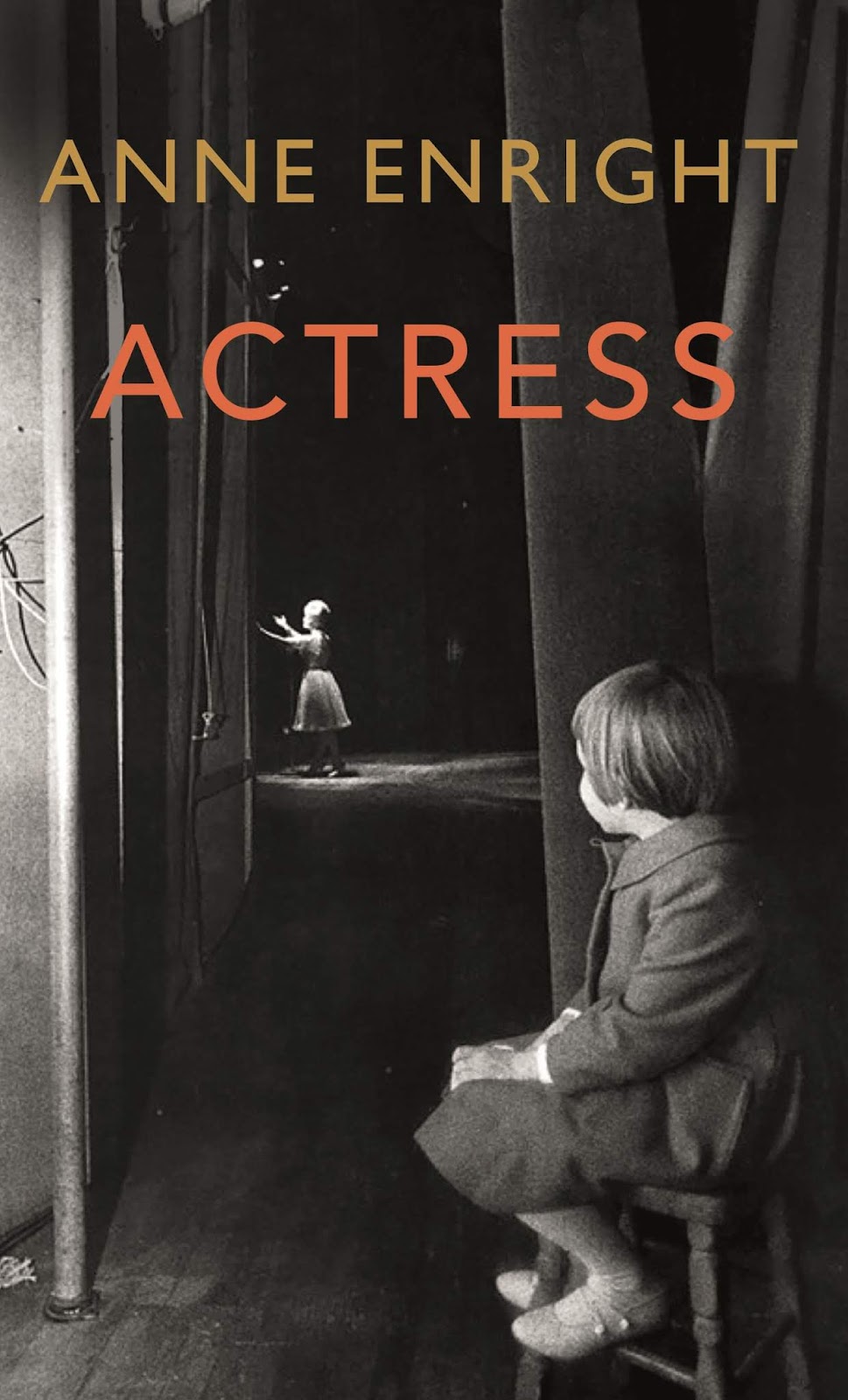
Actress | Anne Enright #Begorrathon


I have to ask straight up - who is Norah's father? Could you work it out? I wasn't sure. There didn't seem to be any repercussions or exposition after the reveal. Was it all about the #metoo element? But since you kind of figure that out for yourself very early on, it wasn't so much a shock revelation, but a quieter 'I thought so' moment. I'm confused.

Anyway, let's put that all that aside for now and talk about the lovely, lovely writing in Anne Enright's Actress. I loved her descriptions of Norah and her mother, the famous Katherine Odell, her observations of daily life and her empathy for the thinking of a 21 yr old.

  • We had the same way of blinking, slow and fond, as though thinking of something beautiful.
  • I think I mentioned that my mother was a star. Not just on screen or on the stage, but at the breakfast table also, my mother Katherine O’Dell was a star.
  • The boiling eggs chittering against each other and along the metal bottom of the pan.
  • My life felt like an imitation, and I was terrified it might become the real thing.

Actress was an fascinating story but there were many times when it felt rather like trying to drive a car and forgetting to put it into gear. The engine was revving sweetly, but we were going nowhere! Which is maybe why I felt the father revelation late in the story was more of a frustration than anything else. I was waiting patiently for a burst of speed that never happened.

I enjoyed my time in Enright's hands, but it's not the best example of her work.

#Begorrathon2020 #ReadingIrelandMonth2020

Epigraph:

  • 'the more I applauded, the better, it seemed to me, did Berma act.' In Search of Lost Time


Enright Reviews:

Monday, 16 December 2019

The Man Who Saw Everything by Deborah Levy

Hamish Hamilton | Penguin Australia
In 1989 Saul Adler (a narcissistic young historian) is hit by a car on the Abbey Road. He is apparently fine; he gets up and goes to see his art student girlfriend, Jennifer Moreau. They have sex then break up, but not before she has photographed Saul crossing the same Abbey Road. Saul leaves to study in communist East Berlin, two months before the Wall comes down. There he will encounter - significantly - both his assigned translator and his translator's sister, who swears she has seen a jaguar prowling the city. He will fall in love and brood upon his difficult, authoritarian father. And he will befriend a hippy, Rainer, who may or may not be a Stasi agent, but will certainly return to haunt him in middle age. 
In 2016, Saul Adler is hit by a car on the Abbey Road. He is rushed to hospital, where he spends the following days slipping in and out of consciousness, and in and out of memories of the past. A number of people gather at his bedside. One of them is Jennifer Moreau. But someone important is missing. 
Slipping slyly between time zones and leaving a spiralling trail, Deborah Levy's electrifying new novel examines what we see and what we fail to see, until we encounter the spectres of history - both the world's and our own.

This is my second Deborah Levy story, so I now know that this style of writing - the slightly off-kilter structure, narration and characters combined with oodles of symbolism and mythology - is her usual way of telling a story. However, The Man Who Saw Everything isn't haunting me (yet) the way that Hot Milk still does, three years later.

Spectres of the past, though, are a big part of this story with personal and European histories haunting the daily lives of our characters. These ghosts of the past didn't get under my skin, like they did in Hot Milk. I suspect the reason lies in the face value issues on display in each book - Hot Milk was a mother/daughter passive/aggressive thing; The Man Who Saw Everything was more father/brother/son stuff with a narcissistic, self-absorbed narrator. Mother/daughter angst will always resonate here.

Saul is an historian of totalitarianism and the psychology of male tyrants. His research project is about the cultural resistance to Nazism in the 1930's. It is 1988, one year prior to the Wall coming down, when he leaves London (via Abbey Road) to go to East Berlin to work. He seems incredibly naive and light-weight to be tackling such a heavy topic.

His thoughts seem to be caught up in light-weight matters like tins of pineapple, photo shoots and who to kiss next. For Saul it is all about him. How he looks to others and what others think of him. His relationships are messy and confusing. He's aware of the Stasi and that they are probably watching him move around East Berlin, yet he is painfully careless with his actions and words.

Levy deliberately throws in the occasional confusing phrase or comment to make us wonder when or who is telling us this story and what is their purpose. Is this a rewriting of history, a whitewash? Or is this an attempt to uncover a truth?
I did not want to know, as well as wanting to. I could not break into her thoughts and feelings. Or my own, I could not break in.

Mostly though, this first half is a relatively straight forward Cold War drama which suddenly shifts in the second part, to 2016 Brexit London. Saul has been involved in a second accident on the Abbey Road crossing, this time more seriously. He is in hospital, coming out of a coma, surrounded by a confusion of visitors, real and ghostly.

I suspect this section is deliberately confusing for all of us. Was the 1988 story a dream? Has Saul been in a coma for 28 years? Or was he revisiting old haunts trying to piece together the story of how he ended up where he found himself in 2016? We all tell ourselves stories to make our lives more habitable. These stories are not only reinterpreted by our present understandings but our present is also influenced by our beliefs about our past. Levy seemed to enjoy poking holes into Saul's preferred story, until he was forced to face the inconsistencies. For a while anyway.

Sadly, for Saul, he failed to recover any degree of self-awareness. All his relationships continue to be messy and fraught with cruel comments and actions. Perhaps the damage of his childhood ran too deep. The early death of his mother combined with a strict disciplinarian, distant father and an elder brother who bullied him. Saul's fluid sexuality from a young age that only alienated his more conservative father and brother even more. They all processed their grief differently, but in ways that hurt each other - forever. 

Saul, our extremely unreliable narrator, was not the man who saw everything, Far from it. Saul could barely see anything beyond the end of his own, very pretty, nose. The man who saw everything was Walter Müller.
He was always looking at me and I think he could see everything that was good and bad and sad in me.

In 1988, Walter was smitten and then deeply hurt by Saul's careless love. He kept a safe distance thereafter, yet couldn't escape completely. Their lives were irrevocably intertwined and Walter was very, very careful to never reveal the full extent of their ongoing connection. Protecting others from the damage that Saul could do, became Walter's modus operandi.

Saul's Stasi report concluded with the phrase 'he is harmless to other people.' Walter, however, declared that this was false - he was, in fact, VERY harmful to others.

It is only as you make your way through the second part of the story that you begin to see all the red herrings and foreshadowing that Levy left behind in the first. It's like a puzzle that shifts and changes shape as you put it together. Saul is enigmatic to the end. A mystery unto himself and to others.

We are haunted by our past - individuals as well as countries and continents. Marx and Stalin continue to haunt the GDR and Russia. Hitler's actions haunt people all around the world to this day. We are also haunted by pop culture. The Beatles music is everywhere and lives inside all of us. Images also haunt us, whether it's four men crossing a road on an album cover, or scenes of the Wall coming down in 1989 or photographs of the Holocaust survivors being liberated from the camps. The images have become part of our collective memory, even if we weren't there to witness it ourselves.

Which brings me to book cover choices. The Australian cover heads this post. I'm fascinated how and why different countries get very different covers. The Bloomsbury and Canadian versions remind me of the US cover for A Little Life by Hanya Yanagihara. I love the Portuguese version that clearly relates to the fateful crossing of Abbey Road. One, less sympatico Goodreads reviewer said, So, this is a novel about how some people need to be more careful crossing roads. This cover would be perfect for them!

Bloomsbury

Hamish Hamilton | Penguin Canada

Relógio D'Água Editores Portugal

It's not only Abbey Road that features in The Man Who Saw Everything. One of the characters loves the Beatles song Penny Lane. It was only towards the end of the book that I began to realise that some of the lyrics was interwoven into the story - the barber and the nurse spring to mind - a reread would be necessary to spot them all, I suspect.

In 2009, McCartney reflected:
"Penny Lane" was kind of nostalgic, but it was really [about] a place that John and I knew ... I'd get a bus to his house and I'd have to change at Penny Lane, or the same with him to me, so we often hung out at that terminus, like a roundabout. It was a place that we both knew, and so we both knew the things that turned up in the story. (source)


If you're planning on reading this book soon, here are the lyrics to take with you:


Penny Lane | The Beatles | 1967

In Penny Lane there is a barber showing photographs
Of every head he's had the pleasure to have known
And all the people that come and go
Stop and say hello

On the corner is a banker with a motorcar
The little children laugh at him behind his back
And the banker never wears a mac
In the pouring rain, very strange

Penny Lane is in my ears and in my eyes
There beneath the blue suburban skies
I sit, and meanwhile back

In Penny Lane there is a fireman with an hourglass
And in his pocket is a portrait of the queen
He likes to keep his fire engine clean
It's a clean machine

Penny Lane is in my ears and in my eyes
A four of fish and finger pies
In summer, meanwhile back

Behind the shelter in the middle of a roundabout
The pretty nurse is selling poppies from a tray
And though she feels as if she's in a play
She is anyway

In Penny Lane the barber shaves another customer
We see the banker sitting waiting for a trim
And then the fireman rushes in
From the pouring rain, very strange

Penny lane is in my ears and in my eyes
There beneath the blue suburban skies
I sit, and meanwhile back
Penny lane is in my ears and in my eyes
There beneath the blue suburban skies
Penny Lane


Epitaph Philosophy:

I'm always fascinated by the epitaphs chosen by authors to lead us into their stories. Given Levy's penchant for symbolism, I wanted to unpack what she might have been trying to tell us with the two epitaphs at the start of The Man Who Saw Everything.
  • Karel Teige, The Shooting Gallery | 1946
Poetic thought, unlike rootless orchids, did not grow in a greenhouse and did not faint when confronted with today's traumas.
Teige was an avant-garde Czech 'agent provocateur and seismograph, at once provoking action and debate and yet simultaneously reacting with the utmost sensitivity to the shifting political spectrum of his time.' (Kenneth Frampton, Introduction, Karel Teige / 1900–1951: L'Enfant Terrible of the Czech Modernist Avant-Garde | 1999)

He was an editor, writer and artist during the 1920's and 30's. He was a Marxist, but not the card carrying kind. After the 1948 takeover by the Communists, he was not considered to be toeing the party line. Teige was denounced and forbidden to publish or speak out.

Sadly, it would seem, that Teige did in fact, succumb to the traumas of his time, as all reports claimed that he died a 'broken man' in 1951.

It looks like poetic thought can be a as fragile as an orchid. Though, here we are, over fifty years later, still able to read his words, despite the secret police claiming to have destroyed all his papers.

  • Susan Sontag, In Plato's Cave | On Photography | 1977
To photograph people is to violate them, by seeing them as they never see themselves, by having knowledge of them they can never have; it turns people into objects that can be symbolically possessed.

Sontag also claimed that the proliferation of photographic images had developed a 'chronic voyeuristic relation' within people. I wonder what she would think of the selfie?
She also believed 'that the individual who seeks to record cannot intervene, and that the person who intervenes cannot then faithfully record, for the two aims contradict each other'. Was Jennifer merely having a conversation about the nature of beauty as she claimed, or was she trying to capture the real Saul? Perhaps she wanted to show Saul how others saw him or maybe she was objectifying him?

In 2003, Sontag published Regarding the Pain of Others, where she revised some of the opinions she had expressed earlier. She was now concerned that 'people remember through photographs but that they remember only the photographs ... that the photographic image eclipses other forms of understanding—and remembering. ... To remember is, more and more, not to recall a story but to be able to call up a picture'.

Saul definitely had trouble remembering what was real, what was imagined or what he wanted to be true.

Favourite Quote:
I have sex all the time but I don't know if it's the sex I had thirty years ago or three months ago. I think I have extended my sexual history across all time zones, but I did have a lot of sex before the collapse of the Berlin Wall. After that it's a blur but I think I had less sex in social democracies than I did in authoritarian regimes.

Facts:
  • Shortlisted 2019 Goldsmith Prize
  • Longlisted 2019 Booker Prize
  • My 2016 Hot Milk post.

Tuesday, 1 October 2019

The Far Field by Madhuri Vijay


The Far Field by Madhuri Vijay was a tremendous read. Fascinating, absorbing and eye-opening.

I say eye-opening, because even though I've read a lot of Indian literature over the years, I don't believe I've read many that cover the conflict in Kashmir. Vijay doesn't answer all the questions or provide all the answers, she doesn't even fill in all the blanks, yet somehow this seems like a much truer, more accurate rendering of this constantly shifting, long-ranging, complex conflict. How these things started, who is right or wrong, who did what to who, all get lost in the murky details of history.

The job of historical fiction is to create dialogue between the basic facts (dates, places, names) and interpretation and to give them both meaning and a human face. Historical fiction adds possibility - in the details, the moods, the conversations, the interactions, the daily routines - all that ordinary stuff of our regular lives that usually gets lost in the columns of historical facts.

Vijay has given us one such story, one such possibility, set in and around a small town in Kashmir.

Shalini is from Bangalore but when her mother dies suddenly, the grief she is left with feels like too heavy a burden. So she takes off to Kishtwar, in Kashmir, in an attempt to find the charming travelling salesman that used to visit their home regularly when she was a child.

Bashir Ahmed not only charmed Shalini, but also her mother. A long distance, long-term flirtation existed between them. Ahmed's back story is filled in gradually via snippets of memory and conversation as the southern Indian view of the the conflict in the north is challenged by their friendship with him.

During her time in Kashmir as a grieving adult, Shalini is confronted by a whole region in the grip of grieving. Although the backdrop is war and political unrest, the story is deeply personal.

Shalini is not the most likeable character I've ever read. She's rather spoilt, selfish and naive. However, the journey she goes on, both physical and emotional is compelling stuff, and I for one, could barely put this book down.

Epigraph Philosophy:

Something else is yet to happen, only where and what? 
Someone will head towards them, only when and who,
in how many shapes and with what intentions?
Given a choice,
maybe he will choose not to be the enemy and
leave them with some kind of life.

A poem by Wislawa Szymborska, "Some People"

I unearthed the entire poem and found two rather different translations that I discussed in this previous post. Given it was very easy to find both translations, I'm curious why Vijay (or her editors) chose the less satisfying (to me) and less grittier version of the poem?

Either way, it highlights the elusive, changing nature of conflict and historical truth.

Facts:

Thursday, 31 January 2019

The Ways Are Green by William Henley

In my recent post about Ethel Turner's In the Mist of the Mountains, her epigraph, dedicated to her husband, was the final two lines from a William Henley poem.

It was a poem (and a poet) I didn't know, but after reading the poem in full, I can see why Turner chose it for this particular book about late spring in the Blue Mountains. Not only was Turner, herself, a keen gardener, but her love for nature was realistic rather than romantic in nature, as was Henley's.

From this one small peak into the romantic life of the Turner's I cannot help but think that they shared a happy, loving marriage.


The Ways Are Green
William Ernest Henley
(1849 - 1903)

The ways are green with the gladdening sheen
Of the young year's fairest daughter.
O, the shadows that fleet o'er the springing wheat!
O, the magic of running water!
The spirit of spring is in every thing,
The banners of spring are streaming,
We march to a tune from the fifes of June,
And life's a dream worth dreaming.

It's all very well to sit and spell
At the lesson there's no gainsaying;
But what the deuce are wont and use
When the whole mad world's a-maying?
When the meadow glows, and the orchard snows,
And the air's with love-motes teeming,
When fancies break, and the senses wake,
O, life's a dream worth dreaming!

What Nature has writ with her lusty wit
Is worded so wisely and kindly
That whoever has dipped in her manuscript
Must up and follow her blindly.
Now the summer prime is her blithest rhyme
In the being and the seeming,
And they that have heard the overword
Know life's a dream worth dreaming.

1878

Jennifer @Holds Upon Happiness posts a lovely Poem for a Thursday each week. I love seeing which poem she picks but I rarely feel the urge to join in with one myself. However, today is one of those days when my recent reading provided the push I needed.

Monday, 4 June 2018

The End We Start From From by Megan Hunter

There is a lot of space in Megan Hunter's The End We Start From. Known as a poet until now, her debut novel is written almost like a poem, but not quite. It's not prose as we know it either. It's fragmentary, somewhere in between.

Stark, sparse paragraphs, poetic words, no names, just letters of the alphabet. Everything is pared back to the bare minimum to create a startling story about the end of times. The End We Start From got under my skin.


Hunter's choice of epigraph was a poem by T. S. Eliot's Four Quartets,
What we call the beginning is often the end
And to make an end is to make a beginning.
The end is where we start from

She then shows us the end of our known world (via an environmentally disastrous flood that covers London) through the eyes of a young woman about to give birth to her first child. The story reads almost like her journal entries. Brief snatches of time captured through the lens of baby love.

Many reviewers talked about the not-so-new idea of comparing first-time mothering with the end of the world. Curiously it wasn't this particular idea that captured my attention. I was intrigued by how this baby (and the other newborns) will be growing up in this new world which will be the only world that they know and understand. They won't have to accommodate or change or adapt to this new world order; it is their world. They won't spend their lives thinking about and regretting the wonderful old ways and wishing it could be like that again. They won't be climate change deniers or head-in-the-sander's; they will know, they will be living with it as a fact. They will belong to this new world. This is our hope and the way forward.

The story is contained not only within the carefully chosen words but also in the gaps and all that is unspoken. Hunter mentioned several times that she was trying to find a way to move between poetry and prose to find a form that suited her. It worked for me just fine.

London. Uninhabitable. A list of boroughs, like the shipping forecast, their names suddenly as perfect and tender as the names of children.
The cupboards reveal themselves more by the day: their wooden backs, the greying corners we never used to see.
Days are thin now, stretched so much that time pours through the
Z has learnt to smile. He has cracked with it. The smiles built up inside him, R and me smiling madly into his face until it couldn’t hold any more. It cracked, and out came his smile, urgent, almost demented.

Hunter also interspersed these fragments with flood mythologies. They reminded us that since the beginning of recorded time, humans have been grappling with the chaos that mother nature throws our way. We make up stories to help us make sense of the unknown. It made me wonder what stories would then be made up for future generations about this disaster.

My only quibble was the ending. However so many authors these days fail to capture a satisfying end note that I'm becoming used to that feeling of let down after a great read. So much thought seems to go into the epigraph but the search for an equally apt epilogue is not always given the same care.

Benedict Cumberbatch's company has apparently bought the movie rights to the book.

A shout-out to the brilliant cover design by Naomi Clark and illustration by Kazuko Nomoto. I picked this book up for the first time purely thanks to the lovely, lovely cover.

1/20 #20booksofsummer (winter)
16℃ in Sydney
20℃ in Northern Ireland

Thursday, 23 November 2017

On Doubt by Leigh Sales

Touted as a pocket-sized antidote to fake news, Leigh Sales essay On Doubt has been re-released eight years after it's initial 2009 publication in the Little Books on Big Themes series. With the on-going, even increased need for a discussion on self-doubt, balance and truth in our modern lives, this little book has struck a chord with it's 2017 readers, becoming a best seller at work in recent weeks.


Leigh Sales is an ABC journalist and current affairs presenter who has been curious and sceptical all her life. She was the quintessential, questioning, ever-doubting teenager that grew up to do the same thing throughout her career.

She aims to challenge blind faith and over-confidence, but living life with a doubtful mind has it's own pitfalls including anxiety and a lack of an all-consuming passion to name two.

The essay is dotted with fascinating little stories about her childhood, George Bush, Sarah Palin, old style journalists and public disputes between journalists & historians. 

There's even a 12th century philosopher, Pierre Abelard who taught,
that the path to truth lay in the systematic application of doubt. Not only should doubt be brought to bear on external issues, but it should also be turned inwards to test one's own assumptions.

Sales discussed the perils of what she called 'niche news' in 2009. This is the news of telling consumers what they want to hear and it is, of course, interesting to see how this has now morphed into the fake news of today's mad, mad world.

The state of our political system is discussed. Our need for strong leaders to provide electoral certainty has given rise to absolutes. Any leader that changes his of her mind, prevaricates or takes too long to make a decision is seen as a poor leader. Complex issues are not debated, nuance is avoided at all costs, while black and white thinking reigns supreme.

It's easy to see why so many people found Trump attractive when viewed in this light.

Sales finished her 2009 essay poking a bit of tongue-in-cheek fun at herself, clearly showing that she didn't take herself too seriously after all:

I feel that without a doubtful mind, I wouldn't learn as much or have as much fun. But I could be wrong.

The 2017 postscript added another 20-odd pages to her original essay which brought us update with Trump, Turnbull, Shorten and social media, all 'neatly manicured to show our best possible selves to the world'.

Sales believes we have now become so used to distortion in every part of our life that people, especially those in public life, 'no longer bother to hide their deliberate skewing of reality'.
She claims that we've stopped caring about the facts and don't trust any organisation or politician to tell us the truth or anything genuine.

But we can do better than double speak and political correctness - the secret is authenticity.
the reality is there are not two equal sides to every issue...There are not two sides to racism or bigotry....When the facts are overwhelming, they should be presented as such.
Facts matter. Integrity matters. Honesty matters. It's important to understand that your own opinion is not always right and it's vital to be open to the views of others.

I read On Doubt late in the day during the 24 hr #DeweyReadathon in preparation for #AusReadingMonth and #NonFicNov. 

It was a quick, easy read with nothing particularly new or startling to reveal, but it was a timely reminder for us all to check in with our own certainties and black and white thinking, to exercise some doubt and caution and to question those who claim to tell us the truth.


I'm not quite sure what koala's have to do with a French philosopher, however this was the quote that Sales used as her epigraph. Since it's #AusReadingMonth, what the heck! Perhaps this can remind that the first thing you should doubt is the notion that koalas are cute and cuddly. Cute they may be; cuddly they are not!

Friday, 29 September 2017

I Am Reading...

I'm very excited to have a copy of book 8 of the Rowland Sinclair series in my hands for this NSW October Labour Day long weekend.

The series has had a recent change of cover style. I miss the old art deco style covers, but I think these darker covers show the crime side of the story off more.

My previous reviews for the first seven books plus prequel can be found here, but for now here's a little taster for A Dangerous Language.


Volunteering his services as a pilot to fly renowned international peace advocate Egon Kisch between Fremantle and Melbourne, Rowland is unaware how hard Australia's new attorney-general will fight to keep the "raging reporter" off Australian soil. 
In this, it seems, the government is not alone, as clandestine right-wing militias reconstitute into deadly strike forces. 
A Communist agent is murdered on the steps of Parliament House and Rowland finds himself drawn into a dangerous world of politics and assassination.
A disgraced minister, an unidentified corpse and an old flame all bring their own special bedlam.

Once again Rowland Sinclair stands against the unthinkable, with an artist, a poet and a brazen sculptress by his side.

Gentill's epigraph is one from George Bernard Shaw.


Like Rowland, GBS was anti-war and socialist in nature. One of the meanings of 'fellow traveller' is someone who is a communist sympathiser, but not a member of the Party, which sums up Rowland perfectly.

Time to stop chatting and time to start reading.

#Iamreading
What are you reading?

Wednesday, 6 September 2017

I Married You For Happiness by Lily Tuck

I Married You For Happiness by Lily Tuck was a bit of an impulse read one grey, rainy work day. It's slim form meant it could slip inside my coat pocket and come along to lunch with me.

I quickly realised that having happiness in the title was a misnomer as this was yet another book about death and loss and grief. 
I have read so many books about dying and sorrow in the past year or so. I'm not sure if it's just me and where my interests are leading me right now, or if it's a wider bookworld theme. 

Considering that I Married You For Happiness was first published in 2011, I have to assume it's me seeking out/being attracted to this theme at the moment. 


A quotation from Blaise Pascal acts as epigraph for the story,
We never keep to the present. We recall the past; we anticipate the future as if we found it too slow in coming and were trying to hurry it up, or we recall the past as if to stay its too rapid flight. We are so unwise that we wander about in times that do not belong to us

Which sets the scene for this bitter sweet story beautifully.

Philip and Nina's history is told over the course of one night.
It's the night that Philip has died in his sleep after having a little lie down after work and just before dinner. Nina sits, shocked, with Philip's body, and throughout the long night, she remembers some of the moments that made their marriage what it was - their first meeting in Paris, the birth of their daughter, Philip's career as a mathematician, the flirtations, arguments and counselling, the jealousy, the secrets and, of course, their love, that endured it all.

Philip was a mathematician, so quite a lot of probability and philosophy was thrown into the mix. His rational nature often clashed with Nina's more artistic soul and their marriage, like most, I guess, became a compromise and dance around each other's emotional abilities and needs.

Tuck throws in the occasional harsh reality check - like Nina suddenly remembering a story about an elderly local woman who was brutally raped when her home was broken into, who subsequently died, not so much from the pain, but the shame.

This is where Tuck excelled. She showed us the complicated and sometimes random nature of grief. Weird trivial thoughts and practical matters often interrupted and intruded on Nina's ability to process what had happened. The reality of her loss would hit her anew, as another memory led her back to this present moment. And then off again.

Tuck used a fragmentary style of writing which suited the in and out, to and fro nature of Nina's thoughts. The writing was sparse yet delicate as Tuck explored the age-old tragedy of how one partner will eventually predecease the other in any marriage. And that even though we all know this harsh fact right from the start, it still catches us by surprise when it actually happens.

Rest on the Flight into Egypt, Caravaggio

The only really weird moment for me, the reader, was the ending. Was it all a dream? Or did Nina create a fantasy to sustain herself in her grief? Given that her favourite painting was Caravaggio's Rest on the Flight into Egypt, the reference to an angel with black wings is perhaps not so surprising, and could be seen as a sign of comfort and solace seeking in her time of need.

Seeking comfort is one of the essential strategies we all need to develop to distract ourselves from our grief. We will never erase or forget our emotional memories, and closure is a myth, but we can plan for and soothe ourselves when those intense emotions and memories are triggered.

Perhaps that's what Tuck was trying to tell us all along - that we all have the ability to comfort ourselves when the time comes.

If you enjoyed Kent Haruf's Our Souls At Night, Tinkers by Paul Harding or Chesil Beach by Ian McEwan you might also enjoy this. 

Monday, 4 September 2017

Epigraph Philosophy - Smith Vs Shamsie

I love a good epigraph.

A well-chosen, thoughtful epigraph can establish the tone for the book journey you're about to embark on. However many authors spend a lot of time and effort on finding the perfect epigraph only for it to be skimmed over by most readers.

For the reader who does consider the epigraph, its true significance may not become apparent until the end of the book, by which time it has been long forgotten.

It's time to rectify this sad, sad wrong.
It's time to save the epigraph from obscurity!

Today I'm confused.
I'm not sure which Man Booker longlisted book I should jump into next. I thought I would check to see if their epigraphs might help me to decide one way or the other.


Swing Time by Zadie Smith


Two brown girls dream of being dancers - but only one, Tracey, has talent. The other has ideas: about rhythm and time, black bodies and black music, what it means to belong, what it means to be free. It's a close but complicated childhood friendship that ends abruptly in their early twenties, never to be revisited, but never quite forgotten either.

Bursting with energy, rhythm and movement, Swing Time is Zadie Smith's most ambitious novel yet. It is a story about music and identity, race and class, those who follow the dance and those who lead it...

And Zadie Smith's epigraph is....


According to wikipedia, the Hausa are one of the largest, most homogeneous ethnic groups in Africa, primarily based in Nigeria. Many Hausa proverbs have two corresponding, but interrelated parts that display balance and cohesion in a poetic way.

When the music changes, so does the dance, tells us that we should adapt to what is coming our way. It's another way of saying we should 'go with the flow' and embrace where we are and what we're doing right now. It can also be claimed by those who wish to create change or reinvent themselves.

It also makes me think of Anthony Powell's series of books titled A Dance to The Music of Time.

Sounds promising doesn't it?

Home Fire by Kamila Shamsie


The suspenseful and heartbreaking story of an immigrant family driven to pit love against loyalty, with devastating consequences 

Isma is free. After years of watching out for her younger siblings in the wake of their mother’s death, she’s accepted an invitation from a mentor in America that allows her to resume a dream long deferred. But she can’t stop worrying about Aneeka, her beautiful, headstrong sister back in London, or their brother, Parvaiz, who’s disappeared in pursuit of his own dream, to prove himself to the dark legacy of the jihadist father he never knew. When he resurfaces half a globe away, Isma’s worst fears are confirmed.

Then Eamonn enters the sisters’ lives. Son of a powerful political figure, he has his own birthright to live up to—or defy. Is he to be a chance at love? The means of Parvaiz’s salvation? Suddenly, two families’ fates are inextricably, devastatingly entwined, in this searing novel that asks: What sacrifices will we make in the name of love?


 Shamsie's epigraph is...
The ones we love...are enemies of the state -
Antigone, Sophocles  (translated by Seamus Heaney, 2004)

I studied Antigone at school, but sadly remember very little from it. Perhaps the most interesting part in this choice of epigraph is that it is actually a quote from Heaney's 2004 play, The Burial at Thebes, which is classified as a version of Sophocles' play.

Antigone's main themes were personal freedom versus civil disobedience, fidelity and love of family, natural law versus law and human error.

Whereas Heaney's play, according to Wikipedia has,

conflicts between individual freedom and the imposition of restrictions by state, as well as the conflict between Divine Law and Civil Law.
The play contains many digressions from the Greek original, Heaney adding Irish idiom and expanding the involvement of some characters such as the Guard. Relevant to the time of its writing, Heaney also adds in "Bushisms", referencing George W. Bush and his approach to leadership, drawing a parallel between him and the character of Creon.

Both books appear to cover big themes that have vexed the human condition since we began recording it.

Which one should I read next?

Saturday, 29 July 2017

Epigraph Philosophy

I love a good epigraph.

A well-chosen, thoughtful epigraph can establish the tone for the book journey you're about to embark on. However many authors spend a lot of time and effort on finding the perfect epigraph only for it to be skimmed over by most readers.

For the reader who does consider the epigraph, its true significance may not become apparent until the end of the book, by which time it has been long forgotten.

It's time to rectify this sad, sad wrong.
It's time to save the epigraph from obscurity!

I'm currently reading one of this year's Miles Franklin shortlisted books, The Last Days of Ava Langdon by Mark O'Flynn. His epigraph is by Oscar Wilde, Letters from Paris, 1900.


The Last Days of Ava Langdon is loosely based on the real life story of Eve Langley, author of The Pea Pickers. She and her sister, famously, defiantly dressed as a young men during the 1920's and travelled around rural Victoria picking peas and hops. She used her memories and experiences of this time to create her book The Pea Pickers.

At some point after this, it is claimed that she began 'equating creativity and artistic freedom with masculinity'. In 1954 she changed her name by deed poll to Oscar Wilde, who she believed was her alter ego. J. L. Thwaite's biography of her was titled The Importance of Being Eve Langley (1989).

The Oscar Wilde connection is, therefore, pretty obvious, but I am yet to understand the reference to miracles. There is a religious element as well as a homage to a Shakespearean quote from Henry V i. i. 67 It must be so; for miracles are ceased;

but the rest is yet to be discovered.

The full quote from Letters to Paris is:
I hope to be in Rome in about 10 days - and this time I really must become a Catholic - though I fear that if I went before the Holy Father with a blossoming rod it would turn at once into an umbrella or something dreadful of that kind. It is absurd to say that the age of miracles is past. It has yet to begun.


It’s been twenty years since Ava Langdon published her much-lauded novel The Apple Pickers, but today could very well be the day her genius is finally recognised again. Armed with a freshly completed manuscript, a yellow cravat and a machete, Ava strides out into the world in the hope of being published – and so the adventure begins. Despite being dismissed as an eccentric – or worse – by the world around her, and battling poverty and age, Ava’s internal world remains vivid; her purpose, clear.
 
Author Mark O’Flynn first learned about legendary Blue Mountains writer and recluse Eve Langley when he stumbled across her abandoned hut outside the small town of Leura. Though he moved on to other projects, Langley’s voice stayed with him: ‘Why did she change her name (by deed poll) to Oscar Wilde? Why the romantic preoccupation with her past? So little is known of her final days.’ O’Flynn’s fascination with her life eventually led to the creation of the irrepressible Ava Langdon. 
Rich in wordplay and colourful anecdote, The Last Days of Ava Langdon is an intimate, witty and soulful conjuring of a once-great artist in her final days, which will leave the reader questioning – what passion would sustain you if everything was lost?


Epigraph Philosophy has the potential to become a personal meme. I like taking the time to research these quotes. It has added to my reading pleasure.

Have you come across a particularly meaningful, insightful or startling epigraph in your recent reading?

I'd love to know what it is and why it took your fancy.

Did you connect to it personally?
Did it put you off or lead you into the story?
Did the quote only make sense once you got into the story? Or at the end?
What does a little bit of googling reveal about your epigraph?

If you'd like to write your own #epigraphphilosophy post please add you link in the comments below.
Use <a href="URL">word</a> to make your link hyper.

If this becomes a thing, I would happily consider another name/hashtag, if any of you have a talent for naming memes!

To finish, I leave you with a Montaigne quote,
I quote others only in order the better to express myself.

Wednesday, 12 July 2017

Epigraph Philosophy

I love a good epigraph.

A well-chosen, thoughtfully considered epigraph can set just the right tone for the book journey you are about to embark on. However so many authors spend much time and effort on finding a fitting epigraph only for it to be skimmed over by most readers.

For the reader who does consider the epigraph, its true significance may not become apparent until the end of the book, by which time it has been long forgotten.

I want to rectify this sad, sad wrong, here today.

I'm currently reading The Essex Serpent by Sarah Perry.


Set in Victorian London and an Essex village in the 1890's, and enlivened by the debates on scientific and medical discovery which defined the era, The Essex Serpent has at its heart the story of two extraordinary people who fall for each other, but not in the usual way. 
They are Cora Seaborne and Will Ransome. Cora is a well-to-do London widow who moves to the Essex parish of Aldwinter, and Will is the local vicar. They meet as their village is engulfed by rumours that the mythical Essex Serpent, once said to roam the marshes claiming human lives, has returned. Cora, a keen amateur naturalist is enthralled, convinced the beast may be a real undiscovered species. But Will sees his parishioners' agitation as a moral panic, a deviation from true faith. Although they can agree on absolutely nothing, as the seasons turn around them in this quiet corner of England, they find themselves inexorably drawn together and torn apart. 
Told with exquisite grace and intelligence, this novel is most of all a celebration of love, and the many different guises it can take.
Perry begins her tale with an epigraph from Michel de Montaigne, On Friendship.


Straight away I had a personal connect to this quote. It sums up beautifully how Mr Books and I feel about each other (although, apparently, Montaigne himself didn't believe that women were capable of this level of emotion, but that's another story!)

Montaigne's quote also gives me another clue about the romance that is at the centre of this story.

Furthermore, on the blurb for Montaingne's book, On Friendship, it says,
Michel de Montaigne was the originator of the modern essay form; in these diverse pieces he expresses his views on relationships, contemplates the idea that man is no different from any animal, argues that all cultures should be respected, and attempts, by an exploration of himself, to understand the nature of humanity.

Not only the epigraph, but the author of the epigraph, highlight Perry's intentions in The Essex Serpent. In this case, the pertinence of the epigraph is apparent from the beginning.

This post is now beginning to feel rather meme-ish to me.

Have you come across a particularly meaningful, insightful or startling epigraph in your recent reading?

I'd love to know what it is and why it took your fancy.

Did you connect to it personally?
Did it put you off or lead you into the story?
Did the quote only make sense once you got into the story? Or at the end?
What does a little bit of googling reveal about your epigraph?

If you'd like to write your own #epigraphphilosophy post please add you link in the comments below.
Use <a href="URL">word</a> to make your link hyper.

If this becomes a thing, I would happily consider another name/hashtag, if any of you have a talent in naming memes!

To finish, I leave you with another Montaigne quote,
I quote others only in order the better to express myself.