Showing posts with label ReadIreland. Show all posts

Saturday, 28 March 2020

The Heather Blazing | Colm Tóibin #Begorrathon


Oh, this was utterly delicious. Deliciously melancholy, if that's a thing.

The Heather Blazing is the story of Judge Eamon Redmond, and the loss and grief that has defined his whole life. Tóibin writes these rather sad, introspective characters so well. Like Nora Webster, you're left wondering, if perhaps Eamon's first person story is missing an important piece to the puzzle of his life. There are hints, in his relationship with his wife and children, comments they make about his distance, lack of loving gestures and affection, that suggest he wasn't an easy to person to live with. Eamon also struggles with his emotional life, constantly afraid to show his true feelings. Taught from a young age to stay on the sidelines, always watching but not included in the adult decisions being made around him. Seeking solace in solitude, books and walking.

Eamon's sad, lonely childhood affected his ability to show the people in his life that he cared. We, the reader, can feel his emotional pain and see how much he loves those around him, but we can also see that it's all internal. Eamon thinks and feels and deliberates, but he doesn't express or show or share.

The frustrations of his wife and children are tangible, but Eamon is powerless to change.

The political and environmental story line that ran alongside Eamon's story was almost an allegory, with shifting political allegiances and houses slowly crumbling into the sea. The inevitable march of time and natural forces beyond our control reflecting Eamon's faltering progress through his own life.

I also learnt a bit about the history and differences between Fianna Fáil, Sinn Féin and Fine Gael.

Donaghmore, Wexford County, Ireland
Highly recommended to anyone who loves their Irish Lit to be gentle and thoughtful.
#Begorrathon2020
#ReadingIrelandMonth2020

Brooklyn
Nora Webster
Saturday, 21 March 2020

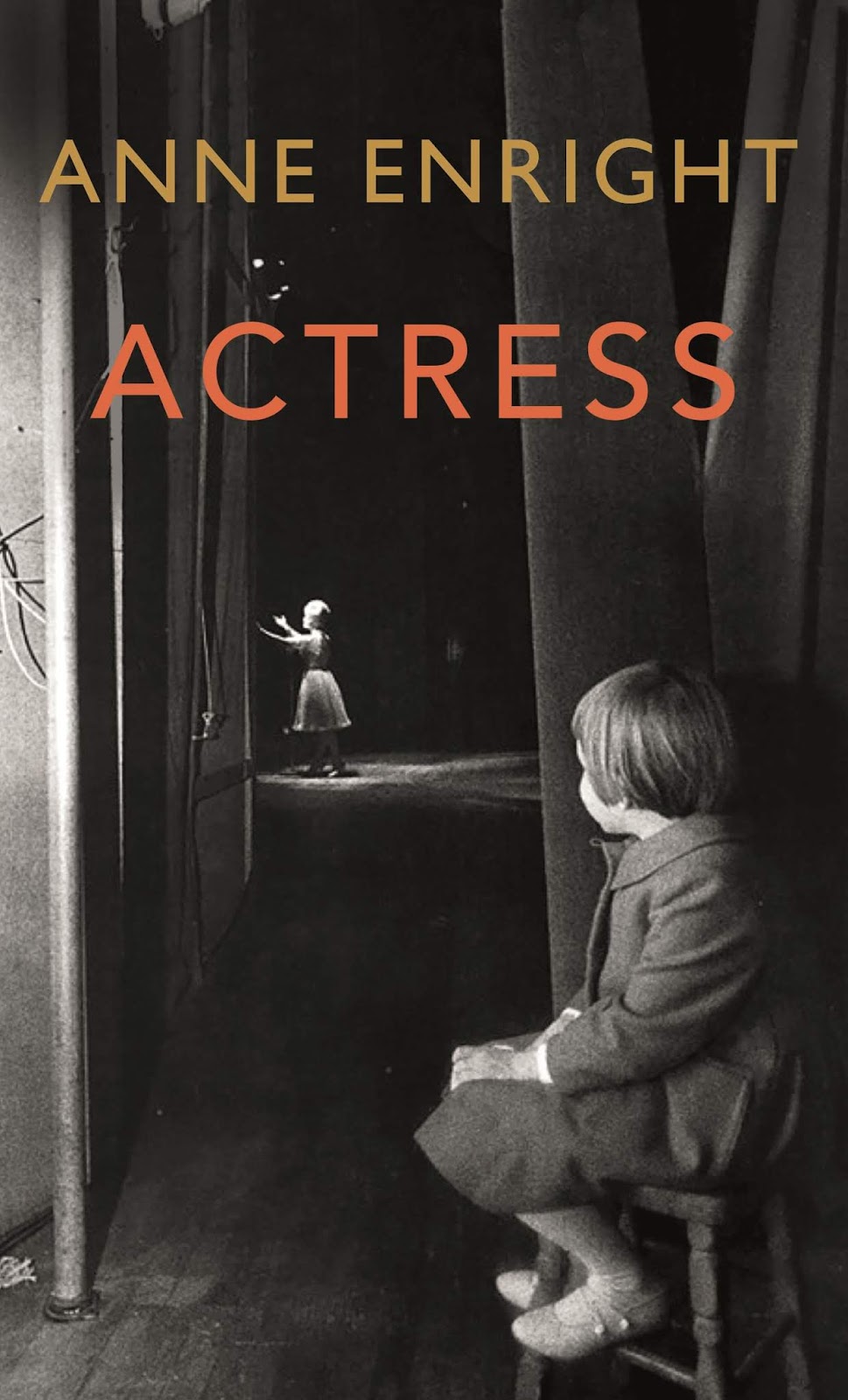
Actress | Anne Enright #Begorrathon


I have to ask straight up - who is Norah's father? Could you work it out? I wasn't sure. There didn't seem to be any repercussions or exposition after the reveal. Was it all about the #metoo element? But since you kind of figure that out for yourself very early on, it wasn't so much a shock revelation, but a quieter 'I thought so' moment. I'm confused.

Anyway, let's put that all that aside for now and talk about the lovely, lovely writing in Anne Enright's Actress. I loved her descriptions of Norah and her mother, the famous Katherine Odell, her observations of daily life and her empathy for the thinking of a 21 yr old.

  • We had the same way of blinking, slow and fond, as though thinking of something beautiful.
  • I think I mentioned that my mother was a star. Not just on screen or on the stage, but at the breakfast table also, my mother Katherine O’Dell was a star.
  • The boiling eggs chittering against each other and along the metal bottom of the pan.
  • My life felt like an imitation, and I was terrified it might become the real thing.

Actress was an fascinating story but there were many times when it felt rather like trying to drive a car and forgetting to put it into gear. The engine was revving sweetly, but we were going nowhere! Which is maybe why I felt the father revelation late in the story was more of a frustration than anything else. I was waiting patiently for a burst of speed that never happened.

I enjoyed my time in Enright's hands, but it's not the best example of her work.

#Begorrathon2020 #ReadingIrelandMonth2020

Epigraph:

  • 'the more I applauded, the better, it seemed to me, did Berma act.' In Search of Lost Time


Enright Reviews:

Thursday, 22 March 2018

The Green Road by Anne Enright

I finally got around to reading The Green Road thanks to Cathy's #ReadIreland Month. It has been sitting on my TBR pile since 2016.

Over my years of blogging, I've come to realise that writing a rave review about a book I really enjoyed, if not loved and adored, is actually harder to do, than writing about those books that are fine reads but didn't quite reach the heights of ecstasy or move me into speechlessness.


The Green Road was such a wonderful, engaging, poignant read after a bout of books that were fine stories mostly which had failed to move me or delight me. I wonder if it was a coincidence that this bout of books were all written by men? By the end of the Winton, I felt an overwhelming sense of desperation to read a book written by a woman. Either way, I'm left feeling rather bemused about how to write an adequate response that does this glorious book justice.

The story of the Madigan family is a slight story in someway. There is no major crisis or earth shattering family secret. The Madigan's are just a regular family with the usual (in Irish terms) problems, misconceptions and issues.

We start with a series of stories seen from the perspective of each of the four children, Constance, Dan, Emmet and Hanna. We see the fall out of Dan choosing to leave home (for the priesthood, which causes his mother to take to her bed for a week!) via the baby sister's eyes. Ten years later we see him again in New York - a failed priest still coming to terms with his sexuality. The other brother makes his way to Africa as a UNICEF field worker whilst the eldest daughter has stayed in Ireland, married well, had a clutch of children and is battling with her weight. We cycle back to see Hanna, now all grown up, not quite making it as an actor, with a baby of her own and an alcohol problem.

Each of these chapters could almost be a story in their own right. Enright has the ability to weave a sense of place into each chapter so thoroughly, that shifting onto the next one is a little jarring at the start. Ardeevin, County Clare is vividly drawn, as too is AIDS ravaged New York and the hardships of Segou, Mali. Each sibling has attempted to find their own place in the world, their own sense of purpose, all the while their mother's voice and their childhood angst rings in their ears.

Their tale is the usual family tale of coming to terms with the image of your mother as you experienced her as a child, against the mother you wished she had been with the woman she really is. Rosaleen is annoying, at times manipulative and perhaps not quite grown up and at peace with her childhood. In other words, she's a regular woman trying to deal (or not) with her own issues as she brings up a family.

Enright writes with compassion, humour and insight. Like real life, nothing is wrapped up in a tidy bow, for the simple reason that the story goes on. One way or another, we always go on.

The second half of the book centres around Christmas 2005, when all the siblings come home together for the first time in a very long time. The catalyst? Their mother has just declared she is ready to sell the family home. And the Green Road of the title? It's a local road that leads through the fields of County Clare to the beach,

Fanore, Burren, County Clare

This road turned into the green road that went across the Burren, high above the beach at Fanore, and this was the most beautiful road in the world, bar none, her granny said -famed in song and story - the rocks gathering briefly into walls before lapsing back into field, the little stony pastures whose flowers were sweet and rare.

The Green Road was shortlisted for the 2016 Baileys Women's Prize for Fiction, longlisted for the 2015 Man Booker Prize and shortlisted for the 2017 International Dublin Literary Award and the Costa Book Award.
Enright won the Kerry Group Irish Fiction Award for 2016.
#ReadIreland18
#Begorrathon18

Monday, 12 March 2018

Midwinter Break by Bernard MacLaverty

I picked Midwinter Break from my TBR pile to read for Cathy @746Books #ReadIreland18 month. It is a staff pick at work thanks to one of my colleagues, so I was looking forward to it. But I failed to engage.


There was lots to like about the story. I enjoyed the time that Stella and Gerry had wandering around Amsterdam. I enjoyed their cute couple moments - the kiss in the lift, the little in-jokes and intimacies that can only occur over time and with love. It was sad seeing this obvious once-love being destroyed by Gerry's alcoholism.

He wasn't an abusive, violent drunk. There was no need to be scared of Gerry or to fear him. He was a bumbling, deceptive, in-denial drunk. He was sloppy and mocking and selfish.

It was interesting to see how the major event in their marriage - Stella being shot whilst pregnant - was a turning point for all of them, in such different ways. After she had recovered, and the baby survived as well, they made the decision together to leave Ireland for the safer option of Scotland. However, at the time of the shooting, Stella vowed and said a prayer,
Spare the child in my womb and I will devote the rest of my life to YOU.

She viewed the survival of her son as a miracle that had to be atoned - a spiritual debt that had to be repaid - by good deeds, to improve the world through kindness and justice and equality.

Gerry simply saw Stella's survival and the birth of Michael as the miracle,
To him her presence was as important as the world. And the stars around it. If she was an instance of the goodness in this world then passing through by her side was miracle enough.

The tragedy being that he was just pissing all that goodness away.

Normally I don't mind jumps between various times and events, but it felt clumsy here. I kept losing my way. And the very worse thing that can happen to me when reading a book happened at the half way mark - I realised I was bored.

I skimmed through the last half hoping for my very own bookish miracle, but it failed to recapture my imagination.

Sad, but true.

#begorrathon18
#ReadIreland18

Friday, 9 March 2018

The Shepherd's Hut By Tim Winton

The Shepherd's Hut is Tim Winton's much anticipated latest novel. I am a fan, but with reservations. I loved Cloudstreet and Dirt Music but hated The Riders (it has the dubious honour of being one of my very first DNF books). Breath was good but a bit blokey and Eyrie was okay, but a bit blokey. I adore his children's picture book illustrated by Karen Louise called The Deep. And his essays in The Boy Behind the Curtain were truly luminous.

So I entered The Shepherd's Hut cautiously.


The first 20 or so pages were a struggle for me. I know that there are awful dad's out there, I know what they can do. I used to be a teacher, I've assisted some of those families in negotiating the quagmire of domestic violence over the years. But I don't feel the need to read about such sad, brutal things.

So I struggled with the first part of the story where we experienced Jaxie's dysfunctional relationship with his father. I thought, I can't do this.

Later that night, I tried again.

Without spoiling anything for anyone, Jaxie was on the run and suddenly we had a full-on road trip/survival story underway. Unusually for Winton, there wasn't a beach in sight, as Jaxie headed inland to the scrubby, salty desert areas of WA.

Some readers might find Jaxie's vernacular hard going. It annoyed me at the start, but I think I'm at an age when teenager-speak is annoying in whatever form it takes! But once Jaxie hit the road, the voice became more considered and thoughtful, and was perhaps meant to reflect the influence that Fintan had on him. If you disliked Huck Finn or Lincoln in the Bardo because of the local dialect, then steer clear of this one too. The swearing may also put off some readers.

Fintan was the ageing priest that Jaxie stumbled upon in the bush. We don't know why he's living a life of exile, but there were obviously some issues around the priesthood and the Catholic Church that Winton was exploring here. I'm still not sure what they were.

The same goes for Winton's well-known concern about toxic masculinity. He discusses it in detail, but what is the solution?

Because it's also #ReadIreland month over at Cathy's blog, I thought I would highlight the Irish character in Winton's story. Fintan, the priest is described by Jaxie like this,
I never did know what to make of Fintan MacGillis....He was Irish, he told me that straight up. But I never found out what it was he done to get himself put there by the lake, what kind of person he was before....He was one of them geezers been out on his own so long he talks to himself all day....You had to sort through all these bent up words to figure which was bullshit and which was true. What I mean is he made a lot of noise but sometimes he didn't say much. With that accent of his and the way he said things fancy and musical, it was like camouflage and you knew deep down he'd been doing this all his life, hiding in clear sight.

The Shepherd's Hut is not an easy read, but, in the end I found it to be a worthwhile encounter.
It's not quite a coming of age story because the becoming part was still to happen and it's not quite a road trip story as Jaxie's journey was nowhere near done. It was more like a vignette, a moment in time, a snapshot in time.

I'm not sure I learnt anything new or gained any insights into domestic violence, the lost and lonely or survival, but I can see an action-packed, fast-paced, gritty movie on the horizon!

Eyrie by Tim Winton
Dirt Music by Tim Winton
The Boy Behind the Curtain by Tim Winton
The Deep by Tim Winton

Facts:
  • Longlisted for the 2020 International Dublin Literary Award.

Thursday, 1 March 2018

Stories & Shout-Outs #15

Happy St David's Day! Dydd Gŵyl Dewi!


The 1st of March is the National Day of Wales.
You may be wondering why someone in Sydney would care about such things?
My name is the first give away - Bronwyn (although my variation is a masculine Anglicized take on the traditional Welsh spelling of Bronwen).
My mother's ancestors are the next clue. 
My grandmother's maiden name was Llewellyn, although less salubriously, it was her grandfather who first came to Australia...as a convict (he stole a copper pot).
My Pop had closer Welsh ties.
His dad immigrated to Australia (from Llantrissant via the California goldfields) in the late 1800's.
We are still in touch with the children and grandchildren of his siblings back in Wales.

But all of that is but a distraction from my purpose today.

My purpose today is to get back on blogging track.

I had hoped that life would be a little calmer this year, but so far, the first two months of 2018 have been so crazy busy, my head is threatening to spin right off!
I've always said that I would rather be busy than bored, but I little more downtime wouldn't go astray.

Reading time is okay, but blogging time has taken a real hit.

The #LesMisReadalong is a constant joy.
A chapter a day #slowreading is perfect for me right now, my ability to join in group chats and tweets waxes & wanes though.

With that in mind, I'm proud to announce my upcoming participation in two more reading events.


The 1st of March is not only St David's Day and the first day of autumn (by the calendar) in the Southern Hemisphere, it is also the beginning of #ReadIreland month.
Hosted by Cathy @746books and Niall @Raging Fluff, the idea is to read books by Irish authors.

I posted a survey on twitter asking which one of my Irish writers I should read this month...and the winner was Bernard MacLaverty's Midwinter Break.


#readireland18 
#begorrathon18

I also have a tome of William Trevor's short stories that I might be tempted to dip into again.
If I have time, I may even squeeze in The Green Road by Anne Enright.

April sees the return of one of my all time favourite readalongs -

I love Austen in August, but my love affair with JA began long, long before blogging and readalongs.
Whereas my love affair with Zola began thanks to Fanda's Zoladdiction month.
I am now trying to read the Rougon-Macquart books in order.
In the end the decision was made easy for me.
Chronologically, book 2 is La Curee or The Kill. I have a copy of this on my TBR pile.
Book 2 for Zola was Son Excellence Eugène Rougon. A book I have yet to source.


Which brings me nicely to the (ongoing) discussion over at The Classics Club about what actually makes a classic. Lots of stimulating thoughts about the nature of time and generational relevance, forgotten classics, who decides what is a classic in the first place, the role of women and translated works...just to summarise quickly. 
I can feel another response percolating away (I wrote a post about this a number of years ago).
Now I just have to find the time to write it!

Will you be joining me/us in any of these challenges?
Or have you found something else to pique your interest right now?