Showing posts with label WCLC. Show all posts

Thursday, 24 January 2019

Eden's Outcasts by John Matteson

Eden's Outcasts: The Story of Louisa May Alcott and Her Father won the 2008 Pulitzer Prize for Biography or Autobiography. I started reading it in 2016. I thoroughly enjoyed the early part - Matteson wrote a very thorough and in-depth look at Louisa's childhood. But the font was small and things began to get difficult thanks to Bronson Alcott.


By half way through I had begun to actively dislike him. The family's time at Fruitland's was a turning point for me. Bronson's selfish, grandiose, madcap ideas had HUGE impacts on the rest of his family, who had no choice but to follow along.

My anger at his irresponsible actions, was unreasonable, I grant you, at this distance of two hundred years, but it was there, irrational or otherwise, and enough to stop me reading. For two years! Until the latest CC Spin spun me this book.

After such a long break, the story felt rather stale and I resisted picking it up again, until January. What to do next?
Start again? or pick up where I left off?

I tried picking up where I left off, but found myself a little confused. So I sat down with the first half of the book and all my underlining, to make some notes. I skimmed through and added jot points to this post to help me remember some of the important or interesting to me events.

At this point, I also realised that writing a review for this book was not going to just be about my journey with the book. If after only two years, I had forgotten most of what I had read earlier, then this post was going to have to be a place where I could keep my notes for future reference.

I already knew that this book was not going to be a keeper. I will not be rereading it at any point going forward. It will be passed on to others as soon as this post is finished. But the next time I reread Little Women, I may want to refer to some of the facts and thoughts presented in this bio.

For instance, both Louisa and her father, shared the same birthday, November 29 - 33 years apart and they died in the same year, 1888, not quite two days apart.

For Bronson,
  • 'Life was a persistent but failed quest for perfection'.
  • 'He believed that people had been given their weaknesses in order that they might triumph over them'.
  • reform & redemption
  • puritan 'nature was my parent'
  • meager schooling - borrowed his cousins copy of The Pilgrim's Progress to commit 'favourite portions to memory
  • "dear, delightful book"
  • 'only the spirit that truly mattered'
  • 'Bunyan's allegory was pivotally responsible for shaping Bronson's ideas of right conduct.'
  • 'organised religion failed to bind him to its forms and dogmas'
  • 'He never accepted the idea of Jesus as the Son of God' - he was a "superb specimen of humanity".'
  • didn't pray
  • thought that 'writings of Confucius, the Bhagavad Gita, and other Eastern texts should be combined with the New Testament to create an ecumenical "Bible for Mankind".'
  • asceticism
  • believed in his own genius 'the faith that he was both right and righteous became essential to Bronson'
  • aversion to cruelty 
  • only used corporal punishment as a 'regretted last resort'
  • 'governed his students not by threats but by conversation, appealing to their feelings and sense of justice'
  • believed that children 'possessed a collection of faculties that developed at different rates over time'
  • Socratic dialogue was the 'chief avenue to the mind and soul of the child'
  • influences - William Russell, Samuel Taylor Coleridge, Plato - emphasising 'spirit of body'
  • 'wholly immersed in the spiritual growth of his daughters'
  • never understood the value of humour
  • transcendentalist - Peabody, Emerson, Hedge, Thoreau
  • 'he read not to absorb new ideas but to be confirmed in what he already knew'
  • 'he had no ability whatever to set aside his own personality and enter into the lives and situations of others'
  • 'could barely tolerate dissent of any kind'
  • refused work that 'offended his moral principles'
  • believed that 'Providence would rescue him'
  • Fruitlands 'everyone agreed on the natural beauty of the farm. The improvements were another matter'.
  • 'all should live according to the dictates of their own spirit' unfortunately everyone at Fruitands 'had a particular view of truth and righteousness.'
  • 'The world had no good yardstick for measuring Bronson Alcott. His inspirations seemed saintly to some and deluded to others.'
  • Hillside home became a station on the Underground Railroad
  • affected by strange 'hallucinatory thoughts'
  • 'Like many grandparents, he was evidently more at ease with his grandchild than he had been with his own offspring.'
  • several speaking tours of the Midwest where he found '"the true American spirit.'"
  • Tablets (1868) 'he reflected not on what adults might consciously do for children, but rather on what children unconsciously do for us.'
  • 1879 collaborates to create a philosophical college in Concord offering a summer course of lectures.
  • 1882 suffers a massive stroke.

The Alcott family and Orchard House around 1865 (Louisa May Alcott Memorial Association)

Louisa
  • middle daughter
  • defiant
  • energetic
  • resistant to discipline
  • first surviving journal dates from the Fruitlands period
  • Hillside first time she had a bedroom of her own.
  • 'However much Emerson meant to Bronson during this time, he meant still more to Louisa, who found in him both a literary idol and a sympathetic ear.'
  • 'These Hillside years correspond to the adolescence celebrated and fictionalised in Little Women'
  • "Money is never plentiful in a philosopher's house, and even the maternal pelican could not supply all our wants on the small income which was freely shared with every needy soul who asked for help"
  • family held together by shared narrative 'the tales they shared of their daily lives formed a bridge of sympathy and shared effort'.
  • wrote The Inheritance - 'one can be both loyal to family and virtue and defy one's parents' wishes at the same time.'
  • all her fiction is a 'plea for understanding the difficult process by which both characters and author must work out the ambiguities of personality and right behaviour'.
  • 'Instead of looking for an alternative to her father, she apparently craved a better version of him'.
  • Lizzie's death and Anna's betrothal affected her deeply. She believed that the soul of Lizzie was 'powerfully with her' and these trials brought her closer to the "Almighty Friend".
  • 'the search for artistic excellence also involved a chaotic descent' like a whirlpool
  • 1861-62 at the home of James Fields met - Longfellow, Fanny Kemble, Olive Wendell Holmes Sr & Harriett Beecher Stowe
  • 1862 became an army nurse until she contracted typhoid pneumonia.
  • Dr's gave her mercurous chloride (now known to be highly toxic and poisonous) to treat her illness which meant 'the last 25 years of her life were the history of glacially slow mortal illness'.
  • Hospital Sketches (1863) 'popular beyond Louisa's highest expectations'.
  • 1865 travelled to Europe as a travelling companion for the infirmed daughter of William Fletcher Weld.
  • possible love affair with Ladislas Wisniewski in Italy (& one of the inspiratioons for Laurie in Little Women).
  • Little Women (1868) 'put a permanent end to the real Alcott family's days of chronic want. Flush with royalty cheques, Louisa paid all the family's debts, and, to her astonished delight, had money left over to invest.'
  • 1879 Louisa and May sail to Europe with a friend. Anna's husband, John Pratt died suddenly whilst they were gone.
  • 'After she heard this news...,her writing took on a new purpose: both the spirit and the proceeds from this new novel must belong to the two "little men" who had been left without a father'.
  • 1877 Abba dies.
  • 1878 May marries in London but dies the following year due to complications after child birth - her dying wish was for Louisa to raise her daughter, Lulu.
  • Louisa sells Orchard House after Bronson's stroke, so they could move to a warmer cottage in Nonquitt, Massachusetts.
  • Jo's Boys published 1886 'its elaboration of Louisa's ideas on women's rights' and 'to be useful is to be blessed'.
  • 1887 LM became a patient of Dr Lawrence's convalescent home in Roxbury.
  • "At 55 one doesn't hope for much."
  • 1st March 1888 visited Bronson, "I am going up. Come with me" LM: "I wish I could." He died three days later. The same morning, before news of her father's death could reach her, LM began to feel feverish and slipped into a coma.
  • LM died 'barely forty hours after Bronson's death' 6th March 1888, the day of Bronson's burial.
  • 8th March LM buried.
  • LM adopted Anna's younger son, John before her death so that he could inherit her copyrights 'these he held as a trustee, dividing the income with Lulu, his brother Fred, and his mother.'

pg 307 
It has been suggested that the unyielding asceticism of Louisa's parents was a harmful force in her personal development. However, it may be argued with equal good faith that the staunchness with which they encouraged her to confront her inner failings was precisely what kept her sane.

I'm glad I pushed through my early dislike for Bronson. He never really outgrew his selfish, thoughtless ways, but there can be no doubt about the love he had for his family and the genuine affection and connection that existed between Bronson and Louisa.

Our families influence us, for good and bad, our entire lives. Our childhood experiences shape the adults we become. Matteson's biography explores this idea very thoroughly, with oodles of historical detail and recourse to primary sources. As he states at the end, it is impossible for those of us coming after, to know the everyday, unrecorded moments that make up any relationship.

pg 428
The life written is never the same as the life lived. Journals and letters tell much....But the bonds that two persons share consist also of encouraging words, a reassuring hand on a tired shoulder, fleeting smiles, and soon-forgotten quarrels. These contacts, so indispensable to existence, leave no durable trace


However, his award winning biography does a magnificent job of showing us everything else.

Susan Bailey has a most impressive blog all about Louisa called Louisa May Alcott is my Passion.

My Little Women review
My Good Wives review
My Little Men review
My Jo's Boys review

Thursday, 6 December 2018

Romantic Outlaws by Charlotte Gordon

I knew next to nothing about the mother/daughter Mary Wollstonecraft/Shelley pair until reading Romantic Outlaws: The Extraordinary Lives of Mary Wollstonecraft and Mary Shelley. I had started reading Frankenstein for the very first time as a #CCdare when the Preface alerted me to the fact that there had been an ongoing controversy about who wrote Frankenstein. I remembered that I had this bio lurking non my TBR pile and it seemed like exactly the right time to dive in.


Gordon is clearly of the view that Mary Shelley wrote Frankenstein with input certainly from her husband.

Mary's role in shaping Shelley's revolutionary theories is rarely acknowledged. Rather, critical debate has centred on Shelley's influence on Mary. In part, this is Mary's own doing. In her version of events, Shelley was the great man and she the diminutive follower. But her representation of their relationship has more to do with her own complexities than with the actual partnership they formed.

It is these very complexities that Gordon goes on to explore in this dual biography of the two Mary's.

She has written a very readable and engaging account of both their lives. Told in alternating chapters to highlight their parallel lives, I occasionally got a little mixed up with which Mary I was reading about and what time frame I was in. This was mostly due to so many of the cast having the same names or suddenly changing their name.

I was fascinated to learn that Mary W was in Paris during the trial and execution of Louis XVI. I'd love to source a copy of her An Historical and Moral View of the French Revolution; and the Effect It Has produced in Europe, 1794 one day.

Both women (as well as most of their family and friends) suffered the indiscriminate and sudden loss of children due to illness but also by law and circumstances. These were hard, hard times to raise a family and to enjoy good mental health. People died easily and suddenly at any age. Men and women suffered these losses at all levels of society. It was harsh and relentless. But for any woman who  desired to be independent or different, or who was forced by circumstances to be independent or different, life was tougher still.

The roles of men and women were very clearly defined and monitored during this time. If you stepped outside these cultural norms then you had to expect to be censured and ostracised. Both Mary's desired independence and a creative life but life circumstances also forced them down this path. Ghastly combinations of poverty, abuse, death of parent/s and illness dogged both their young lives. Yet, as noted in my recent review of White Houses, why is it that some people with horrific childhoods, succumb to its sordidness, always the victim, yet others find a resilience and sense of agency to remake their adult selves?

The Mary's struggled not to be victims and a lack of understanding about depression tortured both of them at various times. Yet they used this pain to embrace creativity while they used education and intelligence to give their lives purpose and meaning.

That the mind can create actual 'beings' and that 'feelings' can 'produce ideas'; that inspiration comes from inside the self, not outside, from emotions, not logic; that the wanderer can see truths in Nature that the city dweller misses; that in solitary contemplation the artist combines emotion and thought, recollection and observation, to create a new universe, new creatures, a new vision for humankind - these are the principal tenets of Romanticism.

The appalling way the men in their lives treated not only the women and children, but also each other was astounding. Such selfish, thoughtless and cruel behaviour made me grateful to be living in a more enlightened, emotionally aware world. The irony being that both Mary's thought that they were living through more enlightened times.

I wonder how our lives will be judged by future generations (assuming there will even be a world for future generations to live in)?

It was a hard world and hard times and the fact that these women achieved success despite or because of the adversity they faced is an incredible story.

It is a sobering tale, the rise and fall of both Marys, since it so clearly points to how difficult it is to know the past and how mutable the historical record can be. For almost two hundred years, Wollstonecraft was written off, first as a whore and then as a hysteric, an irrational female hardly worth reading....Mary Shelley, on the other hand, would be condemned for compromising the revolutionary values of her genius husband and her pioneering mother. Viewed as a woman who cared more about her place in society than about political ideas or artistic integrity, she was discounted as an intellectual lightweight....
At the end of her life, Mary Shelley could never have suspected that she and her mother would be treated so differently by history....
To be themselves. The hurdles, the critics, the enemies, the insults, the ostracism, the betrayals, the neglect, even the heartbreaks - none of this had stopped them

Since it was my reading of Frankenstein that prompted me to pick up this book in the first place, I thought it would be fitting to finish with Gordon's summary of Mary's story.

Mary's three-pronged narrative, her Russian doll technique of nesting one story inside another, provides the reader with three different versions of the same set of events....Careful not to weight the story in favour of either the creator or the created, Mary conjured a sense of moral suspension in which the conventional questions -- Who's the hero? Who's the villain? Who's right? Who's wrong? -- no longer applied....Monsters, says Mary, are of our own making....
Like Mary, the creature has only a father, and his father fails him, leading the creature to seek murderous revenge. In a world without mothers, she suggests, havoc reigns and evil triumphs. 
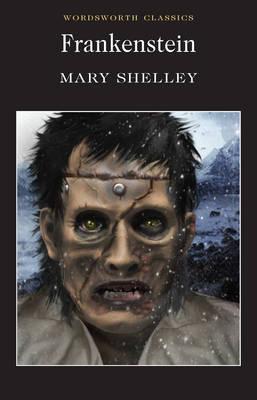
Frankenstein by Mary Shelley

Friday, 26 October 2018

Frankenstein by Mary Shelley

Reading Frankenstein for the first time was a curious thing. We all think we know the story. At least, I thought I did. I was expecting a slock-horror story full of scary, lurking, creeping monster moments with lots of people screaming and fleeing his terrible claws. I didn't get this.


I also hadn't appreciated that it would be an example of Romantic era thinking. I'm not a huge fan of romanticism, described by wikipedia as,
an artistic, literary, musical and intellectual movement that originated in Europe toward the end of the 18th century, and in most areas was at its peak in the approximate period from 1800 to 1850. Romanticism was characterized by its emphasis on emotion and individualism as well as glorification of all the past and nature, preferring the medieval rather than the classical. It was partly a reaction to the Industrial Revolution, Rationalism and Classicism of the Enlightenment

I'm all for exploring character emotion and psychology, but I often feel that Romantic writers are out of touch with own their times and their story often suffers for it's lack of reality. Frankenstein was certainly a curious and unexpected mix of nostalgia, scientific advancement, individualism and gothic melodrama.

I didn't expect that the monster would learn to talk in the same cultured tones as the narrator. I didn't expect all the murder scenes to be off-page. I didn't expect that Dr Frankenstein would be so self-absorbed and so unaware and so thoughtless. His utter lack of responsibility or understanding about his role in the monsters maturation, right to the very end, was astounding.

Shelley obviously had a lot to say about absent parents in this story. I'm finding the bio on both her and her mother by Charlotte Gordon fascinating and revealing...thoughts and review to come later though.

Like Shelley, the monster just wanted to be loved and to belong. Dr Frankenstein and the wider society denied him that opportunity. His reaction can, therefore, be seen as a normal response to such an all-encompassing rejection. Except that these actions then meant that he would forever be on the outside of the regular society he desired to be in. Just like Shelley herself, perhaps?

Dr Frankenstein meddled with science without thinking through the consequences. He was after personal glory rather than thinking about the betterment of society as a whole. The individualism admired by the Romantics has negative consequences when viewed through the prism of the larger community. One man's selfish actions can have ongoing and tragic effects on the people around him.

Dr Frankenstein and his monster were two tragic cases of misunderstanding, miscommunication and lack of personal responsibility. The reader is given more than enough detail to understand how both got to the point that they got to, but you're also left with a sense of frustration by their inability to walk in the others shoes. They might follow and track each other all around Europe, but it's a physical journey not a journey of discovery or enlightenment.

I did enjoy my #Frankenfest reading experience, but it wasn't what I expected. It felt quite juvenile and self-indulgent and certainly not the horror story I was anticipating. I'm now more inclined to agree with Gremaine Greer's opinion that I noted in my Preface post (link below). Frankenstein is not a great novel, but it was a fun October read for the Classics Club #ccdare.

As noted in previous posts, I'm noticing lots of bookish references to grief and loss, that reflects my own personal journey right now. Frankenstein revealed this,
'but is it not the duty of survivors, that we refrain from augmenting their unhappiness by an appearance of immoderate grief? It is also a duty owed to yourself; for excessive sorrow prevents improvement or enjoyment, or even the discharge of daily usefulness, without which no man is fit for society.'

Monday, 8 October 2018

Frankenstein by Mary Shelley - The Preface

Who knew that when I decided to join in Marg @Books in Bloom's #Frankenfest as my #CCdare choice for October, that I would be opening up a can of worms simply by reading the Preface!

I'm reading the 1999 Wordsworth Classics edition that includes the original 1817 Preface by Percy Bysshe Shelley as well as the 1831 Author Introduction by Mary Shelley (it also have an Introduction by Dr Siv Jansson that I will save for the end to avoid spoilers). The book was originally published on the 1st January 1818.


This is my first time with Frankenstein or The Modern Prometheus. I have never read or seen any movie versions of the story. I have a vague notion of the story - the creation of a man-made creature by a mad doctor that runs amok - is the best synopsis I can provide at this point. And most of that comes from my knowledge of The Rocky Horror Picture Show - the modern, sexualised spin-off.

I was therefore blissfully unaware of the controversy that has surrounded the novel since its publication about who actually wrote the book. How did I not know about this?

How did this controversy even happen?

Actually I know exactly how it happened.
It's the same thing that successful, intelligent, creative women have had to struggle against, in what feels like forever. It's why women published book anonymously or under a male pseudonym. It's why women like Mary Shelley got slut-shamed and lived a life of isolation for daring to run off and have babies with a married man, while the man gets high-fived for being such a smooth dude.

From Mary's Author Introduction in the 1831 edition we learn that -
  • Mary was born to two 'distinguished literary celebrity' parents, William Godwin and Mary Wollstonecraft. She grew up in a literary, philosophical, modern thinking world where women (her mother, anyway) could write and be published (under her own name).
  • She 'scribbled' and wrote stories throughout her childhood.
  • She spent most of her childhood in Scotland (where part of the book is set).
  • Shelley, Lord Byron and Mary discussed the latest scientific thinking, shared stories and ideas.
  • She and Shelley edited and assisted each other with their creative efforts.
  • Frankenstein was born from a ghost story telling session in Switzerland with Shelley, Byron and others. 'I busied myself to think of a story - a story to rival those which had excited us to this task. One which would speak to the mysterious fears of our nature, and awaken thrilling horror - one to make the reader dread to look round, to curdle the blood and quicken the beatings of the heart.'
  • Mary has a believable and fairly common tale of the origin of the idea for her book 'My imagination, unbidden, possessed and guided me, gifting the successive images that arose in my mind with a vividness far beyond the usual bounds of reverie.'
  • 'At first I thought but a few pages - of a short tale; but Shelley urged me to develop the idea to greater length. I certainly did not owe the suggestion of one incident, nor scarcely of one train of feeling, to my husband, and yet but for his incitement, it would never have taken the form in which it is presented to the world.'


The 1817 Preface by P.B.S was written as if he were the author, although he provided none of the origin details that Mary did in her introduction.

In a letter to Walter Scott from 2nd January 1818 P.B.S. wrote about the book he had enclosed for Scott to review by saying -

My own share in them consists simply in having superintended them through the press during the Author’s absence.

Yet Scott still attributed Frankenstein to Percy. A letter from Mary to Scott on the 14th June 1818 tried to rectify the mistake -

I am anxious to prevent your continuing in the mistake of supposing Mr Shelley guilty of a juvenile attempt of mine; to which – from its being at an early age, I abstained from putting my name – and from respect to those persons from whom I bear it.

Over the years people have scoured letters and hand writing samples to try and prove one way or the other who wrote Frankenstein or how much input P.B.S may have had in the creative process. Curiously I didn't find very many articles on how much input Mary may have had on Percy's creative process except to acknowledge her posthumous role as editor of his poems.

Since this time we have had a gay rights activist claim that it had to be P.B.S who wrote the book because it was actually all about homosexuality. This claim was then counteracted by Germaine Greer in one of her fairly typical back-handed ways by saying it had to be written by a woman because it was so bad!

Frankenstein is a masterpiece; masterpieces are not written by self-educated girls and therefore Frankenstein cannot have been written by Mary Shelley. If Frankenstein is not a masterpiece, the thesis collapses. Though millions of people educated in the US have been made to study and write essays about Frankenstein, it is not a good, let alone a great novel and hardly merits the attention it has been given, notwithstanding the historic fact that its theme has inspired more than 50 (mostly bad) films. 
The Guardian 9th April 2007

This has only whetted my appetite for Frankenstein, Mary Shelley and the rest of her work. And I think it's also time that I jump into the bio about Mary and her mother, that has been skulking on my TBR pile for ages, Romantic Outlaws: The Extraordinary Lives of Mary Wollstonecraft and Mary Shelley by Charlotte Gordon.


A list of the various texts discussing the authorship issue are:
  • James Rieger, “Introduction.” Frankenstein; or The Modern Prometheus. Bobbs-Merrill, 1974.
  • Anne Mellor, Mary Shelley: Her Life, Her Fiction, Her Monsters. Methuen, 1988.
  • Marie Hélène Huet, Monstrous Imagination. Cambridge, 1993.
  • John Lauritsen, The Man Who Wrote Frankenstein. Pagan Press, (2007).
#Frankenfest

Friday, 9 February 2018

Flight From the Enchanter by Iris Murdoch

Flight From the Enchanter by Iris Murdoch was her second book published in 1956. However, there is evidence that it was the first book she actually penned, according to Patricia Duncker, who wrote the Introduction in my edition.


Either way, Flight From the Enchanter is an assured piece of of writing by an emerging writer. But what does it all mean?

I found myself asking the same question when I finished Under the Net last month. It would seem that Murdoch preferred to write set pieces loosely linked together with apparent randomness and bizarre coincidences. These set pieces were often gorgeous pieces of writing. I will never forget Annette swinging from the chandelier as she leaves formal education to embark on the School of Life! Or, Annette again making an international call 'opening out telescopically, section after section.'

What did Annette actually learn though? Let alone any of the other characters.

Annette learnt about the lure of fascination and sexual politics when they made an appearance in her syllabus. But the lesson learnt, or the answer to the muddle, seemed to be found in running back to mummy and daddy.

Rosa allowed herself to become enmeshed in a sexual power play and a weird kind of cold war comic menace with the Polish brothers, Jan and Stefan.

John got caught up in office politics and an early wave of feminist action. He had no idea whatsoever how to act around women of any age.  The only reason someone as inept and as pathetic as he was had 'achieved' as much as he had was thanks to the old boys club mentality.

Peter suffered from translator blues. He worried about individual words and meanings and headed off on tangents. He was another ineffectual man bumbling along looking for a saviour.

Nina was an outsider open to manipulation and to being forgotten.

Mischa seemed to be the power base or the saviour that everyone else gravitated towards. He was mysterious and romantic with his Continental connections and obscene wealth.

But I think that Calvin was the real power behind the throne. He manipulated everyone, including Mischa. The real menace emanated from his machinations. Was he being guided by Mischa? Probably, but I suspect he also took matters into his own hands, to get what he wanted. And he definitely didn't want Mischa and Rosa together again.

One thing all these rather odd characters all had in common was their inability to act responsibly and decisively. They drifted and wafted and let themselves be manipulated. All except, Calvin Blick.

What did we learn? What did all these characters learn?

I'm really not sure, but it was a fascinating journey anyway.

More reviews for FFTE can be found with Liz @Adventures in Reading.

Under the Net
#IMreadalong

Thursday, 11 January 2018

Under the Net by Iris Murdoch

Hmmmmm, Under the Net by Iris Murdoch...where do I start?


Perhaps I should start with my expectations.

I expected an English-style comedy of errors featuring a bumbling, gentleman layabout.

I'm reading the Random Vintage classic version, so the back cover tells me that,

Jake, clever and lazy, makes a living out of writing translations and sponging off his friends. When he is kicked out of his latest lodgings he embarks on a series of fantastic and hilarious adventures around London involving movie stars, majestic philosophers, bookies, singers and a celebrity hound called the Marvelous Mister Mars.

In my mind I pictured Mr Bean, racing madcap around London, bouncing from one person, idea and purpose to the next. Or perhaps purposelessness would be a better term for what Mr Bean does and what I expected from Jake. I fully expected to see a Christmas turkey on Jake's head at some point!

Jake is a particularly English character. He tied himself up in knots of anxiety about his friendships and possible betrayals and all the social niceties that keep the (English) world ticking over. It was exhausting watching him move from one chaotic experience to the next without pause or reflection. Until he had time to pause, then her reflected and reflected and reflected until you could barely recognise the initial problem any longer! And like Jake, you could barely recognise the real person he he was thinking about any longer. Do we ever get to really know the people around us? That's a good question and one that Jake grappled with constantly with little success.

I did struggle around the halfway point to keep going with this story. Jake was annoying me with his bumbling, madcap antics, in pretty much the same way Mr Bean annoys me by the end of an episode. It was getting too ridiculous and silly and pointless!

So I did something I don't normally do.
I read some reviews by other participants of the #IMReadalong and on Goodreads.
They convinced me to persist.

I found myself chuckling about the ridiculous escapade on the fire escape, that quickly led to the bizarre madcap (that word again!) kidnapping of Mister Mars and the eventual fall of Rome!

But what was the point of it all?

I kept on.

And I'm glad I did.

One must just blunder on. Truth lies in blundering on.

So we blunder on to the lovely, poignant passage in Paris with Jake chasing his dream of Anna and his work at the hospital back in London where Murdoch finally begins to draw all the loose strings together. The final meeting with Hugo that gives Jake (and us the reader) all sorts of ah-ha moments and understandings were worth the long wait.

What is urgent is not urgent forever but only ephemerally. 
All work and all love, the search for wealth and fame, the search for truth, life itself, are made up of moments which pass and become nothing.

Round Up post by Liz with links to other reviews.

It has taken me two weeks to read this book which gives Under the Net the dubious honour of being my first book finished and reviewed for 2018. But now I get to experience for myself, Jake's emotions as he began Jean Pierre's award winning book,

Starting a novel is opening a door on a misty landscape; you can still see very little but you can smell the earth and feel the wind blowing.

Thursday, 17 August 2017

Love and Freindship (sic) by Jane Austen

My Jane-ite credentials will hopefully be confirmed by my declaration that I have two copies of Love and Freindship (sic) on my bookshelf!

One is in my lovely cloth bound Penguin Classics (2014); the other is part of my treasured Folio Society Jane Austen boxed set from 2003. Between the two books, I believe I have the entire collection of Jane Austen's teenage writings plus the various half-finished works that she left behind when she died.


Love and Freindship is a juvenile story written by Jane Austen in 1790. She was only 14 yrs of age at the time (which may explain why she misspelt friend and friendship throughout the story)! It was supposedly written for the amusement of her family. According to Christine Alexander who wrote the Introduction in my Penguin Classics edition,
Literature was a shared activity in the Austen household; it was fun and enlightening.

I like to picture the Austen family sitting around the fire together, reading stories aloud to each other, trying to impress and make each other laugh with their cleverness and wit. I suspect Love and Freindship would have produced plenty of chuckles and quite a few guffaws.

Love and Freindship: Deceived in Freindship and Betrayed in Love is a laugh out loud parody of many of the romance novels in vogue at the time. It features elopements, exaggerated reversals of fortune, long-lost relatives, outlandish coincidences, pathetic deaths and lots of ill-timed faints!

Beware of fainting fits...Though at the time they may be refreshing and Agreeable, yet believe me they will, in the end, too often repeated and at improper seasons, prove destructive to your constitution... 
Beware of swoons, dear Laura.....A frenzy fit is not one quarter so pernicious; it is an exercise to the Body and if not too violent, is, I daresay, conducive to Health in its consequences - Run mad as often as you chuse, but do not faint - .


Laura is our hapless heroine. She is sentimental to the max and proud of it! Her friend Isabel, has asked Laura to give a detailed version of the 'Misfortunes and Adventures of your Life' to Isabel's daughter, Marianne, to satisfy her curiosity and to 'prove to her to be a useful Lesson.'

What follows is a series of hilarious, ridiculous letters full of the trials and tribulations of Laura's attempts at, well, love and friendship.

Unlike Lady Susan, who you end up feeling a grudging respect for, Laura is just too silly for words. Her naivety and shallowness are a danger to society and all those around her.

You may perhaps have been somewhat surprised my Dearest Marianne, that in the Distress I then endured, destitute of any Support, and unprovided with any Habitation, I should never once have remembered my Father and Mother or my paternal Cottage in the Vale of Uske. To account for this seeming forgetfullness I must inform you of a trifling Circumstance concerning them which I have as yet never mentioned - . The death of my Parents a few weeks after my Departure, is the circumstance I allude to.

We see in Love and Freindship that Jane Austen's views on sensibility and romance were formed at an early age. She was aware, as Alexander reminds us, of the 'false values and absurd conventions of sentimental fiction'.

Elinor Dashwood and Anne Eliot's rational, sensible approach to life and love is something that Jane clearly favoured all of her life. It's pleasing to be able to trace the more mature, sophisticated exploration of these ideas in Sense and Sensibility and Persuasion from this earlier, lighter story.

Love and Freindship is a high spirited, fun read and instructive, in more than ways than one!

#AusteninAugustRBR

Sunday, 13 August 2017

Lady Susan by Jane Austen

Lady Susan is an epistolary novel written around 1794 when Austen was in her late teens (although it was not published until 1871).


Lady Susan, herself, is an amoral, self-serving coquette, but it's hard not to love her just a little bit. She has a happy knack of twisting the facts to suit herself and an even happier knack of believing her own bullshit. Lady Susan brings to mind the magnificently monstrous Marquise Isabelle de Merteuil from Les liaisons dangereuses (Pierre Choderlos de Laclos). Susan is less vengeful than Isabelle, although it doesn't mean she's any less conniving or duplicitous. Her motivation appears to be one of carefree fun and getting what she wants, rather than meanly and deliberately plotting another's fall from grace.

Les liaisons dangereuses
was first published in 1782 and translated into English two years later, it caused quite a scandal because of its erotic plot and nefarious protagonists. I assume that Austen, who had unfettered access to her neighbours library, would have come across this novel or at least heard about this book by the time she was 19.

Claire Tomalin in her biography of Jane Austen, says -
although Eliza may well have owned a copy of Les Liaisons, it is hard to believe she would have shown it to her unmarried cousin. Its cynicism was one thing; its outspoken sexual element quite another. But she could have talked about the book.

This is not meant to be a critical put down. Early Jane was known to parody or emulate writing styles and in this particular instance, it is easy to say, that imitation was indeed the sincerest form of flattery.

If you're an Austen fan you'll be charmed and delighted by Lady Susan. But like me, you may also wish that she had developed this story further as a mature writer. Perhaps we can take heart from Lady Susan's obvious influence in some of Austen's later characters - Lydia and Wickham, both artless, selfish, flirts in Pride and Prejudice, the self-serving rake Henry Crawford in Mansfield Park and the less than honest, manipulator, John Thorpe, in Northanger Abbey.

Confusingly, Kate Beckinsale starred in a movie last year called Love and Friendship (the title of another Austen short story) that was actually based on Lady Susan. It looks rather delicious, and now that I've (re)read the story, I can't wait to watch the movie.


Speaking of movies, we watched Clueless on the weekend for the first time in 20 yrs or so. I had forgotten how much fun it was. The modern day Elton had us in stitches! I had also forgotten that 'whatever' and 'my bad' dated from this time too.

Whilst researching some of the dates and facts surrounding the writing of Lady Susan, I came across, for the first time, the whole debate surrounding the authenticity of a certain painting claiming to be that of a teenaged Jane Austen.

Is this or isn't it Jane?
Called The Rice Portrait of Jane Austen by Ozias Humphry, the painting is supposedly one done of Jane when she was 13 or 14. The story goes that the painting was commissioned by Jane's great Uncle Francis during a family visit to The Red House at Sevenoaks, Kent in 1788. Various modern provenance tests have been done on the painting in recent years, with no definite answer being given, one way or the other.

Wouldn't it be exciting if the painting was proved to be real?

If you'd like to know more about the history and provenance of the painting click here.

Jane Austen as drawn by her sister Cassandra c. 1810

And a modern colour reproduction of the same.

Thursday, 6 October 2016

The Secret Garden by Frances Hodgson Burnett

Before Thomas Thwaites dreamed up the idea of being a GoatMan and before Peter Wohlleben communed with the trees in Germany, Frances Hodgson Burnett gave us the original back to nature, talk with the animals, boy child, Dickon.

Dickon is a kindred spirit to all the creatures that live on the moors. He mothers orphaned lambs and squirrels, talks to the robins and is followed around by a fox cub. He grows the best herbs and vegetables to feed his large family and he has the sunniest, most positive disposition of any human I've ever known!

He is too good to be true.

Mary and Colin are not.

Two more self-indulged, self-involved, selfish children you will not find anywhere.

The Magic of the garden and Dickon's influence changes all that though.

And there you have The Secret Garden in a nutshell.

My lovely Penguin Threads edition was designed by Jillian Tamaki. It's hand-stitched, then sculpt-embossed - front and back - to create a gorgeous tactile, aesthetically pleasing cover. I confess, the cover, ultimately, had more lasting appeal than the story.


The Secret Garden is one of those books I was sure that I had read as a child, but as the years went by I felt less and less certain about this. I knew what the book was about in general, but it didn't feel familiar or known.

Now that I have really and truly read it, I'm pretty sure that this was my first time.

The Indian section at the start and the finding of the garden were vaguely familiar, but I suspect I gave up on the book as a kid at this point. As an adult I loved the descriptions of the moors and the garden coming to life after winter, but as a kid I would have got bogged down by the exuberant and somewhat excessive garden love.

The preachy part of Burnett's voice, I could push into the background as an adult, but as a child, her obvious attempts to tell me how to be a good child got up my nose!

My thoughts and feelings about this book are more ambiguous now.

As an adult I could appreciate Burnett's use of perspective and how this led to her character's developing self-awareness and personal growth.

I thoroughly enjoyed the early sections that read like a homesick homage to English weather and seasons. I loved how she explored the healing nature of nature. I loved learning about 'wuthering' and the Yorkshire moors (a lovely nod to the Bronte's, I thought). The smells and textures and sounds of the moors were described beautifully - she made me want to go a wandering across the heather on the misty morn.

I was pleased to see an unlovely, unlikable, spoilt child as protagonist.

I felt uncomfortable with the racist attitudes towards the Indians, but could accept them as being of their times, reflecting the attitudes and assumptions of Victorian England. I felt a little weird about the miraculous cure of Colin, but of course, the only real malady he suffered from was hypochondria.

Mrs Sowerby, Dickon's mother, was a lovely, warm, generous character, but she also felt too good to be true most of the time. A mother of 12, living on the edge of the Yorkshire moors in grinding poverty being so cheerful and helpful and wholesome? Really?

I very definitely felt that the heavy handed 'magical' parable that the ending morphed into was evangelical and prissy. The only 'magic' involved in this story though, is the magic of mother nature doing her thing in the garden and some children discovering that keeping busy and active is better for you than sitting around bemoaning your aches and pains and only thinking about yourself. I'm not sure how this book has ended up with a magical realism tag in wikipedia.

I have since found out that Burnett embraced the tenets of Christian Science which believes that illness is an illusion that can only be cured by prayers. She also dabbled in the occult after the death of her son, Lionel. We can read The Secret Garden as being a tribute to Lionel and as a way for her to work through her depression and grief.

This explains the strong element of 'healing' via nature and 'beautiful thought', as Burnett called it, throughout the book.

I'm the first to acknowledge that being in nature and thinking positive thoughts are beneficial to one's health and well-being. A lovely story could have been crafted with this idea in mind. Colin's smug Magic lectures at the end could have happily been left out.

How did you find The Secret Garden when you reread as an adult?

Sunday, 31 July 2016

The Catherine Wheel by Elizabeth Harrower

The Catherine Wheel was my latest #CCSpin read.

I found it quite a tough read at times.

Harrower's only novel to be set in post war England focuses on young Clemency Jones. Brilliant writing evokes a tangible sense of the cold, deprivation and chaos that existed in London at this time.

But it is Clem's chance meeting with the charismatic window cleaner, Christian Roland that proves to be the central focus.

The reader is quickly alerted to Christian's more disturbing, dangerous nature. Tell-tale comments and behaviours build up a picture of a young man careless with the truth, irresponsible with money, relationships and work and somehow able to suck people into taking care of him.

Clem is smart enough to see this too, but for some reason I could never quite fathom from the story, she too allows herself to be sucked into his chaotic world.

This came as his opinions always did with an air of tremendous authority. Considering how bizarre, prejudiced and just plain wrong they often were, I thought his confidence all the more charming.
He had a way of distributing virtues, vices and histories where and how he would. He rarely asked: he told

I nearly gave up on the story a couple of times as I found the descriptions of Christian's rages and manipulations too chilling and too close to home at times (we know someone with Borderline Personality Disorder who is a female version of Christian).

I would love to know who and what Harrower experienced in her life to give her such intimate insights into living with people who have a personality disorder.
The Watch Tower was a powerful exploration of a control freak and A Few Days in the Country also had a number of stories detailing psychological abuse and emotional manipulation.

The effect this has on the reader (or this reader at least) is one of suffocation and frustration. Like Clem, I felt a growing sense of helplessness. But unlike Clem, I just wanted to get out of there as fast as I could.

As a result, I read the last part of the book very quickly, to be done with it as soon as possible and to get Christian out of my life for good!

Extraordinary writing and characterisation indeed, to evoke such strong emotions and reactions!


11/20 Books of Summer (winter).

Monday, 20 June 2016

The Ladies of Lyndon by Margaret Kennedy

The Ladies of Lyndon (1923) was my very first Kennedy as well as being Kennedy's very first published novel.

When I recently spotted that Jane @Beyond Eden Rock was hosting a Margaret Kennedy Day today, I knew that this would be the perfect opportunity for me to jump on board the Kennedy bandwagon.

The Ladies of Lyndon is not without its flaws (bumpy jumps in time for instance), but, at its heart, it is oh so charming and amusing in a Noel Coward kind of way.

It's the kind of very English writing that I love - a type of comedy of manners, full of class consciousness and social conventions.

There's John:
He had always looked forward to marriage as a duty, inevitable, but infinitely boring and to be postponed if possible.
And Marian:
She had such a faculty for making nice things look insignificant.
and Marian again:
'Well, I don't want to criticize.' said Marian, who liked nothing better.

There was a touch of Edith Wharton's doomed melancholia to Kennedy's writing - just with more tongue-in-cheek humour and less of the trademark Wharton angst.

Her female protagonist, Agatha, was conflicted, prevaricating and constantly making misguided choices. She seemed to be constantly tossed about and easily influenced by events and other people. I wasn't sure if she was all sweet innocence, perfectly hapless or dangerously capable of tremendous self-delusion. The ending for Agatha is rather like a punch in the gut.

All the stuff about the comfortable, respectable family seat of Lyndon versus the newly rich Bragge with his ghastly Braxhall and farcical frescoes, felt like a precursor to Evelyn Waugh's Brideshead Revisited.

But, of course, as the title tells us, this is a story about ladies.

Young ladies, sisters, domineering mothers, widows, martyring step-mothers and maids. Kennedy gives us time inside all of their heads, and although we may not necessarily sympathise with all of them, we can empathise.

And that's where the secret to Kennedy's success lies - her authentic dialogue and believable characters. I'm curious to see where she takes me next with The Constant Nymph.

Book 5/20

Thursday, 5 May 2016

The Voyage Out by Virginia Woolf

It has taken me a while to write this review for The Voyage Out, as I had got myself into a bit of a muddle.

A literary muddle.

After reading such a fine literary classic, full of clever literary devices, I felt duty bound to write a clever, literary review in appreciation.

But, of course, there are already so many of those fine, clever literary discussions out there - what could I possibly add that would be fresh or new or exceptional?

That's when I remembered the raison d'etre for my blog - to document my reading journey and reactions.

Therefore I could talk about rites of passage and the role of civilisation and modern life, or discuss the ideas about internal and external exploration. And we could unpack the feminist issues and Darwinian elements to our hearts content.

But did I enjoy the book?

I attempted To the Lighthouse in my late twenties...and failed miserably. I abandoned the story after the first handful of dense rambling pages that were unable to hook my interest.

I've also dipped into A Room of One's Own a few times over the years with an equal measure of pleasure and rage.

This taught me that I could read Woolf - but perhaps it was only her non-fiction that would suit me?

Therefore when I spotted Ali's #Woolfalong post last year I decided, that if I was going to do Woolf properly with the justice I felt she deserved, I would have to start at the very beginning.

The Voyage Out was Woolf's first novel and one her most highly revised and reworked books.

It is also one of her most accessible works.

Early on, during the actual voyage, I thought it was going to be a Cowardesque country club comedy of class. But Woolf's relationship with her characters was more affectionate than that.

Then I thought it was going to be a clash of cultures novel as the Europeans encountered the natives.

And it was a little bit of that. It was also a little bit of a coming of age story for Rachel, a romance and a Shakespearean tragedy.

But the thing that carried me through and affected me quite deeply, page after page, was Virginia's depression which all her characters wore on their sleeves in one way or another.

From tears and tantrums to thoughts of suicide, despair and hopelessness were experienced by all who inhabited these pages.
Never again would he feel secure; he would never believe in the stability of life, or forget what depths of pain lie beneath small happiness and feelings of content and safety.
They pondered the meaning of life and debated the purpose of human relationships.
The lives of these people," she tried to explain, "the aimlessness, the way they live. One goes from one to another, and it's all the same. One never gets what one wants out of any of them.
Woolf's fragile emotional state clearly shone through but so too did her creative intelligence and her literary knowledge.

As the Introduction in my Oxford World Classic edition says 
the book is full of references to books of all kinds, from Austen and the Brontes to Balzac and Ibsen to Gibbon and Burke to Milton and Shelley, and Sappho and Pindar.
Rachel's story was terribly sad and terribly fascinating at the same time. 

Ali @Heavenali is hosting a year long #Woolfalong.
This post is also part of my Women's Classic Literature Challenge.

Friday, 15 April 2016

Inklings - A Lady in Literature

I love finding new memes and new-to-me blogs.

Thanks to Hamlette's Poetry Month, I've been visiting quite a few new-to-me blogs and discovering lots of hidden gems.
One of those little gems is Heidi's Sharing the Journey blog and her meme, Inkling Explorations.


Each month, Heidi posts a literary subject for us to explore on our own blogs.

Some of the previous topics have included a gripping opening scene, a scene at a train station, a scene involving a letter, package or post office and violets.

This month the subject is - a description of a lady in literature.

I immediately thought of the two main ladies in one of my all-time favourite books, The Age of Innocence by Edith Wharton.

The initial description of the two young ladies, May Welland and her cousin, Countess Olenska tell us a lot about Newland Archer and even more about the social mores of old New York.

Archer does not "wish the future Mrs Newland Archer to be a simpleton." He plans to "read Faust together...by the Italian Lakes..."

At the theatre, Archer spies May Welland across the room,
slightly withdrawn behind those brocaded matrons sat a young girl in white with eyes ecstatically fixed on the stagelovers. As Madame Nilsson's "M'ama!" thrilled out above the silent house (the boxes always stopped talking during the Daisy Song) a warm pink mounted to the girl's cheek, mantled her brow to the roots of her fair braids, and suffused the young slope of her breast to the line where it met a modest tulle tucker fastened with a single gardenia. She dropped her eyes to the immense bouquet of lilies-of-the-valley on her knee, and Newland Archer saw her white-gloved finger-tips touch the flowers softly. 

Soon after "poor Ellen Olenska" enters the box. She is the black sheep of the family, returned from an unhappy marriage in Europe. Her appearance creates a sensation.
Newland Archer, following Leffert's glance, saw with surprise that his exclamation had been occasioned by the entry of a new figure into old Mrs Mingott's box. It was that of a slim young woman, a little less tall than May Welland, with brown hair growing in close curls about her temples and held in place by a narrow band of diamonds. The suggestion of this headdress, which gave her what was then called a "Josephine look", was carried out in the cut of the dark blue velvet gown rather theatrically caught up under her bosom by a girdle with a large old-fashioned clasp. The wearer of the dress, who seemed quite unconscious of the attention it was attracting, stood a moment in the centre of the box.
The classic 'good girl' in bashful white versus the 'fallen women' dressed confidently and wantonly in diamonds and velvet. Or so we believe!

Part of the enjoyment of course, in reading The Age of Innocence, is how Wharton plays with these conventional ideas about the role of women not only in old New York, but in literature, and turns them on their head.

Friday, 25 March 2016

Jo's Boys by Louisa May Alcott

Jo's Boys is the final instalment in Louisa May Alcott's Little Women series.

It's an odd mix of nostalgia, religion and morality.

It's probably the least satisfying of the four stories, but somehow indispensable for its heart-warming conclusion.

We see our original little women all grown, married with children of their own. We see the little men approaching adulthood, establishing careers and falling in love.

Trials and tribulations are met with stoic understanding, forgiveness and patience. Mistakes are made, wrongs turns taken and embarrassments, small and large afflict all our favourites.

Throughout all, the comforts of family life, natural living and unswerving belief reigns supreme.

The morality tales are laid on pretty think in Jo's Boys and one gets the feeling that Alcott was keen to be done with the March family by the end of this book. The adult relationships are not as convincingly drawn as are those of her younger people, which alienates us a little from the grown-up Jo, Meg and Amy.

Jo's Boy's, perhaps more than the other three books, heavily reflects many of the events and philosophies of Alcott's own upbringing and life.
A chapter is devoted to the trials of being a famous writer and many sections discuss the rights of women and the purpose of education.

But, ultimately, like Alcott, we are relieved to come to the end of this sweet series. There were times when the sweetness was overdone and almost tipped over into preaching.
It was time to finally bid a fond farewell to these much loved characters.

My Little Women review
My Good Wives review
My Little Men review

This post is part of my Women's Classic Literature Challenge.

Tuesday, 15 March 2016

Carol by Patricia Highsmith

Usually, I prefer to read the book before I see the movie, but in this case, our long hot summer got the better of my good intentions.

I recently escaped the heat by watching Brooklyn and Carol back to back in our local cinema.

Both movies were fabulous for very different reasons and I came away determined to read both books as soon as possible. I decided to use this experience to test the movie-before-the-book theory.

It has taken me a month to get both books read but I can now confidently say that I preferred the movie of Brooklyn a little more than the book.
Really!

I engaged with the movie characters far more than I did with their book versions and I experienced a wider range of emotions. The book, of course, had more detail and back story which was interesting, but the movie had a heart and soul that won me over in the end.

The movie of Carol was tremendous and very moving, but quite different from the book which made the reading experience almost like discovering the story anew.

Carol was a good title choice for the movie because it really was all about Carol. Carol as observed by Therese (and us). Perhaps this evolved during the filming thanks to Cate Blanchett's portrayal of Carol. Blanchett is such a dominating presence on screen, that like Therese, we're a little in awe of her splendidness.

In the movie we never really feel like we get into or under Therese's skin. There's a vague sense of Carol as the older, experienced cougar-like woman seducing the younger, innocent ingenue. The movie really delved into the devastating impact of Carol's sexual choices. The happy ending came at a very high cost.

The book, originally titled The Price of Salt in 1952 and published under a pseudonym, showed us a much more informed and nuanced Therese. She was clearly very aware of how she was feeling and what she was hoping for with Carol. She gained several personal insights along the way about why she had such a strong fascination for the older, glamorous woman.

The ending of the book, was not only a happy one, but one that allowed the reader to see that the new relationship forged by Carol and Therese would be one based on a more equal footing. It was actually Therese's coming-of-age story.

This theme was reinforced by Highsmith's choice of reading material for Therese when she first visited Carol - James Joyce's Portrait of an Artist as a Young Man.
Goodreads tells us that:

A Portrait of the Artist as a Young Man represents the transitional stage between the realism of Joyce's Dubliners and the symbolism of Ulysses, and is essential to the understanding of the later work.
The novel is a highly autobiographical account of the adolescence and youth of Stephen Dedalus, who reappears in Ulysses, and who comes to realize that before he can become a true artist, he must rid himself of the stultifying effects of the religion, politics and essential bigotry of his background in late 19th century Ireland.


This was obviously an important clue about Therese that Highsmith left for her readers to tease out for themselves.

Carol turned out to be one of those rare cases where the book and movie were both fascinating but for rather different reasons.

Sunday, 6 March 2016

CC Spin #12

It's that time again!

Time to take our classics club list out for a spin.

On Monday 7th March a number between 1-20 will be selected. To join in simply read the chosen book between now and May 2nd.

I love it every time I see the Spin post pop up.
I love seeing what everyone else is reading and I love preparing a new list.

My previous spins have been mostly successful and/or enjoyable. I've also enjoyed reading along with other Classic Clubbers during most of the spins:

#1 The Magnificent Ambersons with Cat @Tell Me A Story.

#2 Tess of the D'Urbervilles with JoAnn @Lakeside Musings & Several Four Many.

#3 My Cousin Rachel.

#4 The Brothers Karamazov with Bree who also read a Dostoyevsky novel for this spin. I gave up on this chunkster about halfway through, then I lost the bok during our move earlier in the year...serendipity, I say!

#5 The Odyssey with Plethora of Books. This one was a bit of a cheat as I had started it for another readalong, but struggled to finish. I added it to my list to motivate me to finish it. When no. 20 spun up it seemed like the gods had decreed it so!

#6 No Name by Wilkie Collins with Melbourne on My Mind.

#7 Silent Spring by Rachel Carson with Booker Talk - my first classic non-fiction spin.

#8 Vile Bodies by Evelyn Waugh has been my one and only dud Spin read so far.

#9 The Great World by David Malouf my first Australian classic spin.

#10 A Far Cry From Kensington by Muriel Spark.

#11 So Big by Edna Ferber with Christy where we experienced the joys of rediscovering a forgotten award winning classic.

________________________________________________________________________

I seem to have ended up with a few chunksters on this list, so I hope the spin will be kind to me (fingers, toes and eyes crossed)

  1.  A Game of Hide and Seek by Elizabeth Taylor         (shared author with Juliana @The Blank Garden)
  2.  Villette by Charlotte Bronte                    (reading with Cleo @Classical Carousel)
  3.  Poor Miss Finch by Wilkie Collins             (shared author with What Me Read)
  4.  This Side of Paradise by F. Scott Fitzgerald
  5.  Death in Venice by Thomas Mann             (reading with cirtnecce)
  6.  Picture of Dorian Gray by Oscar Wilde
  7.  Origin of Species by Charles Darwin         (reading with Jean @Howling Frog)
  8.  Dubliners by James Joyce                        (shared author with Elspeth @The Content Reader)
  9.  Return of the Native by Thomas Hardy     (reading with Lois @You Me and A Cup of Tea & shared author with Christina @The Ardent Reader)
  10.  One of Ours by Willa Cather                     (reading with Shelley @Book Clutter)
  11.  The Bell Jar by Sylvia Plath
  12.  Mystery of Edwin Drood by Charles Dickens    (reading with Karen @Books and Chocolate
  13.  Don Quixote by Miguel de Cervantes        (reading with Lois @You Me and A Cup of Tea
  14.  Robinson Crusoe by Daniel Defoe             (reading with Laurie @Relevant Obscurity)
  15.  Hunchback of Notre Dame by Victor Hugo      (reading with Karen @Books and Chocolate
  16.  Stoner by John Williams                          (reading with Care's Books and Pies)
  17.  The Way We Live Now by Anthony Trollope      (reading with Care's Books and Pies)
  18.  Mary Barton by Elizabeth Gaskell             (shared author with Helen @She Reads Novels)
  19.  The Good Earth by Pearl S. Buck
  20.  The Voyage Out by Virginia Woolf             (reading with Margaret @Books Please)
If you have a book or author that you share with me & I've missed mentioning you, please let me know in the comments below and I will rectify the situation asap!

Happy Spinning!

________________________________________________________________________

Later:

The lucky spin number is 8.

Which means that I'm reading The Dubliners by James Joyce. It will be my first Joyce - at least it's a slim start.
Dubliners was completed in '05, but British & Irish publishers & printers found it so offensive & immoral it was suppressed. It finally came out in London in '14, just as Portrait of the Artist as a Young Man began to appear in the journal Egoist under Ezra Pound's auspices. The 1st three stories might be incidents from a draft of Portrait of the Artist & many of the characters who figure in Ulysses 1st appear here, but this isn't a book of interest only because of its relationship to Joyce's life & mature work. It's one of the great story collections in the English language--a brilliant, unflinching, often tragic portrait of early 20th-century Dublin. The book, which begins & ends with a death, moves from "stories of my childhood" thru tales of public life. Its larger purpose, Joyce said, was as a moral history of Ireland.

Elspeth is reading a Joyce too. She'll be tackling The Portrait of an Artist of a Young Man. I suspect it will be handy having someone to discuss Joyce's writing style with.

What was your lucky spin book?