Showing posts with label Picture Book. Show all posts

Thursday, 24 December 2020

The Tailor of Gloucester | Beatrix Potter #ALiteraryChristmas


Feeling very grateful, right now, that Tarissa @In the Bookcase is hosting A Literary Christmas this year. It made me search my shelves for something Christmassy that I hadn't read yet. It led me straight into the delightful and utterly charming arms of Beatrix Potter.

I confess that I did not read any of the Peter Rabbit stories when I was a child. I had to wait until my early childhood teaching years to discover them. The first time I tried to read one aloud, I stumbled with the phrasing and pacing of Potter's writing. The story has plenty of drama and suspense, but it isn't immediately apparent. You have to read it several times to find the most dramatic way to read it out loud, in a way to keep the attention of twenty, very modern, 4 year olds.

It is twelve years since I taught my last class (I was reminded just yesterday of how that final class has grown, when one of them popped into the bookshop to buy books for her mum for Christmas. She is now in her final year of school, and has matured into a thoughtful, gracious young woman). Which is my long way of saying that it is also twelve years since I last read The Tale of Peter Rabbit (1902). 

I now have a beautiful hardcover copy of Beatrix Potter's Complete Tales. It contains a lovely map of Hawkshead and Sawrey, showing where many of the stories take place, including the Tailor of Gloucester sitting next to the road to Gloucester and South Coast, with Pig Robinson. This collection then lists all the stories in chronological order. The Tailor of Gloucester is the third story. To get to it, one has to go past the original Peter Rabbit and The Tale of Squirrel Nutkin (1903).

However, I couldn't skip past so glibly. 

I settled down, with the memories of classes past arrayed in front of me, and read Peter Rabbit, then Squirrel Nutkin out loud. All the old phrasing and pacing came back to me. I knew where to pause for dramatic effect and how to milk the tension. I was transported to another time and place. These two mischievous characters are drawn so sympathetically, it's hard not to love them and their naughty ways. However, Potter was writing these stories for the children of her former governess, so she was careful to give both Peter & Nutkin a proper comeuppance, for after all, bad behaviour should come with natural consequences.

The Tailor of Gloucester is a longer story and was considered by Potter to be her favourite from amongst all her books. It is based on the true story of a tailor in Gloucester, John Prichard, who was commissioned to make a waistcoat for the local Mayor. He had to leave it unfinished on Saturday evening, but when he turned up to work again on Monday, it was finished, except for one buttonhole for which there was 'no more twist'. In real life, it was his two assistants who secretly helped out. In Potter's imagination the helpers turned into little brown mice and the setting became Christmas Eve. 

Our hard working tailor becomes stricken with a fever. In his delirium he keeps muttering about needing 'one more twist', and 'where is my twist'? He is ill for three days, until it was Christmas Eve. Everyone else was buying geese and turkeys and baking Christmas pies, but not our poor tailor. His only company was his mean old cat, Simpkin.

But it is in the old story that all the beasts can talk, in the night between Christmas Eve and Christmas Day in the morning (though there are very few folk that can hear them, or know what it is that they say).

Rather like the Grimm's Brothers fairy story, the Elves and the Shoemaker, the tailor's hard work and dedication is rewarded when he needs it most. Even Simpkin, sees the errors of his ways, and does his bit to help out too.

A review appeared in the trade journal, The Tailor and Cutter, on Christmas Eve 1903. One hundred and seventeen years later, it is hard to top!
we think it is by far the prettiest story connected with tailoring we have ever read, and as it is full of that spirit of Peace on Earth, Goodwill to Men, we are not ashamed to confess that it brought the moisture to our eyes, as well as the smile to our face. It is got up in choicest style and illustrated by twenty-seven of the prettiest pictures it is possible to imagine.

Epigraph:

  • I'll be at charges for a looking-glass; and entertain a score or two of tailors. Richard III

Christmas Eve at Coogee Beach - even the tree is in quarantine this year!


Wednesday, 28 October 2020

A Fairy Tale Revolution


The series, A Fairy Tale Revolution, consists of four picture books from Vintage Classics, that 'remix and revive' well-known fairy tales and give them a modern, feminist twist. Featuring four amazing UK authors - Jeanette Winterson, Kamila Shamsie, Malorie Blackman and Rebecca Solnit - flexing their authorial muscles in a new format.

Like most fairy tales, however, they are not really designed to be read with or by very young people. Fairy tales are cautionary tales offering up dire consequences to those who do not take heed. They're stories created to keep you safe by alerting you to the dangers of jealous partners, controlling partners, death, grief and loss. They warn you of the consequences of selfish behaviour, greed, laziness, arrogance and self-indulgence.

The old tales, pre-Disney, do not mince words. 

If you don't pay attention, you could end up dead. You could be eaten by a wolf, enslaved, lost forever in the forest, cast out of your community, orphaned or maimed. Sometimes it was a stranger you had to beware, but even way back when, everyone knew that the biggest danger lurked much closer to home. 

Domestic violence and the awful way that families can treat each other have always been the main causes for concern in fairy tales. Dressing them up as a story, only took away some of the power and pain. The Brothers Grimm struggled with this harsh image of family life, changing many of the original stories from being about mothers to stepmothers, and fathers to devils, to soften the blow.

Wicked, cruel, selfish mother-figures and strict, controlling, violent father-figures haunt the pages of most fairy tales. Obsessive husbands, manipulative wives, lying, lazy children - families were viewed as toxic danger zones. Safe families could change at the drop of a hat, or the death of a parent. The big, bad world was full of injustice and inequity. 

These were adult stories designed to frighten and instruct. There were always consequences, but not necessarily the ones you would expect. They urged you to be vigilant. Fairy tales highlighted some of the evil, wicked and unfair practices that exist in our world.

Most of the modern retellings sanitise these older tales. The lazy little pigs don't get eaten by the wolf, they merely run to the next house. The wolf doesn't get boiled alive, he jumps out the window and runs away. Cinderella's stepsisters don't lop off parts of their feet to fit into the slipper, birds no longer peck out their eyes. The consequences for being lazy, inept or selfish are watered down. Our darker selves are ignored or discounted, while all the bad stuff is removed, onto an 'other'. The modern retellings take away the morals embedded in the old tales about our own personal development, our dual natures, the good and bad inside us all. All the bad is put out there, away from us. The lesson now is that we're all fine just as we are. The bad people are out there, out of our control, but nothing to do with us. We don't have to change, we just have to be cautious and keep out the baddie (other).

Many years ago I devoured Bruno Bettelheim's The Uses of Enchantment. I was fascinated by the idea of children returning to a story over and over again to satisfy some inner conflict. I saw this in my teaching career all the time. Certain stories resonated with some groups and individuals in a very deep way. They had to be read multiple times over an extended period of time, until the need was met.

These stories were always the 'darker' ones. Stories that were considered scary or sad. Stories where someone died, got lost, faced down a fear or suffered a major disappointment. Books like Koala Lou, Dogger, Harry the Dirty Dog, The Spooky Old Tree, The Deep, The Gingerbread Man (where the GM got eaten by the fox), The Hobyahs, The Story About Ping, The Giving Tree, A Lion in the Meadow, and The Story of Ferdinand.

When I was a child, I was obsessed with two particular fairy tales - Snow-White & Rose-Red and Rumpelstiltskin. Bettelheim, observed that fairy tales about siblings often “stand for seemingly incompatible aspects of the human personality.” There was also something in there about trust, and appearances being deceiving and our wild natures that haunted me as well. While Rumpelstiltskin taught me about the perils of bragging, and making bad decisions and why it's important to name the evil forces acting upon us, to take away their power. 

Much of Bettelheim's research has been debunked in more recent times, but his ideas about the darker elements in stories, their psychological impact and how they resonate with children, still holds true. 

These new retellings of Cinderella, Bluebeard, Hansel and Gretel, and The Ugly Duckling are deep, dark and delicious. They are adult stories dressed up in picture book form. 

Jeanette Winterson in Hansel & Greta turns the known story into an environmental tale of greed, destruction and wickedness. Her word play is delicious and witty. This was probably my favourite story of the four.

Malorie Blackman gives us the very modern Blueblood complete with video surveillance and mobile technology. Nia Blueblood is the great-great-great-great-great-granddaughter of Bluebeard. She is a vigilante outing men who have abused other women and gotten away with it...until now. This was dark and shocking and subversive. I loved it!

Kamila Shamsie's Duckling, is a disturbing tale about body-shaming, fear of the other and bullying. The fate of the outsider, the refugee, and the loner are considered in this sad tale of belonging and being true to yourself.

Cinderella Liberator by Rebecca Solnit maintains a more traditional structure until Cinderella and the Prince just become good friends who help each other to be their best selves. Transformation, asking for help and helping others are the main themes. Economic independence and liberation from traditional roles are seen as being good things for both sexes. 

All four stories share feminist twists that delight the reader. At least, they delighted this reader. They also feature woodcut illustrations in the style of Arthur Rackman, by Laura Barrett. Check them out, I think you will love them too.

Wednesday, 8 July 2020

Indigenous Picture Books

Lisa @ANZLitLover is hosting her annual Indigenous Literature Week. Normally this week is also NAIDOC week, but due to Covid it has been postponed until 8th -15th November. The 2020 theme is 
Always Was, Always Will Be. 
Always Was, Always Will Be. recognises that First Nations people have occupied and cared for this continent for over 65,000 years

The picture books below honour this theme with their focus on country, family, success past and present, dreaming, songlines and sharing language & culture. They share a pride in Aboriginal heritage, acknowledging the wrongs and the suffering but looking forward to a more hopeful, inclusive future.

Respect | Aunty Fay Muir & Sue Lawson | Magabala Books | 1st May 2020


You have to respect this book.

It's heart is in the right place. Every page reflects love of country and family.

Respect combines a deep concern for taking care of each other, with acknowledging cultural heritage and traditions. It generously shares a part of Aboriginal and Torres Strait Islander culture with the wider community.

Magabala Books are planning a series of such books:
Respect is the first title in the ‘Our Place’ series of four children’s picture books which welcome and introduce children to important elements of Aboriginal and Torres Strait Islander culture.
Lisa Kennedy's illustrations are stunning. Full of warmth and colour and a pleasing simple design that engages and draws the reader in.


I can't wait to see the other three books in this series.

Aunty Fay Muir is a Boonwurrung Elder.
Lawson's first book with Aunty Fay was Nganga: Aboriginal and Torres Strait Islander Words and Phrases.
Lisa Kennedy is a descendant of the coastal Trawlwoolway people of north-east Tasmania.


Family | Aunty Fay Muir & Sue Lawson | Magabala Books | 1st July 2020


Family is book two in the Our Place series of picture books from Magabala Books. It's an Indigenous picture book about heart and home.

These books are designed for a preschool aged audience. Simple, clear language is used to show how caring and sharing for country and mob is an integral philosophy of Aboriginal life. This book focuses on how daily rituals and traditions create belonging and connection.

The earthy tones and palate used by Seymour throughout the book, feature family groups interacting together with country.

Respect and Family are both gentle, positive introductions for younger readers to Indigenous family and culture.


Aunty Fay Muir is a Boonwurrung Elder.
This is the third book that Sue Lawson has written with Aunty Fay.
Jasmine Seymour a Darug writer and artist.


Cooee Mittigar | Jasmine Seymour | Magabala Books | 1st November 2019


The full title for this book is Cooee Mittigar: A Story of Darug Songlines.
Cooee mittigar means come here friend. Seymour & Watson, two Darug women, invite us inside to share their story and to pay respect to country.

Darug country encompasses the greater Sydney Basin and Hawkesbury River.

Seymour & Watson have created a story that celebrates the Darug language by embedding it naturally within the text.

A glossary at the back provides simple meanings for each new word, but each word is also explained on the page where it is used, separate to the main text.

Mulgo, Black Swan takes us on a history lesson through Dreamtime and songlines, before moving onto a seasonal journey through Darug country.
Cooee mittigar. Tread softly on our lands.

Know that this dreaming was here. Is still here.

Will be forever.

Beautifully illustrated with native animals and local plants.
This is my pick of the crop (so far) for Indigenous picture books published in the past year.

Shortlisted – 2020 CBCA Award for New Illustrator
Notable – 2020 CBCA Book of the Year Awards: Eve Pownall Award


Coming Home to Country | Bronwyn Bancroft | Little Hare Books | 1st February 2020


Bancroft's illustrations feel very personal. They feature the rivers of her childhood in northern NSW that flow from page to page. Love of country and nature jump off each page in bold colours as Bronwyn takes us on a journey through her home, past and present.

A sense of where her home is grounds her. Knowing where she belongs allows her to go out into the world to make her own way. 

Over the years, her way, has included time as a textile and fashion designer, artist, activist and children's picture book writer and illustrator.


In 2016 Bancroft was the Australian Finalist for the Hans Christian Andersen Award (Illustrator).

She is now a finalist for the 2020 Astrid Lindgren Memorial Award.

Born in Tenterfield, in northern NSW, Bronwyn Bancroft is a descendant of the Djanbun clan of the Bundjalung nation.


Our Home, Our Heartbeat | Adam Briggs | Little Hare Books | 1st May 2020


Yorta Yorta rapper Adam Briggs' energetic, enthusiastic personality oozes from every page and lyric in this book.

In 2014 Briggs released a song during Naidoc week called The Children Came Back. The song celebrates successful, well-known Indigenous athletes and artists, past and present. It was written on the 25th anniversary of Archie Roach's song Took the Children Away to continue the conversation originally started by Roach. His aim is to normalise Indigenous success.

Briggs claims his song is a "history lesson, a monologue, a celebration and an education." 

I've included the lyrics from the song below but urge you to search out the various youtube videos of the song, including the live versions done with Paul Kelly and Dan Sultan.

I'm Fitzroy where the stars be
I'm Wanganeen in '93
I'm Mundine, I'm Cathy Free-
Man, that fire inside a me
I'm Adam Goodes, and Adam should
Be applauded when he stand up
You can look to us when that time stop
I'm Patty Mills with the last shot

I'm Gurrumul, I'm Archie
I'm everything that you ask me
I'm everything that you can't be
I'm the dead hearts, heart beat

The children came back
Back where their hearts grow strong
Back where they all belong
The children came back

I'm Doug Nicholls, I'm jimmy little
With a royal telephone
I'm the world champ in '68
Boy I'm Lionel Rose
I'm William Cooper, I take a stand
When no one even knows
I'm the walk off, I'm the sound of
The children coming home

I'm Gurrumul, I'm Archie
I'm everything you ask me
I'm everything you can't be
I'm the dead hearts, heart beat

The children came back
Back where their hearts grow strong
Back where they all belong
The children came back

Let me take it home, I'm Rumba
I'm the sand hills on Cummera
I'm Les Briggs, I'm Paul Briggs
I'm Uncle Ringo with all them kids
I'm Uncle Buddy - everybody love me
Ain't none below, ain't none above me
I'm the carvings outta every scar tree
I'm those flats that birthed Archie

Now Mr abbott, think about it - me and you we feel the same
That might sound strange, I'm just saying,
We both unsettled when the boats came

I'm Gurrumul, I'm Archie
I'm everything you ask me
I'm everything you can’t be
I'm the dead hearts, heart beat

The children came back
Back where their hearts grow strong
Back where they all belong
The children came back.


Our Home, Our Heartbeat is a younger readers version of this song. Briggs then made a very deliberate decision to have non-traditional illustrations, choosing a contemporary, almost cartoon style with bold, bright colours and lots of action.

From Lunch Lady interview |  21st May 2020
the Dreamtime stories, which are all fantastic, and all the artwork is amazing and fantastic. But cool, we have that. Let’s not do that, because people who are really good at that are already doing it. Here’s my contribution. It’s not here to take away. It’s here to add....I wanted it to be really super vibrant. I wanted everything to be bright and colourful and not like earthy ochre tones. I wanted it to really pop.

Kate Moon is a Melbourne based designer and 3D artist.
Rachael Sarra is a contemporary Aboriginal artist from Goreng Goreng country.

Wednesday, 1 July 2020

Claris The Chicest Mouse in Paris | Megan Hess #PictureBook


Every time I see these very chic, very elegant picture books, I want to say Cla-reece. I have an acquaintance called Cla-reece. However to read these stories, I have to make a huge mental effort to say 'Paris-Claris' in my head a few times to find the rhyme.

I've been saving this post for today, the very first day of July, to help me get Paris in July off to most graceful, glamorous start possible! If you're not sure what I'm talking about (where have you been darling?) then pop over to Tamara's Thyme for Tea blog to check out the coins et recoins.

2020 is the tenth anniversary of Paris in July. To celebrate this year's theme of élégance, I've invited Claris and Megan Hess to the party. Hess is an international fashion illustration with an expanding range of fashion design picture-books-for-adults on her catwalk, including one all about Coco Chanel, (which may explain my unexpected fascination in such girly, frilly books to those who know my ongoing intrigue with Coco). Other books include Paris Through a Fashion EyeThe DressIconic and Elegance.


Claris The Chicest Mouse in Paris, Hess' first picture book for children, was published in August 2018. From the gorgeous end papers littered with pink dresses and pink & gold bling you know that this foray into the world of fashion will be as girly-girl and frilly as you can get!

I always experience a weird conflict when I read these books. My younger self was a tomboy with a capital T. From about age 8, I hated wearing dresses or anything resembling pink. It has taken marriage and a family of boys to help me embrace pretty clothes and the colour pink. As I read these picture books I move between eye rolling tomboy exasperation to gushing girly awww's as I make my way through all the intense, non-stop cuteness that defines and decorates each page.

Claris is a Vanity Fair reading, éclair eating country mouse who dreams of the big city and fashion and frills. She also ‘longed for an elegant friend of her own.’ A chance meeting with two stylish frogs, ‘one in a beret’,and she is whisked her away in a hot air balloon and on her way to Paris!

However, Paris and dreams come true, not easy. 

Claris has to find herself a new maison in which to live, only to find herself at the mercy of snotty, snitchy daughter and a grey cat! Instead of allowing fear to rule her life, Claris takes a chance, a big risk, in fact, to save the grey cat...from the snotty daughter and sartorial disaster!

Naturally Claris and Monsieur Montage become fast and best friends. He helps Claris with discarded dolls house furniture so she can furnish her new apartment in the attic. And he gathers together all the old doll's clothes rejected by the snooty daughter. Claris gets to work, turning them into works of art for herself and her friend. Her motto is ‘you should always be brave and help someone in need.

Some of the rhymes are not as elegant as the illustrations, which makes reading this book aloud a bit de trop. But I suspect you're turning the pages in this book for the fashion and bling, the charm and the colour, and for the glimpses of Paris life, not the rhyme.


Claris and the Fashion Show Fiasco was published in 2019. The end papers are adorned with yellow dresses and pink & yellow bling. 

It is now springtime in Paris and life is tres belle. This is the season of the fashion show! 

A mishap at the breakfast table means that Claris' family leave without their fashion show invite. Claris, with the help of Monsieur Montage, is determined to save the day. Together, they embark on an adventurous, stylish and iconic journey across Paris on their way to the Chanel show. 

The adventure comes with a map and includes the reappearance of the two stylish frogs from book one. We also meet more animal friends, all enthralled by fashion week in Paris.

Once again, adventure, bravery and friendship are the dominant themes, while kindness, chic and savoir faire are the main flavours.


Claris, Bonjour Riviera is Hess' latest worked published earlier this year. This time our end papers feature blue dresses and blue themed fashion bling. 

Summer has arrived in Paris and the très chic thing to do is holiday on the Riviera, at the Hotel du Cap, no less! The two stylish frogs, plus all the other animal friends from the fashion show, arrive in the hot air balloon for a ‘fabulous soiree.

Naturally, Claris finds an adventure and another opportunity to practice being brave and helpful. This time she rescues a song bird whose wing gets stuck in a thorn. Valerie from Antibes is a bit of a diva, but spectaculaire nonetheless.

Teamwork and bravery is it's own reward of course, but Claris also enjoys the excitement of a new friendship and the pleasures of brie and camembert!

Each book features a fashion spread with six images of Claris dressed in Chanel, Dior, Hermes, Pucci etc. This is where Hess excels. Her love and enthusiasm for the fashion world spills over into every design for Claris.

The final page of each book reveals Hess in one of the dresses she loves so much, surrounded by her illustrations.


I hope you agree, that this has been a truly elegant, truly Parisienne way to begin our #ParisinJuly 2020 tour. 

Bonne nuit and bonne lecture!

Saturday, 21 December 2019

The Boy, the Mole, the Fox and the Horse by Charlie Mackesy


The Boy, The Mole, The Fox and the Horse has been one of this year's runaway hits at work in the lead up to Christmas. We cannot keep it on the shelves and the UK publishers (Ebury) cannot seem to print enough for demand. School librarians are buying this book by the bucket load. And the Instagram buzz around this book is HUGE.


If you love Winnie-the-Pooh and love a heartfelt message about kindness, caring and hopefulness, then I'm sure this will be a hit with you too.

It shares all the innocence and joie de vivre of Pooh.

It's thoughtful, gentle and motivational.

It celebrates friendship.

It's poignant and full of universal truths.


Mackesy's illustrations are whimsical and tender.

The end papers are just lovely with their cantering, flying horses moving around a musical score.


It's a treasury of kindness from start to finish.


I'm sure that some people will find this too twee or cringe-worthy, because there are always Scrooges.

Bah Humbug!
Let the haters hate; the rest of us can feel warm and fuzzy as we bask in haze of kindness.


The Boy, the Mole, the Fox and the Horse is the kind of book that makes you crave snowy days, hot chocolates and warm fires.

The desire to snuggle up with favourite little person to explore each page and discuss each message is irresistible.


Minimalism is the key to Mackesy's success. And authenticity.
You can feel his lived experience behind each thought.

Elegant sketches with accompanying wise words, make each page instagramable and hashtag worthy!
They are of this time, yet timeless.
They make you feel nostalgic.
They make you feel better.

In this time of political unrest, climate change and busy, distractible lives, the boy and his animal friends are a timely antidote to all the seems wrong with our world.


Recently the Barnes and Noble booksellers voted it as their Book of the Year for 2019.
"We are pleased to announce Charlie Mackesy’s extraordinary 'The Boy, the Mole, the Fox and the Horse' as our winner,” says CEO James Daunt. “This is the book more than any other that has caught the magpie eye of our booksellers. Word of mouth amongst our booksellers has made this inspirational book the surprise bestseller of the year."

If your soul needs nourishing, then this is the book for you.
Recommended for 4 yr olds - 104 yr olds.

Saturday, 14 December 2019

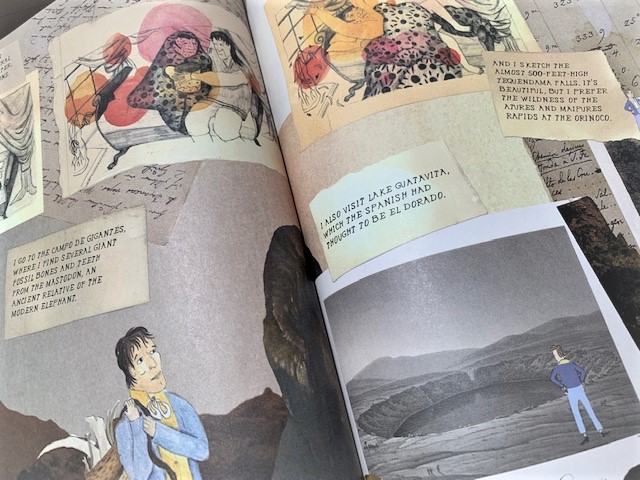
The Adventures of Alexander von Humboldt by Andrea Wulf & Lillian Melcher

From the New York Times bestselling author of The Invention of Nature, comes a breathtakingly illustrated and brilliantly evocative recounting of Alexander von Humboldt’s five–year expedition in South America. Humboldt (1769-1859) was an intrepid explorer and the most famous scientist of his age. His restless life was packed with adventure and discovery, but his most revolutionary idea was a radical vision of nature as a complex and interconnected global force that does not exist for the use of humankind alone. 
To celebrate Alexander von Humboldt’s 250th birthday in 2019, Andrea Wulf partners with artist Lillian Melcher to bring this daring expedition to life.Inspired by his diaries, plant specimens, engravings, sketches, maps and drawings, Wulf tells this story from a completely new perspective, revealing a man who was not only the most famous scientist of his time, but who also believed that the arts and sciences were intrinsically connected. Melcher’s stunning illustrations bring alive Humboldt’s adventures, from his dangerous river journey along the Orinoco to his spectacular climb of Chimborazo. 
The Adventures of Alexander von Humboldt tells a story of hardship, danger, excitement and discovery, but also of Humboldt’s encounters with the natural world, the indigenous people of South America and his early warnings of harmful human-induced climate change. The result is a lush and thrilling journey of discovery through Humboldt’s years in South America.

I wanted to love this book so much.

I adored Wulf's The Invention of Nature when I read it three years ago. It is still one of my all-time favourite non-fiction books, which is why I hunted down the graphic version when I heard about it a few months ago.

I'm happy to tackle non-fiction graphics thanks to the marvellous Radioactive: Marie and Pierre Curie by Lauren Redniss. It you're not really sure how beautiful and informative a scientific biographic story can be, then Radioactive may just be the one to convert you. This was my benchmark when I started The Adventures of Alexander von Humboldt.

The book is an over-sized hardback, printed on quality paper. It's a joy to hold and Melcher's collages are glorious. She used many of Humboldt's maps, engravings and illustrations to create the backdrops. Letters, diary entries, notes and sketches, herbarium specimens are also superimposed into many of the pages. There's a lot to look at in these details. It was a great way to present some of the information.

But I struggled with the information font that capitalised EVERY SINGLE LETTER AND WORD. It felt like they were shouting at me the whole time. (Yes, I know that most graphic novels use capital letters, it's supposed to make it easier to read...when reading someone else's handwriting. But if you're using a typeprint, then surely there is no need for this standard?)

And I REALLY struggled with the portrait drawings of Humboldt, Bonpland and the other characters as well as the speech bubbles attached to them. They lacked substance. The figures were lifeless and expressionless. The dialogue was dull and failed to add anything to the story. In fact, the dialogue often repeated the information provided in the text. It was also often hard to know which speech bubble to read first. By the end of the book, I still couldn't remember which one was Humboldt and which one was Bonpland; their personalities never came alive.

Melcher's design was often quite striking but sadly, most of her watercolours and sketches left me cold. I preferred the pages with less stuff (i.e. less figures and more collage).


It was a grand idea to turn Humboldt's story into a graphic non-fiction, but sadly the final result was less than grand. Rookie mistakes, I suspect - 'How hard can it be to make a graphic book?' A lot harder than you might think.

The graphic novels I've read and loved over the years are the ones that make you feel something. They make connections; they go on an internal journey as well as the physical one. They make you forget that you're looking at 'cartoon' figures; they take on a life of their own. When they speak, they have something meaningful to say. Even the non-fiction ones.

Beautiful, arty graphics are possible - think Shaun Tan and Neil Gaiman - as well as most of the picture books I've featured on this blog. However it's a lot harder to get the synchronicity between the text/dialogue and the illustrations just right - a lot harder than most people think.

I admire Wulf & Melcher for their intent, but I wish they had taken more time to develop their graphic book technique.

If you really want to know about this amazing scientist who was way ahead of his time, then read Wulf's The Invention of Nature: The Adventures of Alexander von Humboldt, the Lost Hero of Science (2015). You won't be sorry.

Wednesday, 17 July 2019

Indigenous Picture Books for Children

For Lisa's Indigenous Literature Week I had planned to post a selection of new Indigenous picture books, however my plans were bigger than my time management abilities!

Fortunately, these beautiful books deserve to be shared at any time, regardless of NAIDOC week or ILW.

Baby Business (2019) by Jasmine Seymour is a wonderful story for new parents, showing us, sharing with us, one way to welcome a new baby to country. However it's not just baby business, but also mother, grandmother and aunty business.

Respect, love and tradition embues every page as we follow the rituals of a smoking ceremony of welcome.


I loved this a lot.
I loved it for its celebration of new life, diversity and belonging. For its pride in our heritage and traditions. For its openness in sharing personal rituals and beliefs.

It's a book that reminds us that we belong to Country; that it doesn't belong to us. That we should only 'take what we need and no more' then 'give back what you can, and help your Mudgin (family) and Nura (country) when they need it.'

Durag words are scattered naturally throughout the text.

Seymour's beautiful, warm earthy illustrations create tender scenes of family, women and country. The background has a soft, dreamy quality which draws the eye towards the action around the sharp-focused baby on each page.


Jasmine is a member of the Durag Custodian Aboriginal Corporation. Her bio at Magabala Books also says that she is,

a descendant of Maria Lock, daughter of Yarramundi, the Boorooberongal elder who met Governor Phillip on the banks of the Hawkesbury in 1791. Maria was the first Aboriginal woman to be educated by the Blacktown Native Institute. She was married to carpenter and convict, Robert Lock and their union resulted in thousands of descendants who can all trace their Darug heritage back past Yarramundi.

When I was growing up, this kind of Indigenous family history and acknowledgement of local Indigenous heritage did not exist. In certain circles, there was a lament that this information had been lost, but most (white) people didn't see the point of remembering it.

But then colonial family history research took off during the 1980's, as so many of us searched for our convict ancestors and the UK county of our forebears. Suddenly (white) Australians were proud of their convict past as they (re)claimed a small patch of the UK as an ancestral 'home'.

It feels like it has taken a lot longer for pride in our Indigenous history to also be embraced. It is still an evolving idea in many circles. But books like this can help all of us to acknowledge, understand and respect the traditional heritage of our land. To learn some of the language, to have a window into another culture, to share a moment together - theses are all tiny, baby steps towards truth telling, reconciliation and treaty.


Sorry Day (2018) by Coral Vass and illustrated by Dub Leffler tells two stories told side by side - a modern story set on the lawns of Parliament House on the day that Prime Minister Kevin Rudd apologised for the Stolen Generation.

The older story provides a window into what it felt like to be stolen.

"Hide. HIDE!!" 
"White men  
The children trembled."

I have read sections of the Stolen Generation report and feel that I am open to seeing things from a perspective other than my own, but it is still confronting to realise that Aboriginal children today, and of old, automatically viewed all white men as people who they should fear. 


Dub Lefller is from the Bigambul and Mandandanji people of SW Queensland. His illustrations include a sepia style for the historic story, while the modern story is in full colour. A double page spread opens up at the end to combine the two styles. A timeline with the relevant facts and figures about the Stolen Generation and the events leading up to Prime Minister Kevin Rudd's apology are provided at the end.

The book includes a foreward by Lee Joachim, Chair of Rumbalara Aboriginal Coop and Director of Research & Development for Yorta Yorta Nation Aboriginal Corporation.

It was Shortlisted for the 2019 CBCA Eve Pownall Award and a Winner of the Speech Pathologist Book of the Year 2018.

*August Update* Sorry Day won the Eve Pownall Information Book Award.


Little Bird's Day (2019) by Sally Morgan is a gorgeous picture book about a day in the life of a bird. Sally belongs to the Palyku people from the eastern Pilbara region of Western Australia and is best known for her 1987 autobiography, My Place.

However, for me, Johnny Warrkatja Malibirr's stunning illustrations are the main attraction of this book. Malibirr is a Yolgu man from the Ganalbingu clan who has recently been awarded the Inaugural Kestin Indigenous Illustrator's Award. His bio on Magabala Books also says that he,
is known for his paintings of Ganalbingu song lines as well as his mother’s Wägilak clan stories. Along with other members of his clan, Johnny keeps culture strong through painting, song, dance, and ceremony. Johnny lives in the remote East Arnhem Land community of Gapuwiyak, where he is Chair of the Gapuwiyak Culture and Arts Aboriginal Corporation.


The illustrations have a strong connection to nature, using a traditional colour palate and styles. The sense of movement on each page is gracefully achieved, with a pleasing balance of details and open space.

It's a lovely nature story for a 3+ audience, that lends itself to simple dramatisation and dance moves.


Welcome to Country (2016) by Aunty Joy Murphy and illustrated by Lisa Kennedy is one of my favourite picture books of the moment. It not only feels worthy (of awards and recognition) and timely, but it's also sensitively and beautifully executed.

The initial 'welcome to the traditional lands of the Wurundjeri People' is presented in both English and Wurundjeri language, with a another reminder to 'only take from this land what you can give back.' The book celebrates Indigenous language, culture and art and is another example of a book naturally introducing the local language to a wider audience. 

Aunty Joy Murphy Wandin AO is an Elder of the Wurundjeri People of Melbourne and surrounds. She is a storyteller who 'is passionate about using story to bring people together and as a conduit for understanding Aboriginal culture.'


Lisa Kennedy is a descendant of the Trawlwoolway People on the north-east coast of Tasmania.
It was then my challenge to find a way to express this living culture in a contemporary way in my illustrations. I wanted to show the physical and the spiritual connection to Country and Ancestors using imagery accessible to a wide audience.
  • Winner of the Environment Award for Children’s Literature
  • Winner Educational Publishing Award
  • CBCA Notable Book 
  • Short-listed for the CBCA Crichton Award 
  • Short-listed NSW Premier’s Literary Award
  • Short-listed Speech Pathology Book of the Year Award


Land of the Echidna People (2019) by Percy Trezise and illustrated by Mary Lavis.

I wasn't completely sure about including this book in my collection of Indigenous picture books. Neither Percy Trezise (1923 - 2005) nor Mary Lavis are Aboriginal. However in the end I decided that the story behind this book was interesting and a good conversation starter around the whole cultural appropriation topic.

The Land of the Echidna People is the eighth book in Trezise's Journey to the Great Lakes series,
first begun in 1996. The eight books follow Jacinda and his younger sister Lande, brother Jalmor and dog, Lasca after a violent storm has carried them away from them family. The series follows their journey through various countries as they try to make their way home. Many of the books contain maps that allow the reader to follow the path they took. The stories are full of adventure, danger, belonging and family.

The first seven books were illustrated by Trezise himself. Sadly he died before finishing the last book. Mary Lavis offered her services to the family to finish Trezise's work to bring this series to an end.
  • Home of the Kadimakara People (1996)
  • Land of the Dingo People (1997)
  • Land of the Emu People (1997)
  • Land of the Snake People (2000)
  • Land of the Brolga People (2001)
  • Land of the Magpie Goose People (2001)
  • Land of the Kangaroo People (2002)
  • Land of the Echidna People (2019)
Trezise devoted his life to Aboriginal causes. In 1956 he moved to Cairns as a pilot to be closer to Aboriginal people. Discoveries of rock art during the 60's by road crews, encouraged Trezise to use his aerial skills to search for other 'lost' rock art areas. One of the most significant finds was the Quinkin Rock Art, in Cape York Peninsula, the oldest art site in the world. He helped the local Aboriginal community to advocate for this area to become a national park administered by them. He also purchased two properties to preserve and protect further rock art sites.

There is absolutely no doubt that Trezise's heart was in the right place. Various interviews and articles, including an Australia Story episode on ABC TV, show his life-long passion and support of Aboriginal culture and art. His collaborative friendship with Mornington Island illustrator, Dick Roughsey (1920 - 1985), gave him access to many of the 'old people'. He was granted the Aboriginal name, Gubbaladalli from the people of Mornington Island Mission.

After his death, two of his sons have continued his work in the area.

I suspect if Roughsey had still be alive, they would have collaborated on this series of myth-making stories, as they did with so many books before. My understanding is that they shared creative ideas and painting techniques. Trezise's interest in Aboriginal culture was not just a passing thing. It was a passion and belief that guided his whole life.

Reading Race: Aboriginality in Australian Children's Literature (2001) by Clare Bradford. She discusses at length the 'complex cultural politics' evident in the Trezise/Roughsey relationship. She claims that their work sits somewhere between an older style assimilationist approach and the contemporary retelling of traditional stories, 'caught between times and between changing practices.'

She sees Trezise's post-Roughsey work as 'redolent not so much of appropriation...as of a set of formulae not too remote from Aboriginal traditions to function effectively for contemporary readers.'


Wilam: A Birrarung Story (2019) is another story by Aunty Joy Murphy with Andrew Kelly, illustrated by Lisa Kennedy.

Andrew Kelly is a Yarra Riverkeeper, who had this to say about the writing process with Aunty Joy on the Booktopia Q&A site,

The writing of the book was a process of bouncing words and ideas between myself and Aunty Joy. The first draft of the manuscript had many more words and it was a matter of whittling them down to a sufficient elegance. The other part I really liked was working with Aunty Joy on the language and creating a seamless flow between Woiwurrung words and English.

I love this trend in embracing and sharing Indigenous languages in a natural way. We should all be growing up, hearing and using Aboriginal words, not just in the names of our country towns and rivers, but in songs and everyday speech.


Aunty Joy Murphy and Andrew Kelly use traditional language to name many known animals and natural things (like rain, tree, creek, river etc) in a beautifully illustrated story about the water cycle.

As ngua rises, Bunjil soars over mountain ash, flying higher and higher as the wind warms. Below, Birrarung begins its long winding path down to palem warreen. Wilam – home.

Kennedy has merged scenes of modern life into and around her central images of the natural environment. Gorgeous end papers bookend the story.

A glossary at the back provides definitions for all the Indigenous words used throughout the story.


My Culture and Me (2019) by Gregg Dreise.

Dreise is a descendant of the Kamilaroi and Euahlayi tribes, from south-west Queensland and north-west New South Wales. As the Penguin blurb says, this is indeed a 'heartfelt and stirring story of cherishing and sustaining Indigenous cultures.'

One of the trends in children's picture books at the moment, is pride in Indigenous culture. They encourage Indigenous readers to reclaim, embrace and celebrate their cultural heritage. They allow non-Indigenous readers a window into another way of life. These stories embody a wonderful sense of sharing, acceptance and understanding with all Australians. 

It is such a long overdue idea that I'm hopeful this new trend is just one more signpost along the way to a more meaningful reconciliation process and a more 'fair and truthful relationship'* between us all. 
*Uluru Statement From the Heart

As an early childhood teacher in a previous life, I know the importance of the early years in laying down the foundation stones for a strong sense of self. Books like this help promote positive images and pride in culture. It is so important to have heroes and role models that look like you and sound like you in books. 

My one concern is that most Aboriginal children in Australia today, now live in cities and large urban areas, whereas most of these books are set in rural or remote areas. Country is such an important concept in Aboriginal culture and this shines through in all these books. But it's not only important to see people who look like you in books and stories, it's also important to have stories that reflect the lives you actually live in the places you are living them. 

Which leads me very nicely into Black Cockatoo (2018) by Carl Merrison and Hakea Hustler


Mia is a 13-year-old girl from a remote community in the Kimberley. She is saddened by the loss of her brother as he distances himself from the family. She feels powerless to change the things she sees around her, until one day she rescues her totem animal, the dirran black cockatoo, and soon discovers her own inner strength.

When I was teaching, the Aboriginal children in my class, were mostly being cared for by their grandparents. In fact, I can only think of one family where this was not the case. Stories that reflect this situation are important for a sense of belonging, but also for opening up the wider discussion around the why's and wherefore's of this reality.

Black Cockatoo is a short story that oozes themes of connection, standing up for yourself, freedom (for birds, animals and humans), family, totem, animal rights, respect and complicated family relationships. It's contemporary, real-life nature is suitable for 10+ readers.

Jaru words are used throughout the story.

The story includes evocative black and white paintings, mostly of the cockatoo. There is a glossary of indigenous terms used in the story at the back of the book.

Carl Merrison is a Jaru man from Halls Creek. Carl was nominated for Australian of the Year in 2016.

His partner, Hakea Hustler was a high school English teacher at Halls Creek District High School. She is committed to Indigenous education with a particular focus on 'school engagement, English language and story as learning, understanding and empowerment.'

Their book has been Shortlisted for the 2019 ABIA's Small Publishers' Children's Book of the Year and the 2019 CBCA Younger Readers Book of the Year.

I had planned on including Young Dark Emu: A Truer History (2019) by Bruce Pascoe in this post, but 
1. it's first print run sold out in a matter of days, so I've been waiting for the reprint to turn up to read it properly. 
2. this post is already too long and 
3. I suspect Pascoe's book will require a longer response than the few paragraphs I could give it here!

For now I will leave you with the words of Michael Warren in his 2012 thesis, Exclusive Inclusion: Aboriginality, The 'Juggernaut' of Modernity and Australian National Identity
Contradiction is indeed a feature common to the relationship between Aboriginal people and white Australia.

Since creativity evolves from and is inspired by the contradictions in our lives, I'd say we can look forward to many more engaging, confronting Indigenous stories in the years to come.

Thursday, 8 November 2018

Dog Stories

I delightful batch of dog stories have turned up at work this month. I loved all three for different reasons, but my favourite of the batch was The Tales of Mr Walker by Jess Black.

Based on a true story, Mr Walker is a delightful illustrated chapter book about the Labrador Ambassador at the Park Hyatt in Melbourne.

The books is full of charming, funny and heart-warming tales. Featuring his first day in the hotel to helping out with a marriage proposal, to preparing for a charity ball, stopping a gang of thieves and entertaining a celebrity pianist. Mr Walker spreads love and happiness wherever he goes.

It's a wonderful family read aloud book or a treasure for your favourite 7 yr old to curl up with.

Royalties from the sale of this book go to Guide Dogs Victoria.


The Dog Who Lost his Bark by Eoin Colfer is a darker dog tale for a more mature reader.

When I was little, my mum had to ban me from watching Kimba the White Lion and Lassie as I used to get too upset whenever Kimba or Lassie got lost, scared or in trouble (which seemed to happen every episode!) Even now, I struggle with books or movies that feature animal violence or cruelty in any way (The Lion King makes me blubber every time).

So the first two chapters of The Dog Who Lost His Bark were very tough going for me. P. J. Lynch's sweet black and white illustrations helped me keep going though...a dog this cute and adorable had to be okay in the end surely.

Sensitive souls beware though, the first two chapters are harrowing.

However the pay off is worth the initial angst. Without giving anything away that the cover doesn't already tell you, our cute adorable dog finds a happy home AND finds a way to show his gratitude for being rescued and loved so well, when things go wrong for young Patrick.

Colfer has created a heart warming, gentle story that is perfectly complemented by Lynch's realistic drawings.

I loved it.


Good Rosie! by Kate DiCamillo is a picture book suitable for younger readers.

Rosie is a good dog, but she's also a little shy and nervous about leaving the house and playing with other dogs. The park is a bit too busy and the other dogs too noisy and active.

This is the story of how Rosie overcomes her fears and embraces new friends. Charming and delightful with some slightly odd-ball moments, Good Rosie! is a picture book designed as an early graphic novel with nine short chapters.


All three books have illustrators who have captured the movement and poses of the dogs to perfection. The dogs are portrayed in such an authentic, loving way, that it's impossible not to love them simply from their front covers. As you get to know each one via their stories, the pictures highlight their adorable little quirks and ways that make them unique.

I have spent most of my life being scared of dogs - too big, too boisterous, too many teeth. But I have always responded strongly to dog stories (as long as they don't talk! But that's another story). These three dog books celebrate a dog's life through the eyes of the dogs themselves. When the world seems like a cold, harsh, unloving place, a good dog story can save the day.