Showing posts with label Death and Dying. Show all posts

Thursday, 10 December 2020

The Living Sea of Waking Dreams | Richard Flanagan #AUSfiction


I know there is a lot of love for The Living Sea in Waking Dreams out there already. 

It's not that I didn't love it, or even admire what Flanagan was trying to achieve, but it's not easy to read a book where you feel like you're being smashed over the head, not just with a hammer, but with the biggest, heaviest mallet that Flanagan could find, on every single page, at every single turn. With such a convoluted title, I was expecting more nuance and intellectual word play. Instead I got whack after whack of anger.

Flanagan has a lot to be angry about.

Last summer was ghastly for all of us in Australia. The bush fires were the worst we'd ever experienced. Our skies were grey with smoke and ash for month after month. The smell was inescapable, the heat was oppressive, the news catastrophic. It was easy to feel like it was the beginning of the end. Or the end of the beginning.

Writing a book while all of this is happening around you, can take its toll. It can be hard to find perspective. It can be hard not to rave and rant in absolute frustration. It can be hard to resist a good old preachy sermon. Flanagan did not resist.

There was nothing subtle in his story about vanishing body parts, a dying mother and a world in flames. The ghastly siblings, Anna & Terzo, who refused to let their mother die with any dignity or grace, were so implausible, I struggled to spend my time with them. Their brother, Tommy, was much nicer company and more realistically drawn, as was Anna's son, Gus. But then, Tommy was the actual carer. He was on hand in Tasmania to care for their ailing mother, while the other two simply jetted in and out whenever there was a problem to be solved. And Gus' response to a world on the brink of catastrophic climate change is to withdraw into a world of gaming and Youtube videos. 

Flanagan ranted several times about social media and smartphone use. Clearly he is not someone who properly understands these online tools. Nothing about the way his characters engaged with their online world actually reflected anyone I know. He had all the right words, but just like Mr Books & I discussing Tiktok or Snapchat or memes with our boys, we show our ignorance at every turn, much to their amusement.

I feel like I'm the one ranting now!

I didn't not like the book. 
It was an interesting read and an interesting concept, with all the vanishings that nobody noticed, that spoke for, or to, something even bigger and scarier that nobody is noticing either. However I felt no emotional connection to anyone in the story, except pity - a huge amount of pity, in fact - for the undying, lingering, suffering, decaying mother. I found myself talking out loud to Flanagan throughout the book, telling him to get out of the way of his own story.

I love it, though, when I discover the title in the story.
It wasn't enough for Terzo that their mother had not died. It wasn't enough that she lived in her sea of waking dreams. In Terzo's view, she had to live like us, rationally, in a rational universe.

Except of course, Terzo's world, or his idea of living, were not as rational as he thought.

In the end, though, the occasional insights and beautiful writing were not enough for me to rate The Living Sea of Waking Dreams particularly highly. 

It astonished her that he had a view as deeply held felt as hers and yet entirely opposite, and which he held with an equal conviction. And in the face of someone who would not be persuaded by her, she did not seek to see the world for a moment as he saw it but instead was simply angry with him that his world was not her world.


I'm in the process of putting together my best 20 reads of 2020. This one will not make the cut.

Epigraph
John Clare | Remembrances
To the axe of the spoiler and self-interest fell a prey;
And Crossberry Way and old Round Oak's narrow lane
With its hollow trees like pulpits, I shall never see again:
Inclosure like a Bonaparte let not a thing remain,
It levelled every bush and tree and levelled every hill
And hung the moles for traitors - though the brook is running still,
It runs a naked brook, cold and chill.

Opening Lines:

1.

Her hand.

2. 

It's impossible to say how the vanishing began or if it was already ended, thought Anna.


Other Opinions:
  • The Conversation | 8th Oct 2020 | Tony Hughes-d'Aeth
  • The brilliance of Flanagan’s story and the deep power of this novel is in our witnessing of the end of the world. The death of Francie opens up a black hole in the family drawing Anna, Terzo and Tommy into its implacable singularity.
  • The Guardian | 16th Oct 2020 | Beejay Silcox
  • The Living Sea of Waking Dreams [is] at its best when it balances its vehemence with its beauty, when it leaves space for the reader to wander and wonder – eucalypt leaves swinging down like “lazing scimitars”; a moth thrumming its “Persian rug” wings.
  • Lisa @ANZ Lit Lover found more to like than I did.
UK Cover

I've been trying to take a photo of the beautiful green textured feather design on the hard cover underneath the glossy black dust jacket, that would do it justice. You'll have to take my word for it. It's much more interesting than the dust jacket image. The next time you're in a bookshop, carefully open the jacket and take a peek for yourself.

Thursday, 26 March 2020

Do not go gentle into that good night | Dylan Thomas #Dewithon

Photo by Jack B on Unsplash | Snowdon, Wales

Do not go gentle into that good night,
Old age should burn and rave at close of day;
Rage, rage against the dying of the light.

Though wise men at their end know dark is right,
Because their words had forked no lightning they
Do not go gentle into that good night.

Good men, the last wave by, crying how bright
Their frail deeds might have danced in a green bay,
Rage, rage against the dying of the light.

Wild men who caught and sang the sun in flight,
And learn, too late, they grieved it on its way,
Do not go gentle into that good night.

Grave men, near death, who see with blinding sight
Blind eyes could blaze like meteors and be gay,
Rage, rage against the dying of the light.

And you, my father, there on the sad height,
Curse, bless, me now with your fierce tears, I pray.
Do not go gentle into that good night.
Rage, rage against the dying of the light.


Do not go gentle into that good night | Dylan Thomas | 1947

You can listen to Dylan Thomas read the poem himself.

Friday, 11 January 2019

Any Ordinary Day by Leigh Sales

It's hard to sum up what an extraordinary read Any Ordinary Day by Leigh Sales really was. I started off a little sceptical, doubtful that Sales would find the right tone to keep me interested, but I was wrong. Very wrong. 


I thought I knew what the book would be about thanks to the generous media and online coverage it had been receiving in Australia in the lead up to Christmas. I also had Nancy's unequivocal admiration for the book ringing in my ears. I was expecting to read about some of the (sadly) well-known names in Australia who had survived tragedies such as the Lindt Cafe siege, the Port Arthur massacre and the Thredbo disaster; I wasn't expecting to read about an acquaintance of mine though.

Any Ordinary Day was a riveting read. Heart-breaking at times, but so full of compassion, kindness and a desire for genuine understanding, that it melted my cynical side completely. But when I reached Chapter 6 and suddenly realised that this section was Leigh's interview with Hannah Richell about the surfing accident that took the life of her husband, Matt a few years ago, I was pulled up short.

Suddenly it felt very personal and very close to the bone. 

As Sales' said early on, the idea behind this book was to explore how we cope with not being 'exceptional' when we discover that we're as 'vulnerable as the next person' to being blindsided by life and death moments. Matt's accident, and Hannah's extraordinary blog about her journey with grief and sadness, have left me pondering this idea often. How do we develop resilience? How do we learn to let go the idea that we have complete control over our lives? How do we cope with the randomness of life? Can we become a better person for having gone through something so traumatic?

Sales' spends some time within each interview discussing these ideas, as well as bringing in various facts and stats from current research findings. Every interview was thoughtfully conceived and executed. She discussed the personal as well as the bigger picture stuff. She considered why it is that we're all fascinated by these traumatic events and why we participate in mass displays of grieving like those that happened after Princess Diana died and the floral tributes in Martin Place after the Lindt Cafe siege.

The role of journalists, media and social media are explored, as well as the negative and positive outcomes experienced by individuals caught up in this kind of craziness when they're at their most vulnerable.

Sales says,
because we don't have enough conversations about the big stuff, about life and loss and fear, we end up approaching death with morbid fascination, like it's some dark awful secret or some big heroic event.

This book is all about reminding us that the big stuff can happen at any time and that we should remember to be grateful for, a savour, the everyday, ordinary moments, for 'they're not so ordinary, really. Hindsight makes them quite magical'.

Thursday, 20 December 2018

Junior Fiction - the rest!

Following on from my recent post featuring several fabulous Australian junior fiction titles, I thought it was time to venture further afield to see what the rest of the world (or at least the US, UK and Japan) were doing in this field.

The Afterwards is a new story by U.K. poet A. F. Harrold, illustrated by Emily Gravett, the well-known picture book illustrator. Like so many books for kids these days, the story explores friendship, death and loss. It is quite dark at times and some children may find the 'other world' that our young protagonist is able to visit quite creepy in much the same way that Neil Gaiman's Coraline's 'other mother' is creepy. But the ending is positive with a focus on living in the moment, honouring those you loved and being present.


Dear Professor Whale by Megumi Iwasa and Jun Takabatake (illustrator) wasn't quite as sweet and charming as Yours Sincerely, Giraffe, but it still highlighted the importance of friendship, kindness and belonging via the old-fashioned means of communication, letter writing.

The action centres around the reviving of the Whale Point Olympics. The older Olympians are honoured and revered while the youngsters are encouraged to engage in friendly competition and teamwork rather than winning gold medals at all cost.

The empathy message may have been laid on a bit thick this time round, but it's hard to take offence when it's so well-meaning and good-natured.


Front Desk by Kelly Yang is for the older end of the junior fiction spectrum - probably 10+ and is loosely based on her own experiences as a new immigrant to the States in the early 1990's. Yang wanted to tell her son about how she grew up and what it was like being an immigrant. In a letter at the front of the books she says,
I grew up in a motel. I didn't have any toys or nice clothes. My parents were struggling...and life was very, very hard for us; it was hard for everyone in our motel, from the immigrants we hid at night to the guests who stayed by the week, folks who got mistreated by the police and were stuck in the same sad cycle of poverty.
I had been searching for a way the right way to tell my son all of this, a way that didn't scare him, but inspired him....Draft after draft, I dug deeper and deeper until the shame and pain and joy of my childhood were so open and exposed, it scared me.

For such a hard won story, it reads lightly and easily. Diversity is celebrated, as is a strong sense of family and friendship. Belonging, perseverance and hard work are standards held up for admiration. Disadvantage and racism are sadly also on show and not just from the American population, Yang also subtly shows the tensions between mainland Chinese immigrants and Taiwanese Chinese.


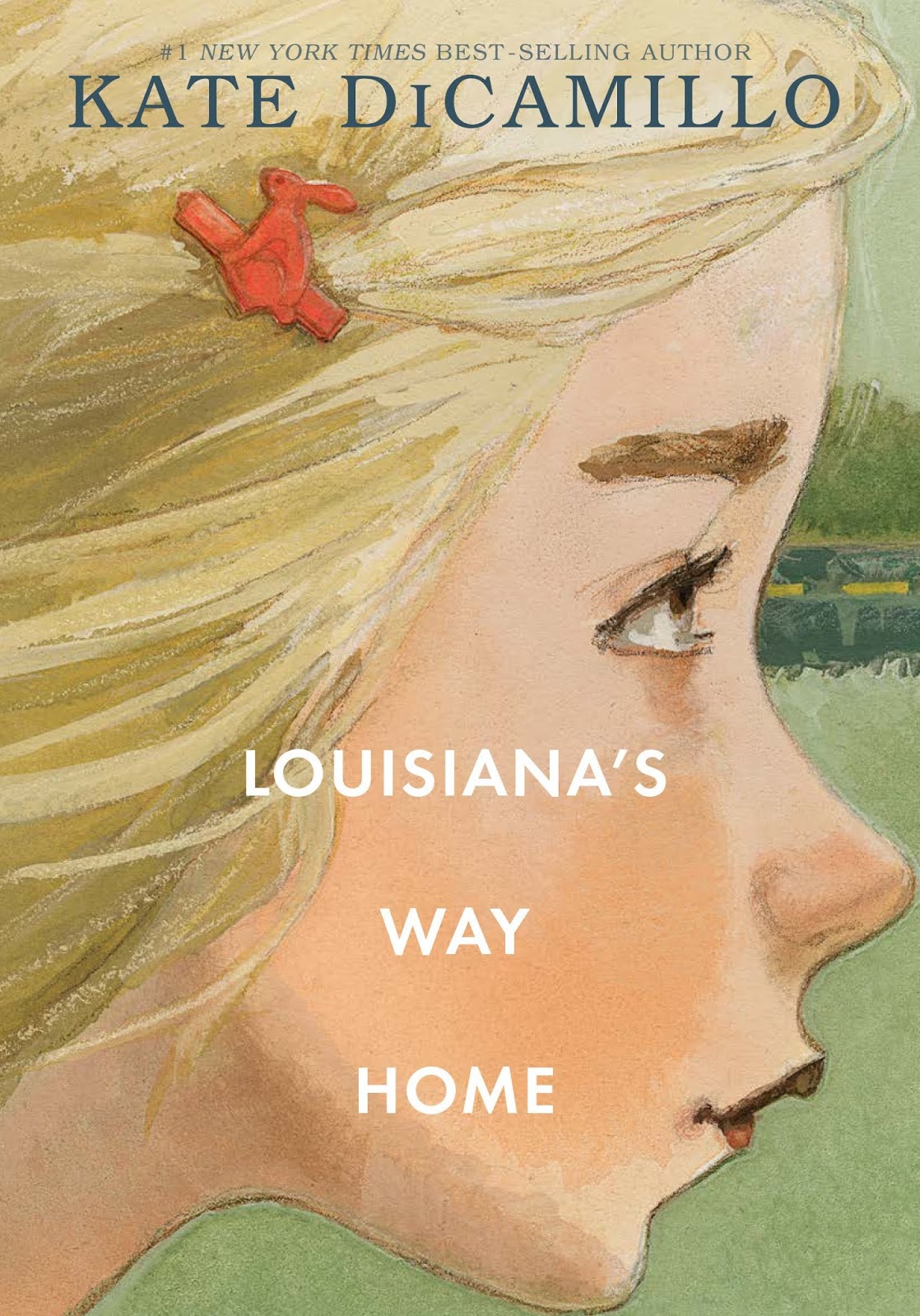
One of my new favourites though is Louisiana's Way Home by Kate DiCamillo. Her writing is stunning as always and Louisiana is a delightful, spunky creation. Suddenly, without explanation, Louisiana is on the run with her Grandma. What follows is a journey of major self discovery as Louisiana learns some painful home truths and discovers just how strong and resilient she really is.

We all, at some point, have to decide who we want to be in this world. It is a decision we make for ourselves. 

Forgiveness, hope and courage are DiCamillo's calling cards - they shine very brightly in this tender, bittersweet story. And it wouldn't be a DiCamillo story if we didn't also learn about the kindness of (some) strangers (although don't get me started on the grandmother!)

Perhaps what matters when all is said and done is not who puts us down but who picks us up.


I'm starting to loose track of ALL the princesses-turned-monster-fighting-superheroes in The Princess in Black series by Shannon Hale but #6 and the Science Fair Scare is still full of all the fun, derring-do, go-girl attitude of the earlier stories.

It's hard NOT to be charmed by these sassy young things with their alter-ego monster-fighting persona's. But I guess at some point, I'd like to see these girls (& the dashing young Goat-Boy) come out from behind their masks and let the world see who they really are all the time.

Book 6 feels like a transition point. Everyone now seems to be 'in' on the secret and it would be nice if the girls didn't have to pretend to be pretty, prim princesses in public any more.


I love junior fiction at this time of year. It's entertaining, easy reading. But they're not always light on topic or emotional impact. These books feature BIG themes with BIG heart. They are books that can be enjoyed by adults just as much as the younger people in their lives. There is way more to junior fiction than the Wimpy Kid and Dork Diaries, and I for one, am very grateful for that!

Saturday, 25 August 2018

Lenny's Book of Everything by Karen Foxlee

I fell in love with Karen Foxlee's writing in 2014 when I read and loved Ophelia and the Marvellous Boy.

A Most Magical Girl confirmed her ability to move me with her words. So much so, that I acquired her YA backlist to read...one day...!

So I was thrilled to discover recently that she had a new book, Lenny's Book of Everything, due out later in the year. When an ARC turned up last week with my reps tear-soaked tissue rave about how good it was ringing in my ears, I popped it on top of the TBR pile for the weekend.


All the PR on the inside covers suggested that this would be Foxlee's 'break-out book', the one that would finally tip her over into the big time (where I've always thought she belonged, by the by).

The opening sentence told me they were correct.

Our mother had a dark heart feeling.

Straight away I had that lovely goosebumpy shiver of anticipation feeling that happens oh-so rarely these days. I knew this book was going to break my heart yet I couldn't stop myself. Even when that breaking my heart feeling almost got too strong, I couldn't look away for long. Because Foxlee breaks your heart so tenderly, so hopefully, so sweetly that you can't not go along for the ride.

Every life has times of sadness and darkness, stories like this remind us that despite the darkness, within the sadness, there can be kindness, loving and beauty. This is what makes our lives worthwhile, this is what gets us through the bad times.

Foxlee also reminds us that words have power. They have meaning and purpose. Some people choose to put that power and purpose to a negative use, but Foxlee shows us the positive, glorious, wondrous nature of words and knowledge. Words that illuminate, uplift and provide hope are her speciality. Her words enrich our lives and fill our souls with joy.

I know, I'm gushing! But I'm not the only one smitten.

The book is full of gushing quotes:
Anna McFarlane (publisher, Allen & Unwin) - it raises spirits while it breaks hearts.
Eva Mills (publishing director) - broke my heart (in a good way!)...a deep understanding of humanity.
Juanita Keig (account manager) - importance of kindness and human solidarity.
Radhiah Chowdhury (editor) - soothes even as it relates the most unutterable pain.

Karen Foxlee's note tells us that this story about 'an encyclopedia set and a boy who kept growing' has been in her head for quite some time, and that when she 'finally sat down to write it, Lenny was there waiting for me. I felt immediately comfortable in her voice.' It shows.

The complexities and nuances within this story have been woven in seamlessly and apparently, effortlessly by Foxlee. Her characters are fully realised with whole back stories just sitting out of sight, influencing all their actions and reactions. The push and pull between her characters as they rubbed up against each other on a daily basis, felt so real and so natural. They loved, they annoyed, they cared and they hurt each other.

Foxlee said she was trying to explore 'love in all its forms' and how wonderful it is to be alive and that 'even in the darkest hours, there's always hope'. She succeeded.

Although Foxlee is Australian through and through, she has set this story in the 1970's in New York City. I've never lived in NYC, but I now feel like I have, at least, in this one little pocket of NYC so vividly described by Foxlee.

The rest of the story details I leave for you to discover yourself.

Not many books make me cry out loud - I can count the contenders on one hand - but Lenny's Book of Everything made me blubber. Yes, my heart was broken, but it wasn't unbearable. My heart was full of love, wonder and hope too and my heart was mended, again.

The comparisons to Wonder, The Boy in the Striped Pyjama's and The Book Thief are spot on. They are all very different stories, told in very different ways, but they all share an authenticity and tell an emotional truth that is universal and enduring.

The final hardback cover will look like this:


If you'd like to read about the creative process that made this stunning cover, read about it @Things Made From Letters.

Lenny's Book of Everything is a Nov 2018 publication Allen & Unwin.
Book 20 of #20booksofsummer (winter) WAHOO!!
Temperature in Northern Ireland 19℃
Temperature in Sydney 18℃

Thursday, 5 July 2018

I Am, I Am, I Am by Maggie O'Farrell

What an extraordinary lucky (or unlucky) life Maggie O'Farrell has had. Seventeen brushes with death in one lifetime seems rather excessive, to one who can barely think of one close call!


But seventeen there really are.

Some of the brushes are a little more tenuous than others - more like a sliding door moment that many of us may have had - like if I had left the house ten minutes earlier I might have been in the exact same spot where the car accident happened that I am now driving safely by. That's about as close as I get to a brush with death.

My mum's was a much closer call and more like the stories that O'Farrell relates in her book, with a near-drowning experience as a young child. It gets a little weird if I think about what would have happened if my uncle hadn't been there to save my mum. Who would I be now?

All the way through I Am, I Am, I Am I was wondering why O'Farrell chose to write her vignettes out of chronological order. That is, until I got to her story about a much too close brush with a truck on a narrow lane. She was in a relationship but walking out in a forest discussing a different future with another man, who was also in another relationship. No names, no ages, no specifics to pin down when this happened, to protect the innocent I assume.

There were a couple of near drowning moments, child birth traumas and serious life-threatening illnesses. O'Farrell's sliding doors moments centred around a blood test after she found out her boyfriend had been sleeping around and scary moments in her childhood when her mum nearly closed the boot on her head and she stepped off the kerb into oncoming traffic. Death or serious injury averted thanks to timing, quick thinking on someone else's behalf and good old fashioned luck.

The truly frightening story was the lucky escape from a murderer whilst walking in a quiet touristy unnamed area somewhere in the wilds of England. It reminded me of the vignette in Ian McEwan's Amsterdam that was curiously based on a real experience that McEwan had whilst walking around the Lakes District in his younger years. It made me wonder if they had both run into the same creepy guy.

However, most of the stories were closer to mini-memoirs. In amongst the dangerous moment were revealing facts about O'Farrell's childhood, her early career choices, first boyfriends, her travel anecdotes, her studies, writing and thoughts on motherhood.

One of her final stories details her childhood brush with death via encephalitis. This seems to be the formative story about how and why O'Farrell faces the thought of death and approaches the rest of her life with such a 'sanguine' indifference:
Coming so close to death as a young child, only to resurface again into life, imbued in me for a long time a brand of recklessness, a cavalier or even crazed attitude to risk....I leapt off harbour walls. I walked alone in remote mountains. I took night trains through Europe on my own, arriving in capital cities in the middle of the night with nowhere to stay. I cycled blithely along what is dubbed 'South America's Most Dangerous Road', a vertiginous, crumbling, eroding track cut into a steep peak....I walked across frozen lakes. I swam in dangerous waters.

I've never read any of her fiction titles, but here, I enjoyed her way with words and the pictures she painted with them. They felt genuine and heart-felt. I read one or two stories at a time during my lunch break, which was the perfect way to read them I feel. I suspect if I tried to read this is one go I might have got a little tired of the theme and the fact that some of the brushes were a little more tenuous than others to say the least.

Very enjoyable short stories, one dose at a time.

Book 9 of #20booksofsummer (winter) drop-in title
Sydney 23℃
Northern Ireland 20℃

Sunday, 17 June 2018

What To Do When I'm Gone by Suzy Hopkins & Hallie Bateman

I'm glad this is a book I don't actually need right now. What To Do When I'm Gone: A Mother's Wisdom to Her Daughter is exactly what it says it is. When Hallie had one of those moments during her early twenties when she suddenly realised that one day her mum would die, she felt devastated by this future loss. She discussed it with her mum, who promptly sat down to put together a list of things to do and not do in the event of her death.


Told in diary form with graphic style illustrations, Suzy proceeds to give advice on how to handle the days after she is gone. The first 8 days contain all the stuff Suzy feels a young woman would need to get through that phone call, that first day, the funeral. We then jump days to include things like that first birthday, the first dream as well as all those times when a young woman turns to her mum for support (the break up of a relationship, having kids of her own, changing jobs, growing older, bad days etc).


It's deeply personal, heart-breaking and so, so poignant. But it is also life-affirming, positive and feels very authentic. This book is designed to help younger women cope with loss and grief, but with an end date 20 000 days later, the advice and support within these pages could help anyone who has experienced death and loss. In a nutshell, it's resilience, memories and courage that will keep you going, keep you strong and keep you safe. Nothing unusual in any of that, but having it all together in a lovely book package can help it to feel like the great, big, warm fuzzy it sets out to be.

Even if you haven't lost someone close, reading books like this can prepare you a little for that time. In the middle of your grief, pages from this book may pop back into your mind to help you get through the next bit.

Book 5 of #20BooksofSummer (Winter) Drop-in title
16℃ in Sydney but the wind chill factor made it more like 7℃
15℃ in Northern Ireland

Thursday, 29 March 2018

Ghosts of the Tsunami by Richard Lloyd Parry

When I was a preschool teacher, I used to tell a drawing story about tsunami's.

It's over ten years since I last told it, but it involved painting simple images on a large sheet of paper as I recited the story about a small Japanese seaside village, complete with rice fields, a hill and an old man. At some point there was an earthquake and the old man noticed the sea receding. All the villagers race down to the shore to see what was happening. But the old man remembers the stories his grandfather told him about the last time the sea disappeared, so with the help of his young grandson & a fire in the rice stacks, he gets all the villagers safely to the top of the hill....just in time to see the sea come surging back to wipe out the village below.

The Great Wave off Kanagawa by Katsushika Hokusai 1829-33

Painting the big blue wave that wiped out the village was always a dramatic, powerful moment during the story telling and the old man's final comment, 'that's why I set fire to the rice stacks' left the children speechless.

After the 2004 tsunami, I remember hearing a story about a young girl who saved her entire resort thanks to a lesson her teacher had taught about tsumanis earlier in the year. I was not only moved by the possibility that a story lesson told to a class of children by a teacher on the other side of the world could save hundreds of lives, but that all the adults at the Indonesian resort actually listened to and believed the young girl.

The story I told my classes over the years was based on The Tale of Hamaguchi Gohei and the Tsunami. I found a retelling of it on this Japanese Children's Literature blog.

I did wonder, seven years later, how it was that so many lives were lost in the 2011 tsunami that hit Northern Honshu. Given what we all now know about receding sea levels, why wasn't everyone on higher ground as soon as they saw the sea disappear? And how did an entire primary school get overwhelmed by the wave when all the other local schools evacuated to higher ground?

Richard Lloyd Parry's book, Ghosts of the Tsunami was always going to call my name for all of these reasons and more.


The very first thing I realised when I looked at the maps in the front of the book, is that many of the villages consumed by water were not by the sea. There was a river, the Kitakami. The tsunami was funnelled down the river to the low-lying villages further downstream. They didn't see the sea recede, they were too far away and by the time the severity of the tsunami was realised, the lines of communication were down.

Parry is a journalist based in Tokyo. He's been there since 1995. Since 2011 he has been visiting and interviewing the survivors and bereaved to understand what happened and to document what the ongoing impact has been.

Only two forces can inflict greater damage than a tsunami: collision with an asteroid, or nuclear explosion.

Huge tsunamis recur along the Sendai plain every 800-1000 years, but lesser ones can occur every decade. The most destructive, with 22 000 deaths, was the 1896 Meiji Sanriku Tsunami. Another one in 1933 killed 3000 people. The 1960 tsunami that was result of the largest ever recorded earthquake off the coast of Chile (9.5 magnitude) killed 142.

'Tsunami stones' mark the high water point of previous tsunamis. However the 2011 undersea megathrust earthquake was the biggest to ever hit Japan (9.0-9.1 magnitude). It was also,

the fourth most powerful in the history of seismology. It knocked the Earth six and half inches off its axis; it moved Japan thirteen feet closer to America. In the tsunami that followed more than 18 000 people were killed. At its peak, the water was 120 feet high.

The tsunami was not just one big wave like the painting above (or even the design on the front cover of the book) suggests, but a series of pulses, 'washing in and washing out again, weaving over, under and across one another.'

The elderly were more likely to die than the young - 54% of the dead were over 65 years of age.

All but one school in the area got all their children to safety.

However great the catastrophe of 2011, the damage caused would have been many times worse if it had happened in any other country....Japan's sea walls, warning systems and evacuation drills saved an uncountable number of lives.

The first half of the book focused on the tragedy of the school while the second half was more about the grieving process. The particularly Japanese version of grief was discussed as well as all the variants and nuances that followed this specific event that depended on if you lost a child or not, how long it took you to find your loved ones' bodies, whether you lost your home or not, your entire family or just one or two members. All these subtle ways of feeling pain and trauma and loss were sensitively explored by Parry.

The aftermath of the tsunami brought people together, but it also tore some apart. The anguish of the survivors and parents from Okawa Primary School is unimaginable and it was heartbreaking to see that over time, they became a divided community.

When grief is raw, the presence of the deceased is overwhelming.

Parry's journalistic style makes this book easier to read than you might first think. It's horrifying and frightening and so very, very sad, but Parry has kept a professional distance that allows the reader an insight without succumbing to despair or helplessness.

He spent time exploring the nature of Japanese submissiveness and their acceptance of death by mother nature. I was also fascinated by the acceptance of ghosts, the use of mediums and the importance of ancestor worship in Japanese culture.

A fire station in Tagajo received calls to places where all the houses had been destroyed by the tsunami. The crews went out to the ruins anyway, prayed for the spirits of those who had died - and the ghostly calls ceased.

Knowing that the Kanto plain where Tokyo has been built is well overdue for it's next large quake is not necessarily comforting to one about to travel there. Apparently these big, devastating quakes happen every 60-70 years. The last one was in 1923.

You do the math!

Image source

Wednesday, 6 September 2017

I Married You For Happiness by Lily Tuck

I Married You For Happiness by Lily Tuck was a bit of an impulse read one grey, rainy work day. It's slim form meant it could slip inside my coat pocket and come along to lunch with me.

I quickly realised that having happiness in the title was a misnomer as this was yet another book about death and loss and grief. 
I have read so many books about dying and sorrow in the past year or so. I'm not sure if it's just me and where my interests are leading me right now, or if it's a wider bookworld theme. 

Considering that I Married You For Happiness was first published in 2011, I have to assume it's me seeking out/being attracted to this theme at the moment. 


A quotation from Blaise Pascal acts as epigraph for the story,
We never keep to the present. We recall the past; we anticipate the future as if we found it too slow in coming and were trying to hurry it up, or we recall the past as if to stay its too rapid flight. We are so unwise that we wander about in times that do not belong to us

Which sets the scene for this bitter sweet story beautifully.

Philip and Nina's history is told over the course of one night.
It's the night that Philip has died in his sleep after having a little lie down after work and just before dinner. Nina sits, shocked, with Philip's body, and throughout the long night, she remembers some of the moments that made their marriage what it was - their first meeting in Paris, the birth of their daughter, Philip's career as a mathematician, the flirtations, arguments and counselling, the jealousy, the secrets and, of course, their love, that endured it all.

Philip was a mathematician, so quite a lot of probability and philosophy was thrown into the mix. His rational nature often clashed with Nina's more artistic soul and their marriage, like most, I guess, became a compromise and dance around each other's emotional abilities and needs.

Tuck throws in the occasional harsh reality check - like Nina suddenly remembering a story about an elderly local woman who was brutally raped when her home was broken into, who subsequently died, not so much from the pain, but the shame.

This is where Tuck excelled. She showed us the complicated and sometimes random nature of grief. Weird trivial thoughts and practical matters often interrupted and intruded on Nina's ability to process what had happened. The reality of her loss would hit her anew, as another memory led her back to this present moment. And then off again.

Tuck used a fragmentary style of writing which suited the in and out, to and fro nature of Nina's thoughts. The writing was sparse yet delicate as Tuck explored the age-old tragedy of how one partner will eventually predecease the other in any marriage. And that even though we all know this harsh fact right from the start, it still catches us by surprise when it actually happens.

Rest on the Flight into Egypt, Caravaggio

The only really weird moment for me, the reader, was the ending. Was it all a dream? Or did Nina create a fantasy to sustain herself in her grief? Given that her favourite painting was Caravaggio's Rest on the Flight into Egypt, the reference to an angel with black wings is perhaps not so surprising, and could be seen as a sign of comfort and solace seeking in her time of need.

Seeking comfort is one of the essential strategies we all need to develop to distract ourselves from our grief. We will never erase or forget our emotional memories, and closure is a myth, but we can plan for and soothe ourselves when those intense emotions and memories are triggered.

Perhaps that's what Tuck was trying to tell us all along - that we all have the ability to comfort ourselves when the time comes.

If you enjoyed Kent Haruf's Our Souls At Night, Tinkers by Paul Harding or Chesil Beach by Ian McEwan you might also enjoy this. 

Sunday, 27 August 2017

Lincoln in the Bardo by George Saunders

I was feeling a little cautious about reading Lincoln in the Bardo. Anytime I had heard someone talk about the book, they would mention the ghosts, the many, many voices and the grief. It sounded like it might be hard work or a bit too clever for its own good.


Fortunately, though, a reading copy recently came my way at work. And I was tempted.

Bardo is the transitional phase after death and before ones next rebirth when the consciousness is no longer connected to the physical body. After trawling the internet I found a copy of The Tibetan Book of the Dead that allowed me to see inside. It gave me one of those ah-ha moments - the  fragmentary multi-voice story telling format that Saunders used throughout his book, reflected the format used in this Buddhist classic.

Saunders made use of this device for both the historical and the ghostly sections of the book. I found it to be effective and affecting how he combined the fragments to make a kind of cohesive narrative whole.

I also wanted to know if the primary sources quoted by Saunders during the historical record sections of the novel were real or fictional. I found this review by Maureen Corrigan from earlier in the year that answered that question for me.

One thing bothers me about this extraordinary novel — more of a question, really, than a quibble. Throughout Lincoln in the Bardo, Saunders intersperses chapters packed with quotes from historical sources. He gives citations for these historical sources and some are legit — like Doris Kearns Goodwin's book on Lincoln, for instance. But other sources are made up. All the historical passages are tossed together indiscriminately.
 
It's not like Saunders is doing anything new here: novelists have been playing with historical narrative since the term "postmodern" was invented. But, I wonder if just in the past couple of months, our taste and tolerance for this kind of melding of fact and fiction has diminished?


There was a brief chapter early in the book, that I believe Saunders used deliberately to play with this idea about what is fact and what is fiction. His historical sources are talking about the moon the night of the White House dinner when Willie was extremely ill. Some recalled the 'beautiful moon', 'the brilliance of the moon' or 'the golden moon', while others remark that 'there was no moon that night', or 'a fat, green crescent hung above' or 'the night continued dark and moonless' or 'the full yellow moon hung among morning stars'.

When I read this section, I was reminded of the comment often made by police officers about the fickle nature of eyewitness accounts when at the scene of a crime, and how all the witnesses will describe the victim and the perpetrator in completely contrasting terms. The unreliability of our memories only intensifies as more time goes by.

Perhaps Saunders is trying to say that even primary sources cannot be trusted to tell the 'whole truth and nothing but the truth'?

The Lincoln Family 1861 - Willie is seated at the front.

The ghosts in Lincoln in the Bardo are certainly not to be trusted. They're still very attached to the idea of their physical bodies. They have failed to grasp that they are in fact dead as they spend their time in bardo going over and over the thing that led them to this point. Knowledge and acceptance is what finally allows them to pass over with a 'matterlightblooming phenomenon' into the great unknown.

This will be a book that divides its readers. The many voices and the blurring of fact and fiction will annoy some and delight others.

I was one of those delighted.

The scenes of Lincoln's grieving were so very touching as were those featuring Willie coming to terms with his own death. Ultimately, Lincoln in the Bardo is a story about letting go. Letting go of the one you loved and letting go of the life you once lived.

Lincoln in the Bardo has been longlisted for this year's Man Booker Prize.

Sunday, 2 July 2017

Brona's Salon


Brona's Salon is a new meme which aims to gather a group of like-minded bookish people 'under the roof of an inspiring host, held partly to amuse one another and partly to refine the taste and increase the knowledge of the participants through conversation.'
(wikipedia)

I will provide a bookish prompt or two to inspire our conversation.
However please feel free to discuss your current read or join in the conversation in any way that you see fit.
Amusement, refinement and knowledge will surely follow!
________________________________________________________

I'm not sure there will be much amusement in this particular post.

A big part of my recent blah, blah, blah feelings have stemmed from the ill health of a much loved family member. Her peaceful passing this weekend now allows us to move onto what comes next.

As it turns out, one of the things that does not come next is Max Porter's Grief is the Thing With Feathers.


Two of my colleagues adored this book, so I'm not going to say don't read this book, ever.
Obviously it has some amazing qualities, that failed to move me at all, if the many Goodreads reviews are to be believed.

But don't read this book if you are in the early stages of grief yourself.
Or you have no knowledge whatsoever about Ted Hughes.
Or if clever, experimental literature is not your thing.
Or if you're feeling 'meh' about pretty much everything.

Which leads me to wonder about all the books about dying out there at the moment.
Why are we so obsessed with this topic right now?

The inevitable, unstoppable journey to our deaths is what defines all our lives.
It is the stuff of stories.

But right now, in the world of literature, we seem to be focused on the specifics of how we die.
What happens when we get that diagnosis, how do we face the treatments and the decline, why is this happening and what have we learnt along the way?

It's curious that the title of this book called to me this afternoon.
Evidently, I was looking for some kind of solace, or deeper meaning.

I'm used to finding empathy and understanding and fellowship in my reading.
But I didn't find it here.

Perhaps it's too soon.

I was looking for a warm, comforting embrace.
Instead, this intellectual exercise left me cold, bemused and confused.

Is grief such a personal thing, that no one book can ever match our circumstances or describe our particular experience? Are we searching for something that cannot be found except in the hard-won, day-by-day process of just going through it?

I'm not looking for sympathy, answers or enlightenment, however for the first time in ages, I felt compelled to write something.

It didn't feel right to confine this post to my usual Salon framework.
But if you'd like to share your latest read with us, then feel free to join in with the questions below in any way that suits you best.
Or if you'd like to share your thoughts on my book choice or topic, then please leave a comment.

I've been reminded this weekend that life is too short to read a book you don't like, but sometimes they help us to define what we are really looking for.

What are you currently reading?

How did you find out about this book?

Why are you reading it now? 

First impressions? 

Which character do you relate to so far?

Final Thoughts

Sunday, 23 April 2017

My Brother by Dee Huxley

My Brother is a CBCA shortlisted book that is all about family. It is written and illustrated by Dee Huxley, with the visual characters drawn by her son Oliver and the book designed by her daughter Tiffany. My Brother is dedicated to Morgan.


The story is also very personal.
This book came about because of the loss of a loved one in tragic circumstances, & our world changed forever. It is both a tribute & a release. A tribute to a beautiful, empathetic soul, who touched so many lives, young & old, & who will be loved & missed forever. A release, albeit sorrowful, to be able to make this book for him, & us, & others like us, & a hope that he is somewhere beautiful & safe now. The main character, a metaphorical gentle creature, represents the emotional journey of loss, disbelief, grief, but also a journey of hope.

Everything about this story is carefully considered. From the placement of the text on the page, to the spacing between words and within certain words. The poem-like text that uses the language of grief and loss so sparsely and evocatively. To the black and white graphite illustrations that are full of detail and pathos. Colour is gradually added in the final few pages to offer hope and some lightening of the mood.

The personal nature of this work suffuses every page, every word.
Woven through each of the drawings are, as Dee says, images of thoughts and memories related ‘to childhood, adolescence, & the few years of adulthood … resulting in a surreal, nonsensical thread throughout the book’. She adds, ‘We know their meaning, others can form their own interpretation’.

After reading about Morgan's murder here, the fragile, haunting beauty of this book leaps off the pages and into your heart. The pain, distress and grief that the Huxley family have endured over the past few years is unimaginable. Being able to use their collective creative sensibilities on this project must have been both a cathartic experience as well as another step along their road towards healing.

All the quotes in this post are from the Working Title Press teacher notes.

Sunday, 10 April 2016

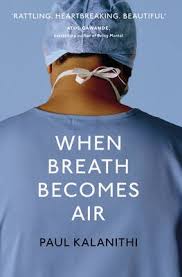
When Breath Becomes Air by Paul Kalanithi

Being Mortal was one of my best reads for 2015.

When I spotted Atul Gawande's quote on the front cover of When Breath Becomes Air, I was, therefore, instantly attracted.

I'm not sure why I'm so compelled to read about death and dying right now, although, perhaps like Paul Kalanithi, it would be truer to say, that death, dying and the meaning of the life have been lifelong fascinations for me, not just a once off flirtation.

Before my cancer was diagnosed, I knew that someday I would die, but I didn't know when. After the diagnosis, I knew that someday I would die, but I didn't know when. But now I knew it acutely.
When Breath Becomes Air is a beautiful written, intelligent and very human discussion on the meaning of one person's life and the internal struggle that ensues when that person realises that their time on earth is suddenly very limited.

Kalanithi covers religion, faith and callings. He wonders what it means to have the ability to do good and what our legacy ought to be. He questions meaning and purpose and values. His personal search connects us to greater universal themes.

Human knowledge is never contained in one person. It grows from the relationships we create between each other and the world, and still it is never complete.

Kalanithi was a reader. He devoured books and ideas from a young age.
The Death of Ivan Illyich, Andrew Marvell, Dickens, Twain, Austen, The Count of Monte Cristo, The Last of the Mohicans - all these shared books and authors somehow made me feel closer to Paul, that somehow we had created a relationship of 'human knowledge' that reached beyond the grave. By sharing these ideas and words, I could help to keep a small part of Paul alive. The ideas and books that fired him up and inspired him, have had a similar effect on me. Maybe one day, when I am gone, the people who read my words and share my book loves will also carry a little bit of me onwards - 'it is never complete'.

When Breath Becomes Air is poignant and sad, yet also uplifting.  It is one man's deeply felt and contemplative search for meaning and understanding.

Highly recommended.

Saturday, 22 November 2014

The Ghost's Child by Sonya Hartnett

Most of you are already aware that I am now an evangelical Sonya Hartnett fanatic.
The Ghost's Child does nothing to change that!

I do wonder, though, if I would have enjoyed her books as a teen.

 "She'd weathered the bafflement of her childhood, and her bleak school years."

I tended to prefer girlish series and romances back then. Occasionally a librarian or teacher would challenge me with something like Animal Farm or To Kill a Mockingbird or A Merchant of Venice & I would get a taste of the big, wide wonderful world of adult literature ahead of me. It's just that I wasn't in any rush to get there.

I'm not sure if Hartnett's beautiful fable about love & loss, beauty, happiness & honesty would have caught my eye.

"It would be a shame to give up. Every journey must be finished."

Which is a shame, because The Ghost's Child has so much to say about life & death & the journey of growing up that happens in between.

"...but the truth is that memory is hardly ever good enough to console a heart."

Hartnett uses the usual magical elements associated with fairy tales to describe the unusual childhood & life of Matilda. Her use of language is simply glorious; lusher than Steven Herrick's (see review below) but equally as complex & nuanced.

This is a slim book with a lot to say about feminine power, freedom & truth.

I'll leave you with a few quotes...if I can decide, that is, which few to pull out!

"She had missed the hills when she was away, their bushfire smell and crackliness, the still air between the trees. She'd missed seeing lizards vanish under stones, missed hearing bellbird calls link the eucalypts like silver neck chains."

"The nargun had no sense of humour, so it never laughed at her; she told it what she dreamt and feared, and it took what she said very seriously. It folded her secrets against its solid black heart and carried their weight for her."

(NB: The Den of Nargun is found on Woolshed Creek in the Mitchell River National Park, Gippsland region, Victoria. Legend has it that the nargun was a fierce half-human, half-stone creature. It had the ability to deflect back to the thrower any weapon used against it. This story was used as a cautionary tale by local tribes to stop children from wandering too far away from the camp. 
The Den of Nargun was actually a sacred site for women's initiation and learning ceremonies. Hence Hartnett's use of the nargun legend in this story.)

Monday, 18 August 2014

This House of Grief by Helen Garner


I seem to be drawn to stories of loss, death and grief this year.
Either that, or the publishing world & our authors are producing more books than usual, with these themes.

This House of Grief follows Garner's journey to understand the tragic real life story surrounding the death of three young boys in 2005.

On Father's Day, in a small country in Victoria, a car left the road at night and ended up in a dam. The father escaped, but all three of his boys drowned. He was returning the boys to their mother after an access visit.

Was it a tragic accident or a horrible act of revenge?

Garner attended the subsequent court hearings and appeals, right to the bitter end.

She worked hard to keep an open mind - to assess the information and the witnesses without prejudice. She grappled with self-doubt, disbelief & repulsion.
She also provided anecdotal stories that highlighted the nature of anger, lies, suicide, marriage break-ups and country town life.

I found this story fascinating, horrifying, compelling and so very sad on so many levels.

My initial response had been "oh no, I can't read about this."

But in the end, I went on this journey with Garner - the journey to understand human nature.

What makes us do the things we do? Why do we lie about them? What pushes us over the edge? How do we cope when we find ourselves over that edge? How do we live with the things we do, especially the bad things we do?

This is a tale of lies, family breakdown, changing loyalties and grief. Garner explores these very human themes from all angles - with compassion and courage.

This House of Grief will be published next week through Text Publishing.

Wednesday, 23 July 2014

Lost and Found by Brooke Davis


The release of Lost and Found in Australia has been surrounded by a LOT of hype (click here for one such article).

But I put off reading Lost and Found for two other reasons.

I thought it might be too light for my tastes and too sad.

But, I have recently had another brush with the randomness of death and suddenly Lost and Found seemed like the only choice.

Lost and Found is lightly told and it is sad, but it is also engaging and wise and very, very human.

As Davis takes her characters on a journey of discovery from lost to found & from sadness to acceptance to renewal. We, the readers also (re)discover the fragility, poignancy & purpose of life.

Davis explores the very personal loneliness & terror of grief. Despair, anger & guilt overwhelm her characters. But eventually, tentatively, hope, love & friendship triumph.

"How do you get old without letting sadness become everything?"

Is the common refrain throughout this story.

A part of me was left wondering how could someone so young write such profound, insightful truths. How could someone so young know so much about living and life and aging...but of course, coming to face to face with death will do all that to anyone. A close, personal, bitter brush with death changes you.

It happens to us all at some point; some sooner rather than later, but one day we all experience the randomness of life and death. One day we all get to experience how lives can be forever changed by one accident, one moment in time.
There comes a day when we all have to learn how to live with the sadness of losing those we love.

What we all learn eventually, the answer we all come to in our way, in our time, of course, is simply to live.

One day it will happen to all of us, but for now, all we can do is live...and love. That's all we can do.

But I'll leave the last words to Millie, Davis' young protagonist,

"You're all going to die. It's okay."

Sunday, 13 April 2014

The Railwayman's Wife by Ashley Hay

This is my kind of fiction.

The Railwayman's Wife is heart-achingly sweet.

Hay has created an emotional world that is absorbing and very tangible. She see-saws between loss & grief and love & hope. Her writing is tender & lyrical and full of the wonder & healing power of nature.

I devoured this book in two days. I could barely put it down.

Anikka Lachlan's world of post WW2 Thirroul became one of my parallel universes of existence. The first night, I hugged Mr Books close as Anikka's grief engulfed me.

Whilst driving to soccer yesterday, I was really walking along Thirroul beach with Ani and Isabel.

At half time, I read another chapter. With the first sentence I was back inside Hay's emotional bubble. The hard, cold stadium seating, the cool, autumnal wind and the smell of teen spirit disappeared completely.

At a dinner party last night, I kept feeling Ani's presence beside me. And I woke this morning aching to be with Ani, with fingers crossed for happy endings.

I love books that take me on an emotional journey. A journey that feels authentic - without histrionics, extravagance or manipulation. A gentle journey of the interior of a gentle, sensitive woman.

The Railwayman's Wife is a beautifully nuanced & bittersweet journey that has left me wanting more story by Hay. For me, it doesn't get any better than this.

Image of Hay at Thirroul courtesy of the Sydney Morning Herald.

The Railwayman's Wife has been longlisted for this years Miles Franklin and shortlisted for the NSW Premier's Literary Awards.

Breaking News: The Railwayman's Wife has won the People's Choice Award at this years NSW Premier's Literary Awards night. 
I'm delighted!

Thursday, 10 April 2014

This Is The Life by Alex Shearer

Hmmmm. I'm not really sure what I'm going to say about this book.

I like the way Alex writes.

I loved the only other book of his I've read - his children's book - The Cloud Hunters.

So I approached This Is The Life with high hopes.

It's a touching story about two middle-aged brothers - one living in Australia; one in the UK. One has been diagnosed with a brain tumour, so the other comes out to help. They discuss treatments, their childhoods and their differing philosophies on how to live a good life.

There were some lovely moments and insights. And there were lots of truisms on the nature of life, death and sibling relationships. But ultimately, I came away feeling underwhelmed.

Which is a pity.
Because when you get to the end, Alex explains that the book is based loosely on the passing of his own brother. "I returned home after my brother's funeral and felt that somehow it was wrong - it was wrong that he should go, should disappear, should vanish without a trace. And so I began to write."


Thursday, 5 December 2013

Tinkers by Paul Harding

I first read Tinkers in 2010 soon after it won the Pulitzer Prize for Literature that year.

Girl Booker raved about Tinkers so highly and so often, that I simply had to read it myself to find out what all the fuss was about. (Click here to read her review about Harding's latest book Enon.)

I was thrilled by the gorgeous writing, the conversation about time & memory and the imagery. In fact, some of the scenes are burnt forever into my soul's memory.

George's life as a tinker in the backwoods of America was completely outside my realm of experience. His story resonated so strongly though it became personal; the beauty of the American woods came alive through his eyes until I felt like I had also walked those paths.

One of the scenes that has stayed with me vividly, is George, or his father, in the middle of winter, driving the wagon through the snow. There was a moment of intense peace; time, memory, history & place perfectly captured in one brief paragraph.

I can picture the wagon with its many little drawers and shelves and compartments for all the bric á brac of the tinkers trade.

Then, one day, three years later, I'm wandering through the Art Gallery of NSW's 'America' exhibition and I'm stopped in my tracks.

It's the tinker; the wagon - right there in front of me! I recognised him straight away.

It was Thomas Wood's 'The Yankee Pedlar'.

A little kinder, softer and gentler than I remembered from the book, but it was the tinker nonetheless.

I love that Tinkers is still alive inside of me. I love that memories of it pop up when I least expect it in the most unlikeliest of places.

A good book can give you connections, a good feeling, a warm glow.

But a great book stays with you forever.