Showing posts with label Starting School. Show all posts

Tuesday, 30 August 2016

Top Ten Tuesday

It's back to school time in the US and UK, so this week's Top Ten is all about the new school year.


Back To School Freebie -- anything "back to school" related.


I used to be a preschool teacher. The beginning of the new school was a big change for everyone concerned - kids, parents and teachers!

Our new school year also heralds the end of the summer holiday period. But for those of us in the Southern Hemisphere, that means the last week in January. 

When I was teaching, I began each school year with two lovely little books about Titch. 
Titch was little, but wanted to be big.

It was a theme my new preschoolers embraced every year.

My former assistants still remember these two books as Bron's first day books. Hopefully there are generations of kids who also remember Titch fondly.

10.
Titch 
Pat Hutchins


9.
You'll Soon Grow Into them Titch
Pat Hutchins

Another great book about growing up and developmental change that I read to most of my classes early on was written by one of Australia's first children's laureate, Alison Lester.

8.
When Frank was Four
Alison Lester

A personal favourite that I liked to read early in the preschool year was Harry. It deals with belonging and identity and had a strong emotional impact on many of my classes.

7.
Harry the Dirty Dog 
Gene Zion

Dogger deals with some of the usual childhood fears - fear of the dark and fear of being alone and lost. It became a great way to get to know the inner workings of my new classes! 

6.
Dogger
Shirley Hughes


How my classes responded to these books gave me lots of clues to their interests, fears and particular talents. 
As each year progressed, we would head down very different literary paths with each group based on the responses and discussions that these books provoked. 

Some groups loved to laugh, others wanted to be moved. Some classes soaked up new ideas and information like sponges and others resisted everything you tried. Some classes enjoyed being scared and others would have nightmares at the merest hint of a darker theme in a book. 

These six books opened the windows into so many souls and told me so much.

Who Sank the Boat is an Aussie favourite. Full of fun predictive text and illustrations. 


5.
Who Sank the Boat
Pamela Allen

At the other end of the school year, my big, grown-up preschoolers began to get ready to transition into big school. December was a huge month for them.

They had dance school Christmas pageant rehearsals, end of preschool performances and 'big school' orientation visits.

The kids were excited and overwhelmed.

The next three books are great stories about starting Kindergarten at big school for the first time in Australia.

They take you through the worries, the routines, the school uniforms, lunch boxes and playground games.

4.
My First Day at School
Meredith Costain

3.
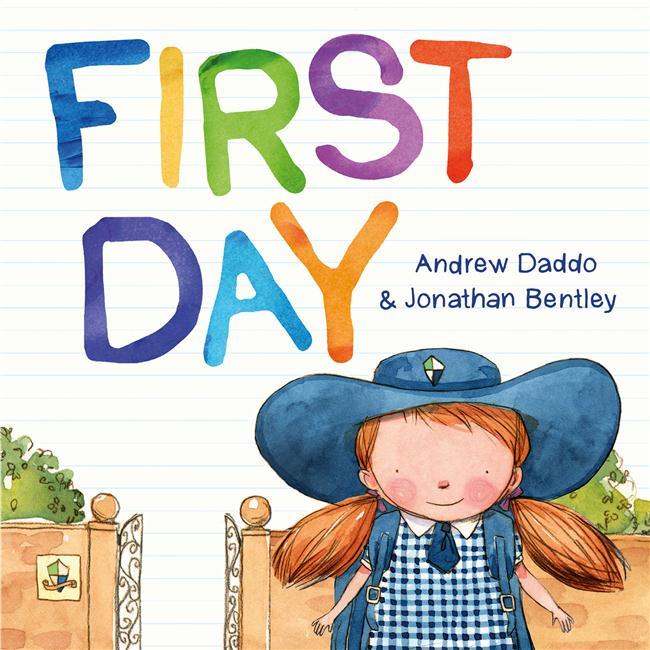
First Day
Andrew Daddo

2.
Look, There's a Hippopotamus in our Playground Eating Cake 
Hazel Edwards

Finally, no back to school list would be complete without the perennial favourite. The one book that embraces childhood change, inspires everyone who reads it and gives hope to us all that we can do it! At any age.

1.
Oh The Places You Will Go
Dr Seuss

Do you have a favourite back to school book?

Top Ten Tuesday is hosted by The Broke and the Bookish.

Friday, 14 February 2014

Free Schools by David Gillespie

Or How To Get a Great Education for Your Kids Without Spending a Fortune.

David Gillespie first came to my attention when I began working in a bookshop 5 years. His book Sweet Poison was all the rage. Every time he spoke on the radio, we experienced a surge in sales.

The success of this book, has produced a new market for I Quit Sugar type books.
(Click on the link to take you to my other blog where you can read my review of this book.)

My doubts about the dogmatic approach to quitting all sugar, in any of its forms has not changed. But anything that helps us as a society to eat better and focus on good health is, ultimately, a positive thing.

I remain skeptical of statistics, percentages and research findings anywhere. Facts and figures can be twisted any which way to prove any argument for or against pretty much anything. Any book, theory or belief that tries to prove that it's stats, facts and figures are 'right' or the 'truth' automatically puts me on guard.

Free Schools freely uses percentages, stats, charts, and research findings. Gillespie acknowledges that almost every area he researched came up against reports, research and data that could support either argument.

Trouble is, a lot of what Gillespie says makes sense and pushes my buttons and biases towards the advantages of state education. Good, universal, well-run, professional state education.

When I was at uni, (ahem, 25 years ago) all these arguments about teaching training, class sizes, unions, private vs state, whole language, teaching to the test etc were being debated. You would have to say that very little has changed since then. The same debates, the same conclusions.

There is no evidence that sending your child to a private school will raise their academic achievements. Most private schools are able to publish outstanding HSC results simply because they groom the students who come to their schools. Those students, all things being equal, would get the same outstanding results wherever they went to school.

If you do want to spend money on private schools and you want that money to be about educational outcomes, there is some research that suggests this is better spent during the primary school years when the foundations are being laid.

If you have a child with a special skill or talent for language, music, sport, the creative arts, music or science, there may be selective high schools (state and private) that can cater to these talents.

But the main point that comes up time and time again is BE INVOLVED.

It was true when I was a student and it's still true now. Students who do well at school have involved parents. Parents who join the P&C, man the tuck shop, help out at the fete, bake cakes for the cake stall, attend assemblies and special events, cover books, ask about homework, get to know the teachers, help establish study and homework timetables, discuss school reports, set goals & get to know their kid's friends.

Balance is the key though - helicopter parents are too involved and run the risk of alienating their children from the school AND, ultimately, from themselves. Or they do so much for their children, that the kids never learn anything about responsibility, self-sufficiency or competence and they struggle to find their way in life as adults.

Gillespie boils the debate down to 2 main imperatives. A good school that can improve your child's educational outcomes has good teachers engaged in on-going professional research and mentoring programs and good school leaders.

I taught for 18 years in the early childhood sector & I can tell you there are a number of ordinary teachers out there. But there are also a lot of amazing, committed, hard-working professionals out there as well.

It's not easy to maintain that level of excellence all the time though.

Some years you get challenging children that suck all the goodness out of you. Sometimes your personal life impacts on how focused you are. Sometimes you get tired, run-down & ill. Sometimes the lack of community support & understanding wears you down. Sometimes you burn out.

Teachers are only human. They have good days and bads like the rest of us. It is a job that has a high level of accountability but very little real support or guidance on how to get there.

Smaller class sizes can make for a less frazzled teacher, but it still only takes one challenging child to throw out a whole year, regardless of the class size. (By challenging, I don't mean the average naughty child who is a bit defiant or silly. I mean the kids who come in calling you a "fu@#ing c*&t" and throw chairs across the room when angry. I experienced this with 5 year olds; I can only imagine how scary it would be with teenagers)!

And maybe that's where private schools have the advantage over state school. Privates schools can refuse these damaged kids entry so that their select students and families can go through their school lives safe from any contact with challenging, difficult people.

Australia is becoming a society where class is playing a larger role. The divide between the haves and have nots is now clearly defined by suburbs & schools. Even small country towns have a 'desirable school' & a 'less desirable school'. We give lip service to democracy and equality and a fair-go for all, but we really mean a fair-go for me and mine first!

Maybe that's the real debate at the heart of this book - our society - where we are and what kind of future do we want for all of us?

Tuesday, 28 January 2014

First Day of School

During my preschool teaching years I used to bemoan the fact that most of the starting school books available to me were written by American or UK writers. None of the books that I read to my classes accurately reflected what would happen as they went off to school.

The closest thing I had to a home grown Aussie school experience was Hazel Edwards "Look, There's A Hippopotamus in the Playground Eating Cake."


This book is part of her delightful series about an invisible friend, a hippo, who likes to sit on the roof and eat cake. He doesn't get into trouble, he doesn't get scared and he's always there when needed.

I used to read this book, year after year, as a springboard to 'what will happen to me at school next year' discussions. It's a great story that appeals to 4 year olds, but I did get tired of reading the one book over and over again.


Until now!

This year we have been inundated with new books about Australian kids starting school.


My First Day of School by Meredith Costain & Michelle Mackintosh uses the Victorian term Prep, which is not that surprising as both Costain & Mackintosh are from Victoria. However, it does highlight the unusual nature of Australia's education system that has evolved different terms, curriculums, frameworks and teaching training standards across each state & territory in Australia!

Headings such as 'coming in, leaving mum, rules, in trouble, partners, mats, hungry, storytime, hometime' assure us that every 5 yr old concern will be addressed.

The questions are answered in a fun, light-hearted way with lots of practical advice.
It finishes with "I think I'm going to like this place called school."

Starting School by Jane Godwin & Anna Walker is written from multiple points of view - in fact, from the entire class!


Each child gets to highlight the thing about school that interests or concerns them the most.

Godwin also uses chapters headings to structure her book - 'getting ready, things we need, first day, in the playground, doing work, packing up & hometime' are just a few.

The book finishes with "What do you like about school?"

First Day by Andrew Daddo & Jonathan Bentley is a simple, fun story about getting ready, with mum, for the first day of school.


As we go along with their breakfast, dressing, packing, school selfie & goodbye's at the school gate routines, we realise that the first day of school can be just as stressful on mum.

"Remember what we always say: the best bit about waving goodbye is the next wave will be hello."

And the last line continues the affectionate, positive attitude "And the next day will be even easier!"

An Aussie Year: 12 Months in the Life of Australian Kids by Tania McCartney & Tina Snerling is a seasonal approach to school, celebrations and the everyday things kids can do.


January talks about swimming at the beach, picnics, cricket, thongs & sunscreen, Australia Day & the tennis.
February focuses on going back to school, Valentine's Day, Chinese New Year and more swimming.

There is a bio at the front on each child that is featured throughout the book and a map of Australia at the back.

Wombat Goes to School by Jackie French & Bruce Whatley follows the further adventures of their (now) very famous wombat.


This time wombat manages to find a tunnel that brings him to school. On his quest for carrots & grass he frightens children, disturbs the peace (& the Principal) and generally makes mischief.

The illustrations combine with the text to make for a very humorous day at school.

First Day by Margaret Wild & Kim Gamble was first published in 1999 (but I somehow missed it at the time.)


The cover and format of the book does not immediately attract me to it.

Which is a shame, because it's a lovely story once you start & the illustrations become more endearing as the characters come to life.

It's also a lot wordier than all the other offerings.
It highlights the multicultural perspective as well as showing us an adult going back to study for the first time since her own school days.

"On the first day of school...Alex hopes she will make a friend, Salma wants to learn to write NOW, Stephen is a little scared, and Penny is as wriggly as a tadpole. Khalil is the best a tying shoelaces, and Jun just wants to count...10 9 8 7 6 5 4 3 2 1 ZERO! But what is the little dog, Josh up to?"

This week kids all over are Australia are heading back to school or starting school for the first time.
We're also heading into new territory as our eldest booklet begins his senior years with all the HSC stress that can entail!

Good luck one and all.
May the 2014 school year be a bright, happy & productive year.

And a special shout out to my former colleagues as they head back into another hectic preschool year - I hope you find these book reviews useful.