Showing posts with label Dreaming of France. Show all posts

Monday, 27 July 2015

The Most Beautiful Walk in the World by John Baxter

Subtitled A Pedestrian in Paris, I was expecting The Most Beautiful Walk in the World to be all about walking around Paris, seeing the sights and getting some great tips for places to visit next time...one day....

But TMBWW is more of a memoir. Part boastful name dropping, part journal, with quite a bit of "look at me! look at me!" thrown in. It seems that Baxter wanted to impress us with his literary connections and elegant taste in food.

I wanted to love this book.
I wanted to lose myself in the streets and parks and cafes of Paris.
I wanted to dream, plan and hope.

Instead I clunked and shuddered from one anecdote to the next, always expectant, always waiting for that moment when Paris would reveal itself from underneath Baxter's seemingly endless supply of words.

I understood his "look at me" approach completely.
Growing up in rural Australia is not an easy thing when you're shy, with intellectual tendencies and a burning desire to not only see the world, but to make your mark on it. I just didn't feel in the mood to read his book about it though.

At some point I also realised that I was enjoying the well-selected chapter quotes more than I was enjoying the actual chapters.

The only section that really piqued my interest was early on when Baxter was talking about a French family Christmas.
His wife had a
stoneware vinegar bottle....Into it, she emptied a few trickles of red wine left after a dinner party. Inside, the mere, or mother, a gel-like colony of bacteria, transformed it into an aromatic vinegar. This bottle, with the mere already inside, came to Paris in 1959 with Aline, the housekeeper hired to cook for Marie-Do, her young sister, and their widowed mother. Before that, who knew...? As long as you kept it fed, the mere was immortal.
I had never heard of this before, although I guess it's like those 'live' cake mixes that go around every now and again. A regenerating vinaigrette is more my style though - and more anecdotes like this would have appeased me.

Sadly my one excursion into Paris for Paris in July has left me feeling a little 'meh', although I can still be found Dreaming of France :-)

Breaking News:
At work today, I picked up Snow Kimono by Mark Henshaw (winner of this year's NSW Premier's Literary Award for fiction) as my lunch time read. If the stars align this week, I may be able to get in one more Paris book before the end of July and also fulfill my Japanese Literature challenge at the same time.

On the same day that retired police inspector Auguste Jovert receives a letter from a woman claiming to be his daughter, he returns to his Paris apartment to find a stranger waiting for him.

That stranger is a Japanese professor called Tadashi Omura. What's brought him to Jovert's doorstep is not clear, but then he begins to tell his story - a story of a fractured friendship, lost lovers, orphaned children, and a body left bleeding in the snow.

As Jovert pieces together the puzzle of Omura's life, he can't help but draw parallels with his own; for he too has lead a life that's been extraordinary and dangerous - and based upon a lie.
This now also counts as my cheats-I'm-too-busy-packing-to-blog #IMWAYR post!

Thursday, 18 June 2015

All the Light We Cannot See by Anthony Doerr

If you've been wondering whether or not to tackle the chunkster that is this year's Pulitzer prize winning novel, hopefully the quote below will tempt you to jump right in.

I've been reading All the Light We Cannot See since last week. It is an extraordinary story, so well told, so beautifully realised, but it did take me a little while to get into its rhythm.

Set in France and Germany during WWII, the story is told from two main points of view in brief, elegant chapters across several time frames. Even though I've read lots of books like this and I could always see the potential of this particular story, I did find it slow to warm. 

Fortunately, I persisted, and I hope you do too, because eventually you get to a point where you cannot put this book down!

Let me give you a little snippet from page 71 of my edition:

Those last nights in Paris, walking home with her father at midnight, the huge book clasped against her chest, Marie-Laure thinks she can sense a shiver beneath the air, in the pauses between the chirring of the insects, like the spider cracks of ice when too much weight is set upon it. As if all the time the city has been no more than a scale model built by her father and the shadow of a great hand has fallen over it.

I hope this tempts you to give All the Light We Cannot See a go.
If you love literary historical fiction as I do, you wont regret one single word.

But that's enough dawdling for me - it's time for me to finish the last dozen or so chapters!

This post is linking up to Thursday Quotables hosted by Lisa at Bookshelf Fantasies & Dreaming of France.

Sunday, 31 May 2015

A Motor-Flight Through France by Edith Wharton

I was so excited when my beautiful copy of A Motor-Flight Through France turned up in time for Wharton Review month.

The look and feel of the cover, the premise (a road trip through France pre-WWI), the paper, even the size of the book - perfect!

First published in 1908, this edition came with a thoughtful and enticing introduction from Mary Suzanne Schriber. Mary, along with her friend Lynne Waldeland, embarked on a five week roadtrip in 1980 with Wharton's Motor-Flight as a guide.

What a delightful thing to do!

As Schribner describes it:
Wharton's flight to France, however, was much more than a move away from America and its lack of interest in intellectual matters and intellectual women. It was a positive flight as well, toward stimulation and expansion.
A Motor-Flight Through France is stimulating and intellectual and full of the joys of the open road.

It's obvious that Wharton loves France and the French way of life:
...everything speaks of long familiar intercourse between the earth and its inhabitants; every field has a name, a history, a distinct place of its own in the village polity; every blade of grass is there by an old feudal right....
Coming from another country with a small recorded history, I understand this desire to fall into the long history of Europe.

Like Wharton, I also like to read extensively (before, during and after) about the places that I visit. I like reading their histories. And I love reading the well-known stories as well as the contemporary authors.

Wharton & I should be besties! The perfect travelling companions.

But something went wrong.

Despite the occasional phrase, beautifully wrought, the fascinating black and white photographs and the all too rare gorgeous description, I began to realise that my high expectations were souring. Not because of what she was writing, but how she was writing it.

I became aware of a smugness, an intellectual superiority and at times, a snobbery towards people not like her.

I recall that I also had a similar response to A Backward Glance, her autobiography that I reviewed last year.

And now I'm left wondering if this will affect my future rereads of her novels? Can you love and adore a book when you're no longer sure you like or admire the person who wrote it?

As an aside, I believe that A Motor-Flight Through France is dying for a modern make-over. Schriber missed a great opportunity to layer her 1980 road trip over Wharton's. Perhaps Michael Palin (or me!!) could undertake to follow in Wharton's tyre treads. We could compare her views to the modern day view. What buildings and scenes were destroyed during the wars? What has been built up, built over or lost?

A travelogue complete with touring maps, sumptuous photographs and George Sand quotes sounds very appealing to me.

Tuesday, 28 April 2015

Catherine Certitude by Patrick Modiano

You know that something special is coming your way when you start noting down & highlighting quotable lines on page one of a new book.

The story begins in New York. Catherine is an elderly woman watching her daughter teach a dance class. She notices a young girl wearing glasses. The young girl carefully places her glasses on the chair to dance. Instantly, Catherine is transported back to her own glasses-wearing childhood.
Without my glasses, the world lost its roughness and became as soft and downy as the big pillow I used to lean my cheek against before going to sleep.
When I wore my glasses I saw the world as it was. I couldn't dream any more. 
I loved how this one paragraph told me that this was going to be a book about perception & memory - my favourite bookish themes.

Catherine Certitude is by the Nobel Prize in Literature 2014 winner, Patrick Modiano.

It was first published in 1988 in France.
This lovely hardback edition, translated by William Rodarmor & illustrated by Jean-Jacques Sempe, was recently published in the UK through Andersen Press.

It's a curious tale with more adult appeal I feel, than the early reader picture book that it looks like from the outside. The cover declares that it's a love letter to Paris, but it feels more like a loving homage to a father/daughter relationship. Full of tenderness & nuances, Catherine Certitude highlights all the special little understandings that exist in any strong bond.


Catherine now runs a ballet school in New York, but this is the story of her childhood in Paris:
Only one thing in my life is out of the ordinary: before we came to America, I spent my childhood in Paris, in a neighbourhood off the 10th arrondissement. 
One of the few things I knew about Modiano from all the publicity last year was that he had had a difficult childhood and that his stories were concerned with memory, history, identity and the complexities of choice.

I was therefore, even more curious about Catherine's story - was this a wish fulfillment tale about his own childhood or perhaps a story about his relationship with his two daughters?
Modiano's work is haunted by what he says was a cold upbringing, creating the impression of a long letter to his parents. (The Local)
Catherine Certitude leaves us with many unsolved mysteries. Why did the mother leave them in Paris? What were Mr Certitude's shady dealings? Why did he emigrate to France?

There are all sorts of signposts from Modiano's own life - the cold, unavailable mother and a father engaged in dodgy collaborations. Yet, it is clear that this father and daughter are very close. Tolerant and supportive of each other's dreams and foibles:
We always stay the same and the people we have been in the past go on living until the end of time.
Catherine Certitude is Modiano's only children's book, but I for one, will be reading more of his adult work to explore his "art of memory" (Nobel Prize committee).

Saturday, 21 March 2015

An Armadillo in Paris by Julie Kraulis

My first thought when I saw this picture book at work was 'Louise!' (from A Strong Belief in Wicker) because An Armadillo in Paris would tickle her Francophile fancy in all the right spots!

Elegant black and white illustrations grace each page & the covers. They are simple, clean drawings enhanced by splashes of water colour.

Young Arlo the armadillo likes to explore - he comes from a long line of nine-banded explorers. His grandfather, Augustin, left him a trail of clues with which to explore Paris for the first time. His aim is to find the Iron Lady.

So with "a twitch that only stops when adventure begins..." Arlo sets off!

He takes in all the usual Parisian sites as his follows his grandfather's clues around the city.
We also learn some facts about the Iron Lady at each stop.

Arlo particularly enjoys the stops that allow him to munch on croissants & try macarons!

The final double page spread revealing the identity of the Iron Lady is followed by a page of facts and figures for those who want to know more.

Julie Kraulis is Canadian and has a website full of her lovely illustrations & art work here. She also has an earlier picture book called, Whimsy's Heavy Things, for me to track down :-)

This post is part of Dreaming of France with Paulita.

Sunday, 7 September 2014

Seven Letters From Paris by Samantha Vérant

I so wanted to love this story.

Seven Letters From Paris: Sometimes Love Gives you a Second Chance: A True Love Story should have been right up my alley.
My Random House rep knew of the basic story behind my very own romantic marriage, so she thought of me straight away when this proof copy turned up at work.

Sure, Sydney is not Paris, and our time apart was 14 yrs, not 20. I was only 19 when I met my husband for the first time, just like Samantha. However ours was more than a holiday romance back then as we dated for 4 yrs....& the beginning of our second time also centred around letters and emails.

As you can see, two very similar romantic stories - we should have been kindred spirits. I should have been able to relate to Samantha's story. But I didn't.

The part that finally made me give up was when Samantha flew to Paris to meet Jean-Luc for the first time 20 yrs later.

Perhaps it's simply not possible to describe the true intensity of feelings of that day, that moment when you meet again. The hopes, the fears, the anticipation, the regrets, the excitement, the wonder, the confusion, the tears, the laughter, the passion - so many expectations & possibilities crowded into one moment, one day. Ten years later, that day is etched onto my brain, heart & soul forever.

Sadly, I was unable to enter into Samantha's world at this point of the story. I felt deflated, like something important had been glossed over. Even Paris seemed bland. I couldn't capture the excitement or feel the emotion. It was a story being told, rather than an experience being shared.

I do wish Samantha and Jean-Luc all the love and happiness in the world. I hope their real life story continues to be as wonderful, romantic and special as ours is to this day.
Even though all our friends say our story would make a fabulous movie, after reading Seven Letters, I think I will save our story just for us.
Unless you know the people involved, with all the back stories and nuances understood & accepted, reading someone else's love story is just, well...unsatisfying.

Seven Letters From Paris is a November release from Random House Australia.
This post is part of Dreaming of France.

Sunday, 3 August 2014

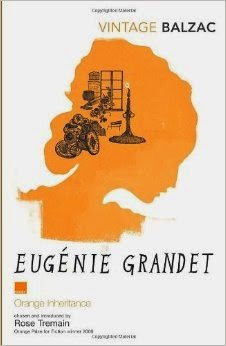
Eugénie Grandet by Honoré de Balzac

Eugénie Grandet is part of Balzac's much larger collection of works, La Comedie humaine, conceived as a realistic exploration of the Restoration & July Monarchy periods (1814-1848) .
There were 91 completed and 46 uncompleted novels & essays in the collection all told.

Eugénie was first published in 1833. My edition was translated by Katherine Prescott Wormeley.

Balzac uses a lot of very specific detail and description to set the scene in this, his first best selling novel. Many of the descriptions referred to places, items & architectural terms that I could not picture, so I spent an afternoon on google images researching the town and buildings of Samaur. (see my WWW post).

I initially thought this was going to be a Romeo & Juliet story with star-crossed lovers and early, tragic deaths.

However, the tragedy is far more subtle, drawn-out & realistic than Romeo & Juliet as the star-crossed lovers are merely separated by geography & time.

Balzac explores human nature, temperament and the influences of family and circumstance.
The main themes are money & power and the corrupting nature of both.

We follow Eugénie as she suffers for her first and only love. She argues with & defies her father who locks her in her room with nothing but bread and water. Her mother dies, she reconciles with her father but withdraws from society. She gradually takes over her father's business affairs as his health also declines and, in despair we watch Eugenie become more and more like her miserly, niggardly father.

Declining all the joys and happiness that could be had, choosing instead to remember lost love and martyr herself to the miserly life established by her father.

According to wikipedia, Eugénie is content with her lot at the end of the book. I guess, if you consider waiting to die to attain the glories of heaven, 'content with your lot', then so be it, but it seems a rather cold & lonely existence to me.

Eugénie was, sadly, a product of her time. As a young woman, she had no other viable option other than to obey her father and accept her lot. Meanwhile, young Charles could head off into world, explore, make a fortune and make a life for himself.

This could have had an interesting early feminist twist, except that Balzac also gave Charles an unsatisfying ending - corrupted morality, a loveless marriage and the hollow ambition to get into the court of Charles X. With all his choices and options, cousin Charles still ended up leading a cold and lonely existence.

But perhaps, I'm just a hopeless romantic who thinks that love is the only real consolation in this life!

I read Eugénie Grandet for Paris in July, although it also fulfills several other 2014 reading challenges as well.
If you'd like to check out the best translation of Eugénie for you - visit this fabulous Compare Translations website.

And for the record, I will be reading more Balzac - this was a very satisfying dip into provincial French 19th century life.

Wednesday, 30 July 2014

Wondrous Words Wednesday

I'm reading Eugénie Grandet by Balzac for Paris in July & Dreaming of France.

And I've come across quite a few unknown words...so it's time to jump on board Wondrous Words Wednesday again!

The early chapters of Eugénie are about establishing the scene. Researching this post, especially hunting down the pictures, has really helped me to embed myself in the town of Samaur.

"...lovers of the Middle Ages will here find the ouvrouére of our forefathers in all its naive simplicity."

It wasn't easy to find a definitive definition for ouvrouére,but the closest I found came through a French/English translation site where one of the possibilities was 'open mindedness' & this seemed to fit the context. 

"...Monsieur Grandet (who was supposed to have worn the Phrygian cap)..."

Wikipedia:
"The Phrygian cap is a soft conical cap with the top pulled forward, associated in antiquity with the inhabitants of Illyria, a region of North West Ballkan peninsula. In early modern Europe it came to signify freedom and the pursuit of liberty. In revolutionary France, the cap or bonnet rouge was first seen publicly in May 1790, at a festival in Troyes adorning a statue representing the nation, and at Lyon, on a lance carried by the goddess Libertas. To this day the national emblem of France, Marianne, is shown wearing a Phrygian cap."

"The two pillars and the arch, which made the porte-cochére (see previous entry for this word) on which the door opened, were built, like the house itself, of tufa - a white stone peculiar to the shores of the Loire, and so soft that it lasts hardly more than two centuries. Numberless irregular holes, capriciously bored or eaten out by the inclemency of the weather, gave an appearance of the vermiculated stonework of French architecture...."
Tufa stone - Balzac's description was detailed but I couldn't picture it.
Now I can!
Verticulated block
Samaur by Willmore 1833

pellitory
bindwind
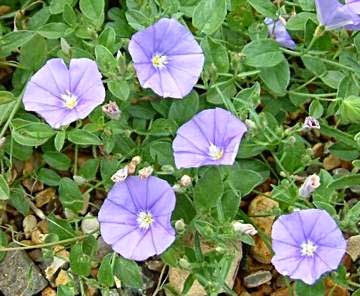
"...a variety of chance growths had sprung up - yellow pellitory, bindwind, convolvuli, nettles, plantain..."

convolvulus


nettle
plantain


Tuesday, 29 July 2014

The Chateau by William Maxwell

I've had The Chateau on my TBR pile for some time now, but Paris in July gave me the excuse I needed to read it sooner rather than later.

The evocative cover attracted me straight away as it drew me into post WW2 France. I was expecting to be overwhelmed by love and tenderness and joie de vivre.

But this was a quieter book than even I anticipated.

"He studied the man's face, and the face declined to say whether the person it belonged to was honest or dishonest."

Harold and Barbara Rhodes are a gentle, sensitive American couple travelling in France after the war. Conscious that they don't belong, they try everything they can to learn the ropes & fit in. Many of the little drama's in this book are created by their inability to understand French ways. They're astute enough to know something is amiss, but the language and cultural barriers are simply too intangible and complex for them to navigate confidently.

"Though there is only one way to say 'Thank you' in French, there are many ways of being rude, and you don't stop and ask yourself if rudeness is sincere. The rudeness is intentional, and harsh, and straight from the closed heart."

The Chateau is full of little awkward moments & little misunderstandings. The insecurities of traveling in a foreign country are beautifully detailed. But also, the unexpected delights - the walk, the detour, the lunch, the party invite that becomes a memorable highlight.

The French countryside and Paris came alive under Maxwell's light touch.

 "Mont-Saint-Michel....Rising above the salt marshes and the sand flats, it hung, dreamlike, mysterious, ethereal."

The melancholy the comes over the traveller as their time is coming to an end was also beautifully described.

"It was alright before, and now it isn't....Home, I'm talking about....I didn't know about any other place. Or any other kind of people. I didn't have to make comparisons. I will never be intact again."

The story was divided into two distinct parts. The majority of the book followed Harold & Barbara on their journey through France. All their experiences and decisions radiated out from their expectations and involvement with the chateau and the people they met there.

Part two was a final, curious chapter, that I ended up reading twice.

"...answers may clarify but they do not change anything."

Maxwell steps out of the story & provides a question and answer chapter that 'clears up' all the little drama's and misunderstandings.

He uses the chapter to highlight just how contrary and nuanced, mundane and bizarre the behaviours of his characters really are. 

The Chateau was not as mesmerising as I thought it might have be, but it's gentle charm has stayed with me for several weeks now. 

I see more Maxwell on my horizon!

This book also counts for Dreaming in France, Back to the Classics & Books on France Reading Challenge.

Monday, 28 July 2014

Gaston by Kelly DiPucchio & Christian Robinson

A new picture book turned up at work last week that I knew would be just perfect to share with all my Paris in July and Dreaming of France friends.

Gaston by Kelly DiPucchio is about a family of French poodles.

There are four adorable puppies - Fi-fi, Foo-foo, Ohh-la-la and Gaston.

But a quick glance at the page below will tell you that there is more to this story than meets the eye.
Gaston, is obviously not a French poodle.

However, Gaston works hard, very hard, to be just like the other poodles. He learns to sip, yip and generally behave in a poodle-like manner.

It's not until the poodle family are walking through the park one day and come across a bulldog family that the problem becomes obvious.

The bulldog family also has four adorable puppies - Rocky, Ricky, Bruno & Antoinette.

They have been taught how to be perfect bulldogs - they love to run and play rough and bark loudly.

Gaston & Antoinette decide that they should live with their biological families...but everyone struggles with the swap.

The poodle family now all look the same, but Antoinette is just too rough & boisterous.

The bulldog family now all look the same, but Gaston is simply too tender and gentle.

Another visit to the park, and Gaston & Antoinette return to the family that they feel they belong with.

The families continue to meet as the years go by, so that the poodles learn to be a little tougher and the bulldogs learn a little tenderness.

Gaston is a gorgeous story about family, belonging and identity. The acrylic paint illustrations have a lovely retro feel and complement the gentle humour and grace that this story is told with.

But for now, I will let you discover the satisfying ending for yourself, below.


Thursday, 24 July 2014

Le Road Trip: A Traveler's Journal of Love and France by Vivian Swift

Le Road Trip turned out to be an epic journey for me as well as Vivian Swift.

It's just that my reading journey was nowhere near as romantic as Swift's creative one!

Last winter I added Le Road Trip to my soccer bag, so that I could use my time on the sidelines (when I wasn't jumping up and down barracking for the boys that is) dreaming of Paris.

The trouble was, at the end of the soccer season, I left it in my soccer bag. Forgotten, like last season's shin pads!

Imagine my delight, during half time at the first game of the season, when I opened my bag & discovered something white & glossy peeping out between the scarf, gloves & garden cushion!
It felt like unearthing hidden treasure or finding an old friend.

Le Road Trip was a book I savoured one lovely page at a time, over two seasons of soccer.

I enjoyed the road trip/relationship comparison.
I loved the cheeses, the windows and the cats.

Swift's drawings and paintings were a gorgeous way to record a holiday. I felt envious of her ability & wished that my travel journal could be more than just words, tickets stubs and postcards.

Sometimes Vivian's voice & attitude was a little, well, annoying, but this is just a slight grumble about an otherwise glorious book full of inspiration & tantalising details.

Thanks to this book (& Paris in July) my TBV (To Be Visited) list for France is starting to look more like a telephone directory!


This is a part of Paris in July and Dreaming of France.

Tuesday, 22 July 2014

Max by Marc Martin

I am rather partial to Marc Martin's illustrations.

I've enjoyed his previous two books A Forest & The Curious Explorer's Illustrated Guide to Exotic Animals A-Z, so I was eagerly awaiting his next book.

Max is a rather cheeky seagull.

He likes fish. He likes chips.
And he especially likes Bob - the fish and chip man.

But one day Bob (and his fish and chip shop) are gone.

Max is a lovely story about friendship and change.

Martin's illustrations are his usual appealing mix of water colour, texta, ink pencil, scanned textures and computer graphics. His seascapes are particularly wonderful.

Check them out - you'll be hooked too :-)


Marc Martin is a French born Australian artist which means that I can include this post in  Paris in July & Dreaming of France.

Friday, 18 July 2014

A Walk in Paris by Salvatore Rubbino

Rubbino has completed three city walking books - one each in London & New York and now, his latest A Walk in Paris.

The story follows a young girl and her grandfather as they explore Paris together.

They use the metro, visit the markets, taste cheese, discuss Parisian style, stroll through gardens and admire the art and architecture.

Maps on the front and end papers help to highlight the main points of interest.

Each page also has useful little French snippets such as French words and phrases, appropriate facts and figures, a little history and a fold up Eiffel Tower at night page!

Rubbino's illustrations are very retro and reminiscent of Sasek's original great cities of the world series. (Although the content is completely up to date.) It's a friendly, easy to read travelogue dressed up in a children's picture book!

The book feels familiar and cosy to adult readers, but I know that my booklets don't like books that look old, so I'm not sure how successful this will be with younger, modern readers.


This review is part of Paris in July & Dreaming of France.

Wednesday, 16 July 2014

Mr Chicken Goes To Paris by Leigh Hobbs

Mr Chicken Goes to Paris (also known as Monsieur Poulet va 'a Paris), was first published in Australia in 2009.

Mr Chicken is an over-sized, grumpy looking fowl with attitude...who happens to enjoy travelling.

The front papers show us Mr Chicken's passport, his to-do list and some pics of him reading books on Paris. There is also a letter from his friend Yvette, inviting Mr Chicken to visit her in Paris.

Naturally, Mr Chicken sees all the usual sights and sites of Paris.

Everywhere he goes he attracts a crowd, discreetly checking him out & wondering who or what he is.

Yvette looks delighted to be showing her friend around, but Mr Chicken and most of the Parisians look decidedly unhappy if not out-right grumpy!

Curiously though, Mr Chicken Goes to Paris is a charming, silly, adorable story.

The end papers show us some 'photographs' of Mr Chicken & Yvette around Paris, a thank you postcard to Yvette...plus several news stories in French papers and on French TV exclaiming "grand monstre" above a picture of Mr Chicken!

Leigh Hobbs obviously feels rather attached to Mr Chicken as a quick google search revealed a sculpture and oil painting by Hobbs featuring Mr Chicken. He has also written a follow up story called Mr Chicken Lands on London.

Hobbs is quoted as saying that he works very hard to make it look easy. And certainly part of the enjoyment of Mr Chicken is in the simple, unassuming style used by Hobbs.

However Mr Chicken's success actually lies in its incongruity.
Grumpy, but cute.
Bizarre, but very funny.
Mr Chicken gets under your skin; he makes you smile even as you're shaking your head in disbelief.


This review is part of Paris in July & Dreaming of France.