Showing posts with label Humour. Show all posts

Thursday, 11 June 2020

The Thursday Murder Club | Richard Osman #CosyCrime

This is how it happens.

Barely a week into 20 Books of Summer Winter, with only two books from the list half started, my lovely Penguin rep hands over a September new release and says, "I defy you to read the first chapter and not want to read the rest."

Challenge accepted!

Given my predilection for cosy crime, it was only natural that I took the book to lunch with me that day, to see if the rep was right. She was. And one June long weekend later, I'm adding my first ring-in to my 20 Books of Winter list.

I'm still reading the first two original books from my list, so this ring-in also gets the honour of being the first book reviewed for 20 Books 2020.

That's how it happens...every single year!

So why did I put down my other two books (which I'm thoroughly enjoying by the way) to binge The Thursday Murder Club by Richard Osman?

The long weekend was a factor. The Sunday in particular was rainy, cold and miserable. The perfect day to snuggle down with a cosy crime.

But the main factor was the book itself.

It was so much fun - laugh out loud fun, in fact. The characters were so charming and delightful and the whole premise was so enticing, I simply didn't want to stop.

The premise - four elderly residents in a fairly well-heeled retirement home set out to solve the murder of the local property developer who built their very own retirement complex. These are not just your regular old folks pottering away their final days though. These people had some serious jobs prior to retirement. Elizabeth was some kind of secretive government operative who knows all kinds of tricks of the trade. Ron was a former union boss, and Ibrahim a psychiatrist. While Joyce's special skill is being overlooked and underappreciated, which allows her time to notice things that everyone else misses. 

They run rings around the local police force as they all try to work out who killed the property developer. 

The whole time I'm reading it, in between all the chuckles, chortles, smirks and snickers, I'm running through my list of older British actors who could play the various roles - Judy Dench, Maggie Smith, Tom Wilkinson...it's a pity Omar Sharif is no longer with us, he would have been a lovely Ibrahim. As well as hoping all the way through, that Osman would finish the book with a teaser leading into a possible book two.

He did!

Facts:
  • Osman is a British TV producer and presenter (think quiz show Pointless).
  • September release with Penguin Random House Australia.

Favourite Quotes:
You always know when it's your first time, don't you? But you rarely know when it's your final time. 
In life you have to learn to count the good days. You have to tuck them in your pocket and carry them around with you.

Book 1/20 Books of Summer Winter 

Tuesday, 5 May 2020

488 Rules For Life | Kitty Flanagan #AWW

Rule 12: The bathroom is not a library, there are far more pleasant, not to mention less smelly, places to read your book. Don't linger in there, get in get out.
Sorry Kitty. I was with you right up to rule number 12!

I've read in the bathroom ever since I was little. In a large family, there were not many places to go where you were guaranteed privacy. The bathroom was almost the one and only retreat available to an avid reader seeking peace and quiet. Taking a long bath with a good book was my favourite escape. It still is.

I hate to admit it Kitty, 488 Rules for Life: The Thankless Art of Being Correct is actually the perfect book for reading in the bathroom. 

Brief chapters filled with pithy and witty sections best imbibed a few at a time to fully savour their aptness. It also meant that Mr Books and I could read the same book at the same time. Well, obviously, not at exactly the same time. But over a period of a few weeks, with two distinct bookmarks, we chuckled and chortled our way through Kitty's rules together.

Rule 26: Cushions are not spiritual advisors.  
Rule 260: Decide on your tattoo. Then wait a year.

The other 480-odd rules were fair and reasonable rules though. As you mentioned a few times, they're barely worth mentioning, except, that obviously you do need to mention them as some people clearly don't understand the importance of standing back from the baggage carousel at the airport or about not leaving only one square of toilet paper on the roll or posting pictures of themselves doing yoga. 
Rule 386: Don't call it a wedding invite. It's an invitation. You invite people to your wedding with an invitation.

I have had the pleasure of seeing Kitty perform live a couple of times. I also enjoy her various appearances on TV shows and televised comedy festivals. She's my kind of funny. I feel like I know her. I certainly know her voice, her inflections and tone. As a read her 488 rules, I could hear her in my head. That's a good thing, by the way. It added to the funny.

488 Rules id highly recommended during these strange times when a good laugh can make all the difference.

Facts:
  • Published by Allen & Unwin 2019
  • Cover design and illustrations | Tohby Riddle
  • Her dad is John Flanagan, the children's writer of The Ranger's Apprentice series.
  • The book started as a joke inspired by Jordan Peterson's book 12 Rules for Life. Obviously 12 were never going to be enough in Kitty's world!
  • Kitty has one of the most comprehensive wikipedia bio's I've ever read!
Favourite or Forget:
  • Obviously a favourite.
  • If you haven't seen her performances in Utopia yet, then make it your mission for the rest of this lockdown period, to binge watch this funny/not funny/too close to real life Working Dog series.
Image Source
Rule 404: Don't get a photo taken with Santa unless you're a child.

Wednesday, 25 March 2020

High Rising | Angela Thirkell #ComfortRead


Given these weird and scary times we now live in, Angela Thirkell seems like the only sensible option! Her gentle social satire, quintessential British humour and lightness of touch in the face of adversity is not only comforting but inspiring.

High Rising is the first book in a 29 book series, the Barsetshire Chronicles, a homage to Anthony Trollope’s Chronicles of Barsetshire books. Barsetshire is a fictional English county used by both authors for their cast of characters - mostly gentry and clergy - to run around in.

Thirkells’s light, amusing, romantic stories are given an added extra something when we take into account that most of the early books in particular, where written contemporaneously. The WWII books were written as they were living it, without knowing when or how it would end, how many lives would be lost or what sacrifices they might be called on to make as a society. Doubt and fear underlie every action in these books. Yet you cannot live every single moment of every single day like that. Daily life continues, even though it’s different to ‘before’. New things become normal, hardships are sudden and unexpected. But carry on, you must. And if you must carry on, then you might as well do it with as much good grace and humour as you can.

High Rising takes place in 1933. Events are unfolding in Europe that will have profound effects on this world one day. We know that, but Thirkell and her delightful, charming characters do not. They are still in the grateful to have survived The Great War phase. Their quiet, domestic arrangements have not been impacted by the wild, crazy 20’s or the Depression. They’re enjoying the new freedoms and new emerging technologies that make their daily lives easier. Getting electricity put in for the first time or even a telephone, having the bathroom plumbed or a new motor car. These are the great advances of society to be celebrated and enjoyed.

It’s hard not to feel nostalgic about this innocence today.

Laura Morland is a wonderful creation. Independent, caring and very practical. She embodies resilience and strength of character. A widow with four boys, all but one grown up and out in the world, she earns her way by writing frivolous romances.
She was quite contented, and never took herself seriously, though she took a lot of    trouble over her books. If she had been more introspective, she might have wondered at herself for doing so much in ten years, and being able to afford a small flat in London, and a reasonable little house in the country, and a middle-class car. The only thing that did occasionally make her admire herself a little was that she actually had a secretary. 

I hope to see a lot more of Laura in the future.

Wednesday, 13 November 2019

99 Interpretations of The Drover's Wives by Ryan O'Neill


This little curiosity has been sitting by my bed for over a year now. It has taken a hectic schedule and a determination to read as much Australian literature this month as possible to bring this particular book to the top of the pile.

Why?

Simply because, as the title says, it is 99 stories re-interpreting Henry Lawson's 1892 short story The Drover's Wife. With my schedule so crazy, the chance to read a stack of short stories sounded like the perfect way to get through AusReadingMonth ticking a few goals!

And it was.

99 Interpretations of the Drover's Wives was a LOT of fun. Starting with a reprint of the original Henry Lawson story to refresh our memories, O'Neill then went on to retell the story in various literary styles.

I'd love to share all 99 with you, but that would just get tedious. Which is how I also felt if I tried to read more than 4 or 5 in one sitting.

The Drover's Wives was best read in small doses so that one could enjoy each version for what it was.

My personal favourites were the Hemingwayesque, the Year 8 English Essay (which had me laughing out loud and reading parts out to a bemused Mr Books), Editorial Comments, A Gossip Column, A 1980's Computer Game, Tweets, A Question Asked by an Audience Member at a Writer's Festival and Biographical. I also enjoyed the Cryptic Crossword and Wordsearch.

Some of the interpretations left me scrambling around on google trying to understand the reference. For instance, I have never read any Cormac McCarthy, so the McCarthyesque version went over my head until I found a vocab list of McCarthy's books that explained everything!

Lipogram was another new-to-me term. Turns out this is a composition where the author systemically omits a certain letter of the alphabet. O'Neill chose the letter 'e'. Whilst Univocalic only uses one vowel throughout the whole story. Again the 'e'.

I wasn't sure what a pangram was, but figured out from the sentence - Zippy onyx snake just got squelched by fuming drover's wife! - that it was a sentence that used every letter of the alphabet.

I also discovered someone I know. At the bottom of the Political Cartoon was 'art by Sam Paine'. I thought, 'I know Sam Paine, he's a Mudgee boy, I wonder if it's the same one?' Turns out it was.

The N + 7 chapter made no sense until I discovered the N + 7 generator - a machine that converts your text by replacing each noun in a text with the seventh one following it in a dictionary. It also explained why O'Neill dedicated the book not only to Henry Lawson but the Frenchman Raymond Queneau. Queneau was one of the 1960 founders of OULIPO (Ouvroir de Littérature Potentielle) a group of ten writers and mathematicians who created pieces by using constrained writing techniques.

One of Queneau's most famous works was Exercises in Style, which tells the story of a man's seeing the same stranger twice in one day. He tells that short story in 99 different ways. Sound familiar?

Abecedarian was a curious choice. Until I learnt about the program for disadvantaged children and finally understood the focus on the children playing and the desire for a stable home environment.

The Drover's Wives was a playful, entertaining read.
O'Neill managed to sneak in pretty much every fact known about the writing of the original story, plus loads of biographical information about Lawson throughout the 99 versions. Imaginative speculation and creative cross-overs with other stories and authors also featured in different versions.

Recommended for readers with some basic knowledge of Lawson, his short stories and the Australian literary scene. If you have to google every single version, then you may not find it quite so amusing.

the drover's wife, 1945 Russell Drysdale

Facts:
  • O'Neill was the winner of the 2017 Prime Minister’s Literary Award for Fiction for Their Brilliant Careers.
  • The Drover's Wife was first published in The Bulletin on the 23rd July 1892.
  • Russell Drysdale's painting the drover's wife 1945 (although apparently not connected to Lawson's story).
  • On 28th June 1975 Murray Bail published a story in Tabloid Story that connected Lawson and Drysdale's works.
  • In 1980 Frank Moorhouse published his satire of the bush ethos in the centenary January edition of The Bulletin.
  • In December of the same year, Barbara Jeffries published her feminist version.
  • Anne Gambling (1986) The Drover's De Facto
  • Kate Jennings (1996) Snake
  • Mandy Sayers (1996) The Drovers' Wives - a critical response.
  • David Ireland (1997) The Drover's Wife
  • Damien Broderick (1991) The Drover's Wife's Dog tells the story from the dogs point of view.
  • Leah Purcell in 2016 created a play based on the story that infuses the story with a female First Nations perspective.
  • The Drover's Wife : A Celebration of a Great Australian Love Affair anthology by Frank Moorhouse 2017 which includes many of the versions above.

Wednesday, 12 December 2018

Australian Junior Fiction Catch Up

The run into Christmas and the silly season, leaves me tired, frazzled and depleted most years. This year I'm attempting a calmer, kinder approach. As a first line of defence I started interspersing junior fiction reads amongst my regular reads several weeks ago. I've been saving all the interesting looking ones for months now, so that I would have something 'just right' for this time.

Great junior fiction is the perfect antidote for the general madness and mayhem of the silly season. It's (usually) light and easy to read, sometimes interspersed with delightful illustrations and (usually) full of wonderful language. And almost all writers for younger people feel duty bound to end with hope. Bad and sad things may happen to their characters along the way, but there is always hope and wonder and love.

The Slightly Alarming Tale of the Whispering Wars by Jaclyn Moriarty is book 2 in her newly named Kingdoms and Empires series. The name of the series didn't make an appearance on the first book, so I was curious to see what this might mean for book 2 and any future books.


I loved Book 1 The Extremely Inconvenient Adventures of Bronte Mettlestone by Jaclyn Moriarty and had very high hopes for this one, so I was a little disconcerted to read the first few chapters with no Bronte in sight.

What was going on?
Where were we?
And who were all these new people?

The first couple of pages of this generously illustrated book show us maps of the various kingdoms within this world. Some of these names were familiar from Book 1, but other than the whispering element, nothing else seemed familiar.

TSATOTWW begins in the little town of Spindrift where we meet two groups of kids - one group from the orphanage, the other from an expensive, exclusive boarding school. A friendly sporting rivalry between the two schools quickly blows up when one of the children suddenly disappears. The Whisperers have kidnapped another child.

A tentative alliance is formed, a plan of rescue is hatched and Bronte makes an unexpected reappearance. Mystery, adventure and a little bit of magic is the name of the game.

I love this series for mature 9+ readers a lot and I hope that Moriarty has many more books planned for the Kingdoms and Empires. Due to the different time frame and setting in this book, it could be read as a stand-alone story, but you'll want to go back to see how Bronte came into the story in the first place. It was a savvy move by Moriarty to expand the horizons and history of this series to include the entire kingdom and I look forward to seeing where and when we end up next.

Inheritance by Carole Wilkinson is for slightly older readers - more 11+ through into the early teen years. It's a fabulous time slip story set in country Victoria.


Nic has been left by her dad at her Grandad's old homestead property while he goes off with his band to play the cruise ship circuit. With no wi-fi, no friends and loads of attitude, Nic starts exploring the big old home one room at a time. Eventually she discovers a locked room with no key in sight.

A fortuitous toe-stub whilst swimming in the dam and an old letter in a copy of Pride and Prejudice changes everything. Nic discovers dark secrets about her family history that have carry-over effects onto today's local history and her own family story.

Wilkinson weaves in indigenous issues, women's rights and early settler history into this engaging yet thought-provoking time travel story.

The Adventures of Catvinkle by Elliot Perlman is now top of my delightful dog story pile. Officially this is a book about a cat - the secret loving, baby shoe dancing, flying cat, Catvinkle, but it is also just as much about her new found friend (shhh! don't tell anyone that a cat and a dog are friends!) Ula the dalmatian.


Set in Amsterdam, Perlman (you may know him from his adult books, especially Seven Types of Ambiguity and The Street Sweeper) has turned the bedtime stories he used to tell his kids into a charming animal story for us all to relish.

There are LOTS of things to adore about this book, but the most endearing are the voices of Catvinkle and Ula. Perlman has got inside the heads of these two animals and they speak and act just as I imagine a cat and dog of these types would speak and act if they could!

The thing these three fabulous books share is complexity. The authors do not talk down to their young readers, they use interesting language, create nuanced, believable characters and they take you on a journey that is utterly compelling.

And then there is The Bad Guys Episode 8: Superbad by Aaron Blabey.

Personally, I'm getting pretty tired of their antics by now, but they continue to entertain and get 5-7 yrs old excited about reading, so I'm not going to complain too much.


After an excursion into outer space, then back in time to the dinosaurs, we are firmly back in the present with our world being taken over by the evil Mr Marmalade and his evil alien forces. And it wouldn't be the modern world without a female team of warriors to assist our bumbling bad guys.

In Superbad we learn that Agent Fox is actually part of a much larger, well organised group called The International League of Heroes. Her colleagues include Agent Kitty Kat, Agent Hogwild, Agent Doom, and Agent Shortfuse. They all have special talents and skills and they mean business. They help the Bad Guys learn control of their new super powers...until Marmalade turns up and throws everything into chaos...again!

Six Bad Guys' trading cards are in the back of the book, with 6 more promised to come in book 9. Blabey is onto a good thing, and he knows it!

Episode 1 The Bad Guys
Episode 2 Mission Unpluckable
Episode 3 The Furball Strikes Back
Episode 4 Apocalypse Meow

Monday, 9 July 2018

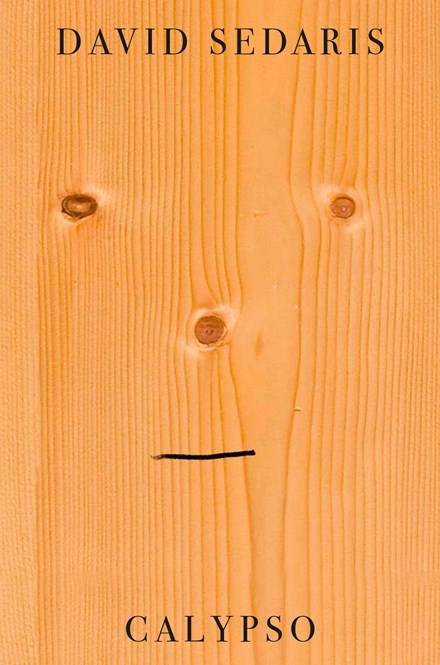
Calypso by David Sedaris

This was my very first David Sedaris book.

I know! Where have I been & what on earth have I been doing?

I've been meaning to read him for years and years, but it was the opening line in Calypso that hooked me,
Though there's an industry built on telling you otherwise, there are few real joys to middle age. The only perk I can see is that, with luck, you'll acquire a guest room.


As someone who enjoyed having a guest room throughout my (single) twenties & thirties but lost it when I married with kids - in my middle years - I knew exactly what Sedaris meant about the joys of having a guest room. I'm now past the middle years (it would be nice to think I will reach 100 yrs of age, but highly unlikely given my family history) and I'm still waiting to rediscover the guest room (the kids will move out one day won't they?)

Like Sedaris, I speak in jest, mostly! Mr Books & I are very aware that our time with kids living at home is coming to an end. It is a bittersweet period. You want to enjoy this last phase of the family all living together, but at the same time we can drive each crazy with differing expectations and opinions about cleanliness, how long a shower should last & where to leave the car keys!

Sedaris' writing felt so relatable and relevant that after you finish chuckling about his story, you start thinking about your own!

Sedaris grew up with five sibling ("Six kids! people would say. "How do your poor folks manage?")
I was one of four ("Four girls!" people would say. "How does your poor dad manage?")
I'm not sure how it is in small families, but in large ones relationships tend to shift over time. You might be best friends with one brother or sister, then two years later it might be someone else. Then it's likely to change again, and again after that. It doesn't mean that you've fallen out with the person you used to be closest to but that you've merged into someone else's lane, or had him or her merge into yours. Trios form, then morph into quartets before splitting into teams of two. The beauty of it is that it's always changing.

Yup.

A fitbit obsession led Sedaris onto a 60 000 step regime - me? I will walk an extra km just to hatch an egg in pokemon go! Sad but true.

The stuff David talks about is personal, which caused this reader to reflect on many of her own personal beliefs and feelings.
One afternoon we scattered my mother's ashes in the surf behind the house....My mother died in 1991, yet reaching into the bag, touching her remains, essentially throwing her away, was devastating, even after all this time.

This is a topic much on our minds at the moment. I always thought I wanted to have my ashes scattered in the ocean, off a cliff or in a garden. But in the past ten years or so, I've witnessed so many people - the survivors of loss - really, really struggle to scatter the ashes of their beloved. It's too hard. So they don't. Instead ashes end up in cupboards or under beds and those who would like to have someone where to go to mourn their loss are left with nothing - no grave, no plaque, no memorial, no special beach, mountain or tree. Sedaris' story confirmed for me that I want my ashes buried, preferably within a couple of weeks of my death, under a rose bush or tree, with a plaque. I don't want to make this time even harder than it may already be for those that I leave behind.

From what I have read, this is the most personal that Sedaris has been in his writing. I enjoyed his stories about family and ageing, but then he started down the road of commentary and anecdotes. I didn't find them funny. The story about what people in other countries call out of cars at bad drivers was laugh out loud funny, but the rest left me with a bad taste in my mouth.

Many of his jokes and tricks seemed rather mean and occasionally cruel. Like his comment about pulling a guess 'out of my ass in order to get a rise out of someone' - someone who had just told him that her mother had cancer. I was also annoyed by his American abroad approach to politics - proud to be ignorant of all things not American. Certainly not someone I would want to sit next to at a dinner party!

So sadly, I think this will be my one and only Sedaris. The annoying bits out-weighed the interesting or amusing.

Book 10 of #20booksofsummer (winter) drop-in title
Sydney 18℃
Northern Ireland 24℃

Tuesday, 26 June 2018

Northbridge Rectory by Angela Thirkell

Northbridge Rectory was my very first Thirkell. But it certainly won't be my last.
Lucky me! I still have 28 books in Thirkell's Barsetshire series ahead of me to enjoy at my leisure. I've added her to my Author Challenge list so I can keep track of my progress. In fact, I enjoyed my time at Northbridge Rectory so much I have spent the bulk of today trawling the blogosphere for other devotees so we can rave and gush together!


I think I first spotted Angela Thirkell on Heaven Ali's blog many years ago. I fell in love with the new Virago covers, so much so that when I spotted Northbridge Rectory on the shelves of a lovely little Indie bookshop, I knew I had to have it.

Last week, as the winter days drew in, I was in need of something gentle and comforting. I suspected that Thirkell would fulfil this need nicely. From the start I found her to be just like a warm English Breakfast tea served in a floral bone china cup - delicate yet robust, obvious and subtle in the same mouthful with the bitterness covered up by a generous spoonful of sweetness.

Written in 1941, we see Thirkell and her characters making do and muddling through the war years the best they can, in what we now know to be the middle of the WWII. However, neither Thirkell or her characters knew this. They had no idea how much longer they would have to soldier on or how much more making do they would have to do. This sense of uncertainty, stoicism and nostalgia for the pre-war days imbues everything that happened in Northbridge Rectory. From the constant discussions around food supplies (or the lack thereof) to the billeting of soldiers and evacuees from London and the hilarious saga around the 'roof-spotters' watching for paratroopers atop the local church.

The descriptions of war-time England were certainly one of the stand-out features of Northbridge Rectory. Thirkell related, almost by accident, the hardships and dreariness, the speculation and gossip, the stiff upper lip and social decorum at all costs that was so typical of so many of the English at this time. The fact that Thirkell was writing her war story as it happened makes it all the more poignant to the modern reader as well as being a remarkable snapshot in time now long gone. I'd be curious to know if Thirkell realised that her books might become a kind of historical record of England pre, during and post WWII? Yes, there is a lot of author fantasy and wish-fulfilment at work here, but a certain kind of truth and bitter reality shines through the sweetness as well.

I thoroughly enjoyed the gentle English humour and charming nostalgia that this book evoked. The lovely relationship between the Rector and his wife, Mrs Villars, shone with gentle understanding and tenderness. The kindhearted noisy nieces (one named and one unnamed throughout the entire novel) with their love interests and common vocabulary made me smile at every encounter. The dear old ladies in Glycerine Cottage with their terrible French and chere amie's living a quiet life of love with nobody blinking an eye. Mr Holden and his weird devotion to Mrs Villars health, the co-dependent relationship between the studious Mr Downing and tough-as-cookies Miss Pemberton, Ex-navy man Father Fewling happily manning the air raid shelter and keeping everything in tip top shape. Kitchen maid Edie carrying on behind the scenes with Corporal Jackson in constant fear of Mrs Chapman finding out. I really loved them all by the end, even the truly ghastly Mrs Spender with her 'believe it or not's, 'I'm funny that way' and 'if you know what I mean's. Mrs Spender is one of those gloriously awful characters that you love to hate, rather like Catherine de Bourgh in Pride and Prejudice or Miss Bates in Emma (or even Emma in Emma!)
Hermione Lee in her essay ‘Good Show: The Life and Works of Angela Thirkell’ in Body Parts: Essays on Life Writing, says ‘these light, witty, easygoing books turn out to be horrifying studies in English repression’. For me, that was the lovely surprise. That these lovely, light, fluffy looking books in fact hid an underbelly of dark social observation and clever characterisations.

I also enjoyed all the literary references, word play and class consciousness that Thirkell oozed onto every page - although after reading through the 'relusions' for Northbridge Rectory at the Angela Thirkell Society I quickly realised that I had only got about half of Thirkell's literary and cultural allusions.

During my search of the blogosphere, I discovered that Claire @The Captive Reader classified NR as one of her least favourite Thirkell's, which has now bumped up my expectations for the other 28 books to ridiculous heights!

Hayley @Desperate Reader  described NR as a book where 'not very much happens, but it doesn't happen in a very enjoyable way.' She also mentioned the rewards and pleasures of rereading Thirkell - I can't wait!

However Booker Talk was not so much a fan. She found that High Rising was 'as substantial as eating an enormous meringue; it looks impressive but once you get your teeth into it, it dissolves into a sugary tasting nothingness.'
Given that High Rising was Thirkell's first book, written in 1933, to escape a disastrous marriage and socially backward Australia, perhaps we shouldn't expect too much at the start. There was a sugary sweetness to Northbridge Rectory too, but I unearthed so much Jane Austen-like satire and social commentary lurking under the surface, that I found myself becoming more and more thrilled with each chapter.

I feel that this book response has gotten clunkier as I've gone along, when all I really wanted to say was how much a adored this deceptively simple war story. It won't be for everyone, but it suited me just fine!

Book 7 of #20booksofsummer (winter)
Sydney 17℃ but felt like 12℃ (brrrr)
Northern Ireland 24℃ (how lovely!)

Friday, 29 December 2017

The Diary of a Provincial Lady by E M Delafield

E. M. Delafield was the thinly disguised pseudonym of Edmée Elizabeth Monica Dashwood, née de la Pasture. Look closely, I'm sure you'll work out the family joke here all by yourself!

Delafield was born in Sussex on the 9th June 1890  and died 2 December 1943, heartbroken after the death of her son Lionel in 1940. She was the daughter of a Count and married a Colonel, the younger son of a Baronet. She wrote over 40 stories and novels and was hugely popular in her day. Most of her stories have gone out of print, but her semi-autobiographical book The Diary of a Provincial Lady has never lost favour with the reading public.
E M Delafield by Howard Coster (1930's) National Portrait Gallery
Delafield became the director of Time and Tide, a feminist magazine in the 1930's. The editors were looking for more light stories to serialise, she promised to give it some thought, and before too long The Diary of Provincial Lady was born.

Many of the stories feature the children, Robin and Vicky, who were based on those of her own children, Lionel and Rosamund. The Diary also highlighted the financial difficulties of being married to a Baronet's younger son. The expectation by society and family to maintain a certain standard, but without any of the means to actually do so.

Lady B asks me how the children are, and adds, to the table at large, that I am 'A Perfect Mother'. Am naturally avoided, conversationally, after this, by everybody at the teatable. Later on, Lady B tells us about the South of France. She quotes repartees made by herself in French, and then translates them. (Unavoidable query presents itself here: Would a verdict of Justifiable Homicide delivered against their mother affect future careers of children unfavourably?)


Part of the charm of the book lies in the fact that her social dilemmas are ours. We've all been outwardly polite, but inwardly squirming, to the over-bearing busybody, the know-it-all or the bumbling aunt. We've all put on our best faces in public or gossiped about our neighbours. And we've all been shown up by the innocent comment of a child.

Delafield's characters feel real because they are, in fact, based on real people. How on earth she got away with it and was still able to walk down her local High Street remains a mystery!

In the preface to The Way Things Are (1927) Delafield wrote: "A good many of the characters in this novel have been drawn, as usual, from persons now living; but the author hopes very much that they will only recognise one another".

Perhaps our inability to see ourselves as others see us saved Delafield from social exclusion and accusations of slander.

Conversation turns upon Lady B. and everyone says she is really very kind-hearted, and follows this up by anecdotes illustrating all her less attractive qualities....Feel much more at home after this, and conscious of new bond of union cementing entire party.

I wasn't always convinced that I was enjoying this book as I read it though. However during the week or so it has taken me to prepare this post, I've come to appreciate it more and more. The daily vignettes, social niceties and character sketches have grown to be more meaningful and pertinent with each passing day. The book grows better on reflection. The pretty cover certainly helps too!

Exchange customary graceful farewells with host and hostess, saying how much I have enjoyed coming. 
(Query here suggests itself, as often before: Is it utterly impossible to combine the amenities of civilisation with even the minimum of honesty required to satisfy the voice of conscience? Answer still in abeyance at present.)

The Things I liked about Delafield and her Diary

  • how all the reasonable, practical domestic matters being discussed were done so in a reasonable, practical manner.
  • Delafield obviously adored her children, and let them be kids as long as possible.
  • the interesting references to women's issues of the time.
  • her sly observations about the snooty, superior women in her social circle.
  • The ironic, self-deprecation humour was funny to start, but then...

The Things I didn't like about Delafield and her Diary 

  • the ironic, self-deprecating humour that got tiresome by the end.
  • the lack of warmth (or maybe it was lack of detail) - I felt like I was being kept at an arms length the whole time.
  • the French phrases that I needed to google translate every single time!
  • I had also read too many reviews about how 'deliciously funny' she was, so my expectations were set too high. I was mildly amused many times, but also often annoyed or frustrated.
I'm glad I read it. I may even reread it one day, but I don't feel compelled to read the other Diary books or seek out the other 30-odd novels to her name.

The Diary of a Provincial Lady was my latest #CCspin book for The Classics Club. How did you fare?

Thursday, 13 April 2017

Blab-fest!

Busting! is the latest in Aaron Blabey's incredible run of hilarious, rhyming picture books. Poor Lou is desperate to go the loo, but there's a queue!


Blabey once again deals with an embarrassing, uncomfortable issue that we've all had at one time or another and reminds us that a good belly laugh makes just about any topic picture book worthy! Although we hope that poor Lou doesn't laugh too hard until he's had time to do his do.

I don't know how Blabey continues to put out such consistently good, fun (and often award winning) books. He has his Pig the Pug seven deadly sins series (we're up to book 5 out of 7) and the Bad Guys early readers with episode five due out next month.

Then there are his stand alone titles including Sunday Chutney, Pearl Barley and Charlie Parsley, Stanley Paste, Thelma the Unicorn, Piranhas Don't Eat Bananas, I Need A Hug and Don't Call Me Bear just to name a few.

I Need A Hug is the seemingly simple, repetitive tale of an echidna who needs a hug. But she's has a body full of prickly spiky needles. We all need affection and this book can be fun to read aloud with toddlers as you cuddle up together.


This is not my favourite Blabey as the echidna comes across as a being rather needy. I'm also not sure that I agree with her difficulty in respecting the others physical boundaries when they say 'no'. And don't get me started on the snake who wants a kiss! 

However I have yet to try this book out on it's target audience.


Don't Call Me Bear has a more aggressive edge than Blabey's other books as Warren the koala tries to convince everyone that he is NOT a bear! Warren's frustration levels build as he tells us all, using some well known teaching tactics, that Australia has no bears, none whatsoever. Warren's teaching style may be a tad OTT, but via a quick history and biology lesson we learn a lot about koalas.


This is rhyming humour with a lot of attitude for an older audience. The illustrations are signature Blabey and the reader learns a lot about the various characteristics of bears and marsupials by the end of the book.


Aaron Blabey lives in the Blue Mountains with his wife and children. After reading his bio, you get the idea that he is one of those types with a lot of creative energy to burn.

I hope this little Blabey-fest has convinced you to try out some of his picture books on the younger members of your tribe. I feel confident that laughter and cries of 'again, again' will ensue.

Tuesday, 11 April 2017

Mopoke by Philip Bunting

Mopoke is my new favourite picture book. I've always had a bit of a thing for owls, especially owls in literature and art. As a (former) teacher, I was often given owl cards and trinkets. Owl Babies by Martin Waddell is one of my favourite picture books and who doesn't love Harry Potter's Hedwig?

Philip Bunting is a Queensland based author and illustrator who has bowled me over with his debut picture book all about owls.


Mopoke is the common name for the southern boobook owl native to Australia. It's a rather cute creature with a great call (see below).

Bunting has used his book to highlight the importance of fun and individual interpretation when reading books aloud to children. I tried Mopoke out on B16 who appreciated the humour. However he was concerned that the pages were too dark for little kids to enjoy!

I didn't have that problem.

I found the simple but stylish colour palette and design eye catching and very reasonable (after all, we all know that owls are nocturnal). As a former preschool teacher, if my classes had commented on the dark pages, I would have used that as a great discussion starter about the nature, behaviour and habitats of owls.


The illustrations and text complement and enhance each other beautifully - it's the classic 'picture worth a thousand words' scenario.

Mopoke is highly recommended for those with owl fetishes, lovers of fun word play and for the wise and discerning reader.

I found a video of a real life mopoke (below) and if you listen real close, you can hear his mates calling their distinctive two-tone call in the background.


Mopoke was published by Scholastic Australia Feb 2017.

Thursday, 23 March 2017

Picture Book Technology & Online Safety

It was only a matter of time before we saw picture books for children that contained themes about mobile phone use. The two latest offerings deal with the positive aspects as well as the addictive nature of technology and social media.


Australian writer/illustrator Nick Bland gives us The Fabulous Friend Machine. Popcorn the hen is a very friendly chook. She's even won awards for friendliness. One day she discovers a glowing device on the ground near her home. It appears to be very, very friendly.


But Popcorn quickly learns that spending hours and hours talking to her new online friends can cause problems with her real life friends. And who are these new friends anyway?

After nearly being running over by a tractor (because she was too busy looking at her screen) and discovering that her new online friends were actually wolves, Popcorn rediscovers the value of paying attention to her real life friends. She also learns to exercise more caution when using her new friend machine.

Nick Bland is a CBCA and ABIA award winning illustrator. He doesn't appear to have his own web page, but he did have an exhibition last year in Darwin (where he now lives), to show off some of the work featured in his previous 26 books. Bland's usual medium is acrylic paint and pens.


Tek: The Modern Cave Boy by Patrick McDonnell also deals with the addictive nature of mobile devices, online games and binge TV viewing, but plays around with the book's formatting to do so. McDonnell's Tek looks and feels like a tablet, with firm dark edges and a screen like set-up on each page. You can even see the battery life running low as you read along.

Both books use humour to convey their message. However Tek needs to learn to disconnect so that he reconnect with his family, friends and the real world around him. His technology obsession is making him uncommunicative and anti-social.


McDonnell is an American author/illustrator best known for his comic strip MUTTS. His recent forays into picture book territory have already elicited New York Times bestsellers and a Caldecott Honor winner.

Have you come across any other picture books dealing with online behaviour and mobile phone use for children?

Another Australian title is The Internet is a Puddle by psychologist Shona Innes - initially written to help some of her clients, it teaches us how to play safely online.

Please add titles or links to any other picture books (from anywhere in the world) in the comments below so that we can build up a picture book online safety resource list.

Thursday, 15 December 2016

The Bad Guys Episode 4 Apocalypse Meow by Aaron Blabey

I love this series of early readers so very, very much.

It's clever. It's fun. And it's a little subversive. It also follows the golden rule that a truly great, entertaining children's book is a truly great, entertaining book for adults as well.

Apocalypse Meow is the fourth book in Blabey's Bad Guys series.

We last saw our wannabe good guys facing off against the advancing kitten apocalypse unleashed by the evil genius Dr Marmalade.

In Apocalypse Meow our team of Sort-Of-International-League-Of-Good-Guys-Guys divides to conquer.

Mr Wolf, Legs and Snake venture forth with Agent Fox to find an antidote, while Mr Shark and Piranha head off to find Dr Marmalade's hideout.

As per usual, nothing quite goes to plan. A meeting with an ageing Granny Gumbo almost leads to the untimely end of Mr Snake. Dr Marmalade reveals that the zitten apocalypse was merely phase one of his plans. And his sudden disappearance in a rocket ship, shifts the action to a much higher plane.

Laughter, terror and ridiculous disguises keep the action rolling along nicely. Mr Wolf also finds time to do a little flirting with Agent Fox, as our good guys continue to escape from one crisis only to land in the next!

The promise of interstellar mayhem in Episode 5 might see our favourite Sort-Of-Good-Guys become the Intergalactic-League-Of-Good-Guys-Guys!

The Bad Guys are perfect for early readers who are gaining confidence with form and font or as a fun, fun read aloud with your favourite four year old.


Episode 1 The Bad Guys
Episode 2 Mission Unpluckable
Episode 3 The Furball Strikes Back
Episode 4 Apocalypse Meow

Thursday, 10 November 2016

The Bad Guys Episode 3 The Furball Strikes Back by Aaron Blabey

To my mind, Aaron Blabey can do no wrong!

His series of early readers featuring four of literature's bad guys trying to make good is consistently funny, smart and unexpected.

In Episode 3 The Furball Strikes Back, we find our four +1 bad guys coming face-to-face with the baddest, most evil of all creatures - Dr Rupert Marmalade, the guinea pig!

Mr Wolf, Shark, Piranha and Snake have now been joined by Legs, the Tarantula. There is growing dissension in the ranks about whether or not being good guys is really working for them.

Mr Wolf's constant cry of "It's time to be heroes!" is rubbing some of them the wrong way.

Falling into the evil clutches of the grandiose and rather mad Dr Marmalade only creates more friction amongst our lovable heroes.

In the background, though, there is another dark and mysterious character jumping about - will this illusive figure be a force for good or evil?

And how will our Bad Guys foil the dastardly plans of Dr Marmalade?

Episode 1 The Bad Guys
Episode 2 Mission Unpluckable
Episode 3 The Furball Strikes Back
Episode 4 Apocalypse Meow

Wednesday, 25 November 2015

The Bad Guys Episode 2 Mission Unpluckable by Aaron Blabey

"Go be a hero"

What a great line.

Sadly for The Bad Guys (Mr Wolf, Snake, Piranha and Shark) their idea to show the world that they are, in fact, good guys hasn't quite gone to plan. News reports of their first event have completely misrepresented what actually happened.

They decide they need to do something more dramatic to show the world that they really are good guys - they decide to release all the caged chickens from the local chicken farm back into the wild. What could possibly go wrong?

The first problem for Mr Shark is the new bad guy turned good guy - I.T. genius Legs, the tarantula. As it turns out Mr Shark is terrified of spiders!

Mr Snake is also struggling to overcome his chicken eating tendencies and Piranha keeps being mistaken for tuna! But what will happen to our loveable bad guys when they finally meet up with a REALLY bad guy?

Full of Blabey's trademark humour, intelligence and quirkiness, Episode 2 is fun from start to finish.

Tuesday, 17 November 2015

Piranhas Don't Eat Bananas by Aaron Blabey

Aaron Blabey certainly has the magic touch right now.

Pig the Fibber, Thelma the Unicorn, the Bad Guys series...and now Piranhas Don't Eat Bananas.

Brian is no 'bad guy' piranha.
He's a fruit-loving, vegetarian piranha!

And like all health-conscious folk the world over, he's keen to convert his buddies to his nutritious diet.

Piranhas Don't Eat Bananas is a humorous, silly, rhyming romp to find out what piranhas really like to eat....I'll give you a hint....it rhymes with 'plum'!

Are you beginning to see why this book is racing off the shelves at work and into the eager hands of every six year old in my suburb!

This is such a fun read-aloud, you won't mind reading it over and over and over again!

This post is part of #AusReadingMonth

Monday, 9 November 2015

You're Still Hot To Me by Jean Kittson

So, yes.

I am a woman of a certain age.

I don't quite know how I got to this age so quickly. I still think of this age as being my mother's age, not mine.
Nevertheless, here we are.
For the past couple of years I have been in the over 45 age bracket!
Me!

Wasn't I just 18 the other day?
Where did 28 go? What happened to 38?

When I was 18 I hated being one of the youngest in my year, but now, all my dear friends from school are turning 48 and I'm still a spring-chicken 47 for a few more months!

My 40's have been fabulous.
The best decade of my life so far.
Healthy, confident, happy.
Secure in love and work. Financially stable and strong.
At peace with my childhood demons.

What could possibly go wrong?

How about a raging irritability that comes from nowhere and is very uncharacteristic?
Some might say that this is just a normal reaction to living with two teenagers, but I knew it was more.

How about a changing body?
Just little things - internally and externally that were different to how I remembered.

How about a change in sleeping patterns, energy levels and concentration?

It took a chat with a slightly older friend to make me realise.....menopause.

Well, actually, not menopause, but peri-menopause.
Menopause is the end event.

Peri-menopause is the phase before that.
The teenage years in reverse; the reproductive cycle winding down.
Just like the teenage years, peri-menopause can be full of angst, hormonal changes and body changes.
Just like the teenage years, every woman will experience it differently. Different signs, symptoms and side-effects.

But thanks to comedienne Jean Kittson's refreshing book, I now feel prepared. I feel understood and accepted. I have lots of useful, practical information at my fingertips. I have a resource to dip in and out of when I need reassurance.
And I can have a good laugh at myself at the same time.
Bring it on!

This post is part of #AusReadingMonth, the Australian Women Writer's Challenge and #NonFicNov.

Wednesday, 5 August 2015

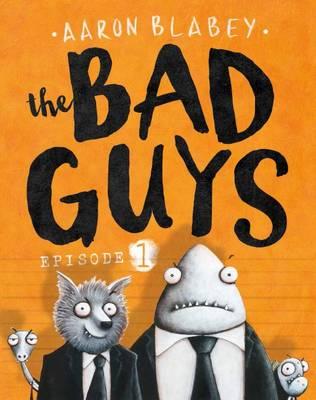
The Bad Guys Episode One by Aaron Blabey

Do you have a reluctant reader in your house?

Then I may have found the perfect book for you to tempt them with.

Aaron Blabey has ventured away from picture book territory into early reader land with The Bad Guys: Episode One.

In an attempt to convince us all that the Big Bad Wolf is simply misunderstood, Blabey presents Mr Wolf (with a nod to Tarantino noir) as the narrator of this story about bad guys turned good.

Full of humour, intelligence and lots of fast pacing, the bad guys struggle to come to terms with their new and improved roles.

An unlikely partnership evolves as these traditional baddies get in touch with their kinder, softer sides!

Full of the trademark quirky Blabey style, easy to read format with large exciting fonts, oodles of pictures and quick chapters, The Bad Guys has award winning hit series written all over it.

Guaranteed to amuse children and adults alike.


Tuesday, 26 May 2015

The Husband's Secret by Liane Moriarty

Last week was the Sydney Writer's Festival. One of the events I attended was a conversation with Liane Moriarty.

I read and fell in love with Big Little Lies last year and I've been meaning to read some of her back list ever since.

I took my copy of The Husband's Secret along with me to be signed. Naturally I started reading it throughout the day...I very quickly finished it in a couple of greedy, gulping reading sessions over the weekend.

Moriarty writes quick, easy compelling books, and she does it so well. Her stories are character driven which is why you feel so close to them and involved in their lives. They are believable, nuanced, complex beings. They could be your best friends; they could be you.

At the SWF, Moriarty said she likes to explore how good people do evil things sometimes - that this is the thing in life she is trying to work out. It sits very closely next to my thing - trying to understand man's inhumanity to man - which is no doubt one of the reasons why I respond so strongly to her stories. Moral dilemma's and domestic compromise drive Moriarty's books - along with her characters, you seesaw between what is the right or wrong thing to do.
Moriarty in Conversation in The Loft

I did pick the main twist or the whodunnit fairly early on with both Big Little Lies and The Husband's Secret. However this did not stop my enjoyment of either story. In fact, it added to my pleasure as I love it when I am proven to be right!

I thoroughly enjoyed the 'sliding doors' epilogue in THS that explored some of the things that might have happened if the key players had made different choices. It also gave me one of my key, "I knew it, I knew it, I knew it" moments!

The Husband's Secret has been reviewed by many wonderful bloggers over the past two years, so I wont repeat their comments, I'll just give a shout out to a few of my favourite links. (If you'd like to add your review link please feel free to add it to the comments section below).

Heidi @...But Books Are Better
Beth Fish Reads and
Melissa @Avid Reader's Musings

View of the Sydney Harbour Bridge from The Loft
One of the curious comments from Moriarty though, was to do with the growing trend in the US market about adding 'trigger warnings' to the covers of books that might make people feel sad. Apparently she has had a few upset emails from readers saying she should warn readers that her books deal with sad and difficult topics.

We, in the audience, on Thursday were horrified.

I've been thinking about it ever since.
Why did this horrify me so much?

For me reading is about the emotional journey.

I don't want to be forewarned that someone is going to die, or suffer domestic violence, or be involved in an accident. I don't need a cover sticker to flag that the story contains adultery, childhood illness or religious references. I want to discover this for myself within the flow of the story.

If there are enough twists and turns or differences in perception then I want the pleasure of a reread to see how the author forewarns of us these issues, but I don't want a sticker on the cover to tell me so before my first read.

I would suggest that the blurb on the back cover, the quotes from other authors on the title page and a quick read of the first page are enough to tell you whether this book is for you or not. Even it's placement in the bookshop or library gives you clues about it's genre and style.

But it has got me curious. Very curious.
Do you like the idea of trigger warnings on covers?

Sunday, 17 May 2015

Thelma the Unicorn by Aaron Blabey

Ahhhhh Aaron - I do love your quirky sense of humour and your wicked way with rhymes.

Thelma the Unicorn is the age old tale of the search for fame and fortune.

Thelma the pony finds life in the paddock rather dull and boring, she wishes that she was special...she wishes that she could be a unicorn!

When her wish comes true, it seems like her future will be one amazing, glamorous day after another.

But will it?

To find out what happens to Thelma, check out Blabey's animated retelling of his story below.

You'll love it, I'm sure! Along with all the pink paint and glitter.

Saturday, 16 May 2015

A Tale of Two Beasts by Fiona Robertson

I'm partial to Robertson's picture books. I enjoy her visual humour and her eye for quirky details.

A Tale of Two Beasts begins with a quote from Mark Twain,

"There are two sides to every story, and then there is the truth."

We then set off into the deep, dark woods with a Little Red Riding Hood style character returning to her Grandma's house. But on the way she spies a strange little creature stuck in a tree. She rescues it and takes it home as a pet.

But the pet runs away...then returns on the last page...but why?

Except this is not the last page.

The next section follows a happy little creature hanging around in his favourite tree, singing and minding his own business when this terrible beast kidnaps him and forces him into captivity!

He plans his escape and is eventually successful. But out in the deep, dark woods it has turned cold and the little creature decides to sneak back to steal the warm clothes the terrible beast had made for him.

Their final confrontation helps them both appreciate each other for who they are as they learn to become friends.

A great way to introduce differing points of view to young children.