Showing posts with label Relationships. Show all posts

Thursday, 14 May 2020

Redhead By the Side of the Road | Anne Tyler #USfiction


I don't know why I've been dragging my feet about writing this post. I loved this return-to-form story by Anne Tyler, one of my favourite character-driven authors. Perhaps, it's simply because I don't have a lot to say about it. I thoroughly enjoyed it. I loved how Tyler teased out the unique behaviours of her main character and embedded him firmly within a large, messy, chaotic family that was full of love, even if somewhat suffocating at times. I loved the resolution to this slim tale and can highly recommend it to those of you who love a gentle exploration of a sympathetically drawn character. What more can I say?

The Redhead By the Side of the Road, without giving anything away, is actually a fire hydrant that our slightly myopic protagonist, Micah mistakes for a child in a hoodie, every single morning when he runs by without his glasses. Its a gentle nod to the main theme of the story. Perception, and how we see ourselves and how others see us in return. One of my all-time favourite book themes! And one that Tyler has mastered. 

Like many of her stories, absence or loss is the driving force behind helping our protagonist to change. When Micah's girlfriend calls things off, he cannot understand why and it takes him a while to understand that the weird feelings going on for him are grief and heartache. Or, as Micah, so eloquently says late in the novel, "I'm a roomful of broken hearts." How could you not take him back?

My one and only beef is that Redhead By the Side of the Road is not as meaty or as angsty as her earlier books. I guess it's a good sign that she has worked through her childhood issues and found a more peaceful writing place, but I do still love a rich, engrossing read full of childhood angst!

Anne Tyler has published 24 novels, of which I have now read four (plus seen the movie for An Accidental Tourist). Tyler, like myself, is the eldest of four children, But unlike myself, she grew up in a Quaker family in a commune in North Carolina. She didn't attend formal schooling until age 12, where she found herself in the outsider role. She feels this has helped her to be the writer she is today.
 
I believe that any kind of setting-apart situation will do (to become a writer). In my case, it was emerging from the commune...and trying to fit into the outside world.

She graduated high school at age 16 and moved to Duke University on a full scholarship. In 1963 she married Taghi Modarressi, an Iranian psychiatrist, at age 22. They moved to Baltimore and had two daughters, both of whom she eventually enrolled in the local Quaker school, even though she no longer felt it was something for her.
Although her parents were believers, she gave up on religion when she was seven, the age she feels was in some ways "the climax of my life, when you finally know who you are. I started thinking very seriously about God and I thought I just can't do it, so that was sort of that."   The Guardian | Lisa Allardice | 14 April 2012
Tyler's writing is classified as literary realism. She has won and been nominated for numerous awards, including the Pulitzer (1989), the Women's Prize for fiction and the Booker.
Tyler doesn't see herself building up to "the great book." "I think of my work as a whole. And really what it seems to me I'm doing is populating a town. Pretty soon it's going to be just full of lots of people I've made up. None of the people I write about are people I know. That would be no fun. And it would be very boring to write about me. Even if I led an exciting life, why live it again on paper? I want to live other lives. I've never quite believed that one chance is all I get. Writing is my way of making other chances. It's lucky I do it on paper. Probably I would be schizophrenic--and six times divorced--if I weren't writing. I would decide that I want to run off and join the circus and I would go. I hate to travel, but writing a novel is like taking a long trip. This way I can stay peacefully at home." Anne Tyler, Writer 8:05 to 3:30 by Marguerite Michaels | 8th May 1977 | NY Times

Saturday, 28 March 2020

The Heather Blazing | Colm Tóibin #Begorrathon


Oh, this was utterly delicious. Deliciously melancholy, if that's a thing.

The Heather Blazing is the story of Judge Eamon Redmond, and the loss and grief that has defined his whole life. Tóibin writes these rather sad, introspective characters so well. Like Nora Webster, you're left wondering, if perhaps Eamon's first person story is missing an important piece to the puzzle of his life. There are hints, in his relationship with his wife and children, comments they make about his distance, lack of loving gestures and affection, that suggest he wasn't an easy to person to live with. Eamon also struggles with his emotional life, constantly afraid to show his true feelings. Taught from a young age to stay on the sidelines, always watching but not included in the adult decisions being made around him. Seeking solace in solitude, books and walking.

Eamon's sad, lonely childhood affected his ability to show the people in his life that he cared. We, the reader, can feel his emotional pain and see how much he loves those around him, but we can also see that it's all internal. Eamon thinks and feels and deliberates, but he doesn't express or show or share.

The frustrations of his wife and children are tangible, but Eamon is powerless to change.

The political and environmental story line that ran alongside Eamon's story was almost an allegory, with shifting political allegiances and houses slowly crumbling into the sea. The inevitable march of time and natural forces beyond our control reflecting Eamon's faltering progress through his own life.

I also learnt a bit about the history and differences between Fianna Fáil, Sinn Féin and Fine Gael.

Donaghmore, Wexford County, Ireland
Highly recommended to anyone who loves their Irish Lit to be gentle and thoughtful.
#Begorrathon2020
#ReadingIrelandMonth2020

Brooklyn
Nora Webster

Saturday, 21 March 2020

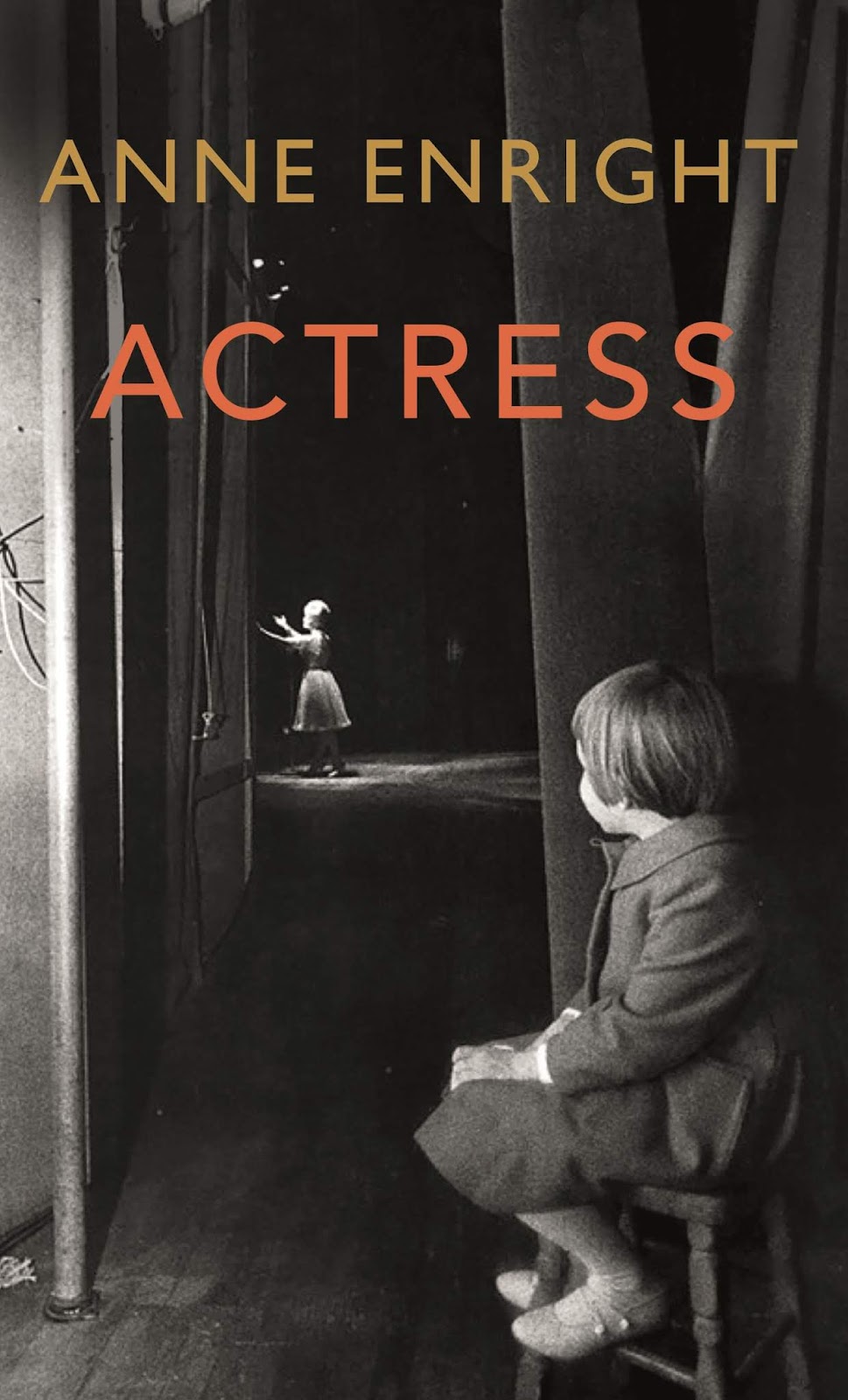
Actress | Anne Enright #Begorrathon


I have to ask straight up - who is Norah's father? Could you work it out? I wasn't sure. There didn't seem to be any repercussions or exposition after the reveal. Was it all about the #metoo element? But since you kind of figure that out for yourself very early on, it wasn't so much a shock revelation, but a quieter 'I thought so' moment. I'm confused.

Anyway, let's put that all that aside for now and talk about the lovely, lovely writing in Anne Enright's Actress. I loved her descriptions of Norah and her mother, the famous Katherine Odell, her observations of daily life and her empathy for the thinking of a 21 yr old.

  • We had the same way of blinking, slow and fond, as though thinking of something beautiful.
  • I think I mentioned that my mother was a star. Not just on screen or on the stage, but at the breakfast table also, my mother Katherine O’Dell was a star.
  • The boiling eggs chittering against each other and along the metal bottom of the pan.
  • My life felt like an imitation, and I was terrified it might become the real thing.

Actress was an fascinating story but there were many times when it felt rather like trying to drive a car and forgetting to put it into gear. The engine was revving sweetly, but we were going nowhere! Which is maybe why I felt the father revelation late in the story was more of a frustration than anything else. I was waiting patiently for a burst of speed that never happened.

I enjoyed my time in Enright's hands, but it's not the best example of her work.

#Begorrathon2020 #ReadingIrelandMonth2020

Epigraph:

  • 'the more I applauded, the better, it seemed to me, did Berma act.' In Search of Lost Time


Enright Reviews:

Monday, 17 February 2020

Nothing to See Here | Kevin Wilson #USfiction


Nothing to See Here made nine of the 'best of' lists as compiled by Kate at the end of 2019, with comments like 'laughed so hard', 'a most unusual story of parental love' and 'hilarious' leaping out at me everywhere I looked.

I was expecting a belly laugh or two, at least. But no. It was way too sad for that. Even though the story was told with a tender, light touch, and some of Wilson's phrasing and imagery was amusing, I couldn't bring myself to laugh at the plight of any of these loveless characters, all so desperate to find someone to love them and care for them properly.

From the Senator, who had the emotional life of a gnat, and ran for office simply because of family tradition, to Carl the body guard, who just did what he was told. Madison and Lillian, the best friends from high school, from vastly different backgrounds, but both with equally shitty parents. To the poor, poor ten year old twins, who could burst into flames when angry or upset, but not be harmed, who watched their mother kill herself and then got stuck living with their crappy grandparents, until their father, the Senator, finally brought them home.

But not really home. A house on the family estate that has been converted to withstand fire and be very private, where they could be looked after by Lillian discreetly, away from the public eye.

In some ways this is a story about parental love. Lillian's growing love for the twins gives her life meaning and purpose. Her own dysfunctional upbringing allows her to empathise with the twins, and once the bond is formed, makes her determined to turn things around for them. The twins, in turn, trust her because of her vulnerability. They can sense her desire to protect them (in a way she was not protected) against all odds. Madison has a similar relationship going on with her own young son, Timothy. Determined to do better than her own upbringing, but also determined to get ahead with a career and life of her own. She is able to spin a story at the drop of a hat, a valuable asset for a politician's wife!

As much as I enjoyed this book, and was utterly engaged in the story from start to finish, there was nothing hilarious about this level of human damage. There is humour in the set-up and the satirical gaze at politics, privilege and power. It's also amazing how quickly you accept that children can self-combust.

Nothing to See Here is an unforgettable book. It was the perfect choice for a mini-break weekend away. Mr Books and I can both recommend it; just don't expect to laugh.

Sunday, 2 February 2020

Such A Fun Age | Kiley Reid #USfiction


I had no intention of reading Such A Fun Age. The premise sounded mildly appealing/interesting:
When Emira is apprehended at a supermarket for 'kidnapping' the white child she's actually babysitting, it sets off an explosive chain of events. Her employer Alix, a feminist blogger with the best of intentions, resolves to make things right. 
But Emira herself is aimless, broke and wary of Alix's desire to help. When a surprising connection emerges between the two women, it sends them on a crash course that will upend everything they think they know – about themselves, each other, and the messy dynamics of privilege.

But really, I'm rather over the whole adulting trope with a world peopled by no-one but twenty-somethings and thirty-somethings. Yet it was hard to completely resist the buzz surrounding the release of this book.

It was everywhere.

Then a colleague read it and came back with a surprisingly good reaction, so I decided to turn Such A Fun Age into a lunch time read.

It's the perfect pick-up, put-down book, ideal as a holiday read or a complete change of pace between your usual fare.

While the dynamics were initially quite tantalising, not being quite sure in which direction this story was going to go, it quickly settled into a book about other people's self-made dramas. The only likeable characters were Emira, the babysitter, and the toddler, Briar. They had some genuinely awkward moments to contend with, but they just got on with life and didn't make a fuss. They didn't spend their time over-thinking every action and reaction, they just got on with having a mutually heart-warming and caring relationship.

Everyone else was pretty annoying. Alix and her friends were ghastly, Emira's friends were tiresome, the husband was a non-event, the children accessories and the boyfriend, Kelley was just creepy.

Class privilege, racial and gender issues bubbled away behind the scenes but were never really resolved. Perhaps there was more actually going on here that an American reader would pick up on, but I simply got weary of all the talk about clothes and hair and social media status. But maybe I'm just showing my age!

There was some interesting stuff about memories, personal bias and how we perceive ourselves compared to how others actually see us, but since no-one really rose above their stereotype it was hard to know what to make of it all. It's this more than anything that leaves me feeling disappointed. A world peopled by no-one but more people of the same age is ultimately dull and an unhealthy place to be. It felt much like watching an episode of a more ethnically diverse Friends.

Don't get me wrong. Reading this book was a tremendous romp and if I'd been lying on the beach as I did so, it would have been perfect! It's only as I've started to think about it more deeply to write this post, that I see how fluffy and flawed it is. But then, not every single book has to be high literature. Some books are just for fun, at any age.

Friday, 27 December 2019

Olive, Again by Elizabeth Strout #USfiction


In some ways this will be the easiest book response I've ever written. Quite simply, Olive, Again is all the same wonderfulness that was Olive Kitteridge. If you loved the first Olive; you will adore the second.

I don't want to say too much so as not to spoil your own reading experience. Except that Strout has once again employed the use of short stories to tell us about Olive. Most of the stories are from Olive's perspective, but there are some from her family and various other town people. Olive has a cameo appearance in these particular chapters as we get to see her through the eyes of others. In one memorable scene, Olive is also given a chance to see herself through the eyes of someone else.

One of the special delights, for me, was suddenly realising that we were getting a brief glimpse into lives of the Burgess boys and Amy & Isabelle years after the events that Strout wrote about in their books. These intersections felt perfectly natural and reinforced the idea that all our small stories are interconnected and woven together in ways we can never dream of or fully comprehend.

Olive has mellowed somewhat with age and she has finally learnt the value of moderation - she no longer has to say out loud every single thing that pops into her head.

Strout also explores the ageing process in unsentimental terms. Not only with Olive but the other characters that flit through the story.

However since the words are still failing me at the moment, let me list some of the comments that others have written about Olive, Again on Goodreads.

Jacqui - Sometimes a book is just so perfect that it feels wrong somehow to break it down, as if by doing so one destroys the magic or fails to capture what makes it so special.

Jaline - The world within and the world without.

skilful
keen observer
larger than life
subtle
wrenching emotional honesty
emotionally radiant
fierce
compassionate
beloved curmudgeon
recalcitrant
psychological complexity
indignities of ageing
autumnal years
profound loneliness
estrangements and secrecy
vulnerable
authentic
meticulous
magnificent
tour de force

To finish I will leave you with the words of Strout herself on why she felt compelled to write a sequel for Olive.

The New Yorker | Elizabeth Strout on Returning to Olive Kitteridge | Deborah Treisman | July 29, 2019.
I never intended to return to Olive Kitteridge. I really thought I was done with her, and she with me. But a few years ago I was in a European city, alone for a weekend, and I went to a café, and she just showed up. That’s all I can say. She showed up with a force, the way she did the very first time, and I could not ignore her. This time, she was nosing her car into the marina, and I saw it so clearly—felt her so clearly—that I thought, Well, I should go with this.

Facts:
  • Strout's 'guilty reading pleasure' is War and Peace.
  • Her greatest influences are William Trevor and Alice Munro.
  • She has not yet read Moby-Dick.
  • Won the Pulitzer Prize in 2009 for Olive Kitteridge.

Favourite Quote: 
All love was to be taken seriously.

My response to Olive Kitteridge.
And The Burgess Boys.

Monday, 16 December 2019

The Man Who Saw Everything by Deborah Levy

Hamish Hamilton | Penguin Australia
In 1989 Saul Adler (a narcissistic young historian) is hit by a car on the Abbey Road. He is apparently fine; he gets up and goes to see his art student girlfriend, Jennifer Moreau. They have sex then break up, but not before she has photographed Saul crossing the same Abbey Road. Saul leaves to study in communist East Berlin, two months before the Wall comes down. There he will encounter - significantly - both his assigned translator and his translator's sister, who swears she has seen a jaguar prowling the city. He will fall in love and brood upon his difficult, authoritarian father. And he will befriend a hippy, Rainer, who may or may not be a Stasi agent, but will certainly return to haunt him in middle age. 
In 2016, Saul Adler is hit by a car on the Abbey Road. He is rushed to hospital, where he spends the following days slipping in and out of consciousness, and in and out of memories of the past. A number of people gather at his bedside. One of them is Jennifer Moreau. But someone important is missing. 
Slipping slyly between time zones and leaving a spiralling trail, Deborah Levy's electrifying new novel examines what we see and what we fail to see, until we encounter the spectres of history - both the world's and our own.

This is my second Deborah Levy story, so I now know that this style of writing - the slightly off-kilter structure, narration and characters combined with oodles of symbolism and mythology - is her usual way of telling a story. However, The Man Who Saw Everything isn't haunting me (yet) the way that Hot Milk still does, three years later.

Spectres of the past, though, are a big part of this story with personal and European histories haunting the daily lives of our characters. These ghosts of the past didn't get under my skin, like they did in Hot Milk. I suspect the reason lies in the face value issues on display in each book - Hot Milk was a mother/daughter passive/aggressive thing; The Man Who Saw Everything was more father/brother/son stuff with a narcissistic, self-absorbed narrator. Mother/daughter angst will always resonate here.

Saul is an historian of totalitarianism and the psychology of male tyrants. His research project is about the cultural resistance to Nazism in the 1930's. It is 1988, one year prior to the Wall coming down, when he leaves London (via Abbey Road) to go to East Berlin to work. He seems incredibly naive and light-weight to be tackling such a heavy topic.

His thoughts seem to be caught up in light-weight matters like tins of pineapple, photo shoots and who to kiss next. For Saul it is all about him. How he looks to others and what others think of him. His relationships are messy and confusing. He's aware of the Stasi and that they are probably watching him move around East Berlin, yet he is painfully careless with his actions and words.

Levy deliberately throws in the occasional confusing phrase or comment to make us wonder when or who is telling us this story and what is their purpose. Is this a rewriting of history, a whitewash? Or is this an attempt to uncover a truth?
I did not want to know, as well as wanting to. I could not break into her thoughts and feelings. Or my own, I could not break in.

Mostly though, this first half is a relatively straight forward Cold War drama which suddenly shifts in the second part, to 2016 Brexit London. Saul has been involved in a second accident on the Abbey Road crossing, this time more seriously. He is in hospital, coming out of a coma, surrounded by a confusion of visitors, real and ghostly.

I suspect this section is deliberately confusing for all of us. Was the 1988 story a dream? Has Saul been in a coma for 28 years? Or was he revisiting old haunts trying to piece together the story of how he ended up where he found himself in 2016? We all tell ourselves stories to make our lives more habitable. These stories are not only reinterpreted by our present understandings but our present is also influenced by our beliefs about our past. Levy seemed to enjoy poking holes into Saul's preferred story, until he was forced to face the inconsistencies. For a while anyway.

Sadly, for Saul, he failed to recover any degree of self-awareness. All his relationships continue to be messy and fraught with cruel comments and actions. Perhaps the damage of his childhood ran too deep. The early death of his mother combined with a strict disciplinarian, distant father and an elder brother who bullied him. Saul's fluid sexuality from a young age that only alienated his more conservative father and brother even more. They all processed their grief differently, but in ways that hurt each other - forever. 

Saul, our extremely unreliable narrator, was not the man who saw everything, Far from it. Saul could barely see anything beyond the end of his own, very pretty, nose. The man who saw everything was Walter Müller.
He was always looking at me and I think he could see everything that was good and bad and sad in me.

In 1988, Walter was smitten and then deeply hurt by Saul's careless love. He kept a safe distance thereafter, yet couldn't escape completely. Their lives were irrevocably intertwined and Walter was very, very careful to never reveal the full extent of their ongoing connection. Protecting others from the damage that Saul could do, became Walter's modus operandi.

Saul's Stasi report concluded with the phrase 'he is harmless to other people.' Walter, however, declared that this was false - he was, in fact, VERY harmful to others.

It is only as you make your way through the second part of the story that you begin to see all the red herrings and foreshadowing that Levy left behind in the first. It's like a puzzle that shifts and changes shape as you put it together. Saul is enigmatic to the end. A mystery unto himself and to others.

We are haunted by our past - individuals as well as countries and continents. Marx and Stalin continue to haunt the GDR and Russia. Hitler's actions haunt people all around the world to this day. We are also haunted by pop culture. The Beatles music is everywhere and lives inside all of us. Images also haunt us, whether it's four men crossing a road on an album cover, or scenes of the Wall coming down in 1989 or photographs of the Holocaust survivors being liberated from the camps. The images have become part of our collective memory, even if we weren't there to witness it ourselves.

Which brings me to book cover choices. The Australian cover heads this post. I'm fascinated how and why different countries get very different covers. The Bloomsbury and Canadian versions remind me of the US cover for A Little Life by Hanya Yanagihara. I love the Portuguese version that clearly relates to the fateful crossing of Abbey Road. One, less sympatico Goodreads reviewer said, So, this is a novel about how some people need to be more careful crossing roads. This cover would be perfect for them!

Bloomsbury

Hamish Hamilton | Penguin Canada

Relógio D'Água Editores Portugal

It's not only Abbey Road that features in The Man Who Saw Everything. One of the characters loves the Beatles song Penny Lane. It was only towards the end of the book that I began to realise that some of the lyrics was interwoven into the story - the barber and the nurse spring to mind - a reread would be necessary to spot them all, I suspect.

In 2009, McCartney reflected:
"Penny Lane" was kind of nostalgic, but it was really [about] a place that John and I knew ... I'd get a bus to his house and I'd have to change at Penny Lane, or the same with him to me, so we often hung out at that terminus, like a roundabout. It was a place that we both knew, and so we both knew the things that turned up in the story. (source)


If you're planning on reading this book soon, here are the lyrics to take with you:


Penny Lane | The Beatles | 1967

In Penny Lane there is a barber showing photographs
Of every head he's had the pleasure to have known
And all the people that come and go
Stop and say hello

On the corner is a banker with a motorcar
The little children laugh at him behind his back
And the banker never wears a mac
In the pouring rain, very strange

Penny Lane is in my ears and in my eyes
There beneath the blue suburban skies
I sit, and meanwhile back

In Penny Lane there is a fireman with an hourglass
And in his pocket is a portrait of the queen
He likes to keep his fire engine clean
It's a clean machine

Penny Lane is in my ears and in my eyes
A four of fish and finger pies
In summer, meanwhile back

Behind the shelter in the middle of a roundabout
The pretty nurse is selling poppies from a tray
And though she feels as if she's in a play
She is anyway

In Penny Lane the barber shaves another customer
We see the banker sitting waiting for a trim
And then the fireman rushes in
From the pouring rain, very strange

Penny lane is in my ears and in my eyes
There beneath the blue suburban skies
I sit, and meanwhile back
Penny lane is in my ears and in my eyes
There beneath the blue suburban skies
Penny Lane


Epitaph Philosophy:

I'm always fascinated by the epitaphs chosen by authors to lead us into their stories. Given Levy's penchant for symbolism, I wanted to unpack what she might have been trying to tell us with the two epitaphs at the start of The Man Who Saw Everything.
  • Karel Teige, The Shooting Gallery | 1946
Poetic thought, unlike rootless orchids, did not grow in a greenhouse and did not faint when confronted with today's traumas.
Teige was an avant-garde Czech 'agent provocateur and seismograph, at once provoking action and debate and yet simultaneously reacting with the utmost sensitivity to the shifting political spectrum of his time.' (Kenneth Frampton, Introduction, Karel Teige / 1900–1951: L'Enfant Terrible of the Czech Modernist Avant-Garde | 1999)

He was an editor, writer and artist during the 1920's and 30's. He was a Marxist, but not the card carrying kind. After the 1948 takeover by the Communists, he was not considered to be toeing the party line. Teige was denounced and forbidden to publish or speak out.

Sadly, it would seem, that Teige did in fact, succumb to the traumas of his time, as all reports claimed that he died a 'broken man' in 1951.

It looks like poetic thought can be a as fragile as an orchid. Though, here we are, over fifty years later, still able to read his words, despite the secret police claiming to have destroyed all his papers.

  • Susan Sontag, In Plato's Cave | On Photography | 1977
To photograph people is to violate them, by seeing them as they never see themselves, by having knowledge of them they can never have; it turns people into objects that can be symbolically possessed.

Sontag also claimed that the proliferation of photographic images had developed a 'chronic voyeuristic relation' within people. I wonder what she would think of the selfie?
She also believed 'that the individual who seeks to record cannot intervene, and that the person who intervenes cannot then faithfully record, for the two aims contradict each other'. Was Jennifer merely having a conversation about the nature of beauty as she claimed, or was she trying to capture the real Saul? Perhaps she wanted to show Saul how others saw him or maybe she was objectifying him?

In 2003, Sontag published Regarding the Pain of Others, where she revised some of the opinions she had expressed earlier. She was now concerned that 'people remember through photographs but that they remember only the photographs ... that the photographic image eclipses other forms of understanding—and remembering. ... To remember is, more and more, not to recall a story but to be able to call up a picture'.

Saul definitely had trouble remembering what was real, what was imagined or what he wanted to be true.

Favourite Quote:
I have sex all the time but I don't know if it's the sex I had thirty years ago or three months ago. I think I have extended my sexual history across all time zones, but I did have a lot of sex before the collapse of the Berlin Wall. After that it's a blur but I think I had less sex in social democracies than I did in authoritarian regimes.

Facts:
  • Shortlisted 2019 Goldsmith Prize
  • Longlisted 2019 Booker Prize
  • My 2016 Hot Milk post.

Saturday, 30 November 2019

The Bookshop of the Broken Hearted by Robert Hillman

Text Publishing:
Tom Hope doesn’t think he’s much of a farmer, but he’s doing his best. He can’t have been much of a husband to Trudy, either, judging by her sudden departure. It’s only when she returns, pregnant to someone else, that he discovers his surprising talent as a father. So when Trudy finds Jesus and takes little Peter away with her to join the holy rollers, Tom’s heart breaks all over again. 
Enter Hannah Babel, quixotic smalltown bookseller: the second Jew—and the most vivid person—Tom has ever met. He dares to believe they could make each other happy. 
But it is 1968: twenty-four years since Hannah and her own little boy arrived at Auschwitz. Tom Hope is taking on a batttle with heartbreak he can barely even begin to imagine.

This is not really a book about a bookshop.

But the lost and brokenhearted are everywhere.

If you're looking for another 84 Charing Cross Road or The Little Paris Bookshop or The Storied Life of A J Fikry, then this is not it. However if you enjoy gentle historical fiction full of love, tenderness and beautiful scenes of Victorian country life, you've found a winner.

Hillman has previously written the biographies of three Holocaust survivors - all women - so he is pretty well placed to write a sympathetic and accurate story about another such woman. It's not the first time that a bookshop setting has been used to represent culture and civilisation as a counterpoint against a time, person or place that is the complete opposite. But it is a useful, hopeful way of showing us how the better side of human nature triumphs over the worst.

In the Reading Guide for the Canadian edition of his book, Hillman said,
...victory. In the life of all Jews who outlived those who wished to murder them and found the courage to embrace life again, a victory is recorded. For me, every lovingly maintained bookshop is also a victory over all that is dowdy and dumb in the world.

The titular bookshop is more of an idea than the actual setting of the story, though.


The main backdrop of the story is Tom's farm in country Victoria. The bookshop may be a place of courage and ideas, but Tom's place is all about the heart and soul. It's a place to heal, to belong and to feel safe. All the main characters in the story are lost and damaged, one way or another. There are varying degrees of tragedy and trauma explored. Whether it's at the hands of a Christian fundamentalist cult, a deranged gunman, a thoughtless wife and mother, a revolutionary mob or Adolf Hitler. However, Hillman also said that,
it would be grotesque to suggest that the suffering of Hannah at the hands of the SS could be compared to Tom’s sorrow when Peter is taken away. People can recover from a broken heart, but the particular circumstances of Hannah’s heartbreak—no. The issue is not “recovery” but whether a commitment to life might allow a person to bear a terrible burden and still see the poetry in the world.

It is that commitment to life, that this gives this gentle story a little something special. It's easy to say that good will triumph over evil, that education will win out over ignorance and that kindness will oust brutality, but how? It doesn't just happen. You have to decide to make it happen. A life well-lived is the best victory of all.

Facts:
  • Longlisted for the Australian Book Industry Award, Small Publishers' Book of the Year, 2019

Monday, 9 September 2019

There Was Still Love by Favel Parrett

The profoundly moving new novel from the critically acclaimed and Miles Franklin shortlisted author of PAST THE SHALLOWS and WHEN THE NIGHT COMES. A tender and masterfully told story of memory, family and love. 
Prague, 1938: Eva flies down the street from her sister. Suddenly a man steps out, a man wearing a hat. Eva runs into him, hits the pavement hard. His hat is in the gutter. His anger slaps Eva, but his hate will change everything, as war forces so many lives into small, brown suitcases. 
Prague, 1980: No one sees Ludek. A young boy can slip right under the heavy blanket that covers this city - the fear cannot touch him. Ludek is free. And he sees everything. The world can do what it likes. The world can go to hell for all he cares because Babi is waiting for him in the warm flat. His whole world. 
Melbourne, 1980: Mala Li ka's grandma holds her hand as they climb the stairs to their third floor flat. Inside, the smell of warm pipe tobacco and homemade cakes. Here, Mana and Bill have made a life for themselves and their granddaughter. A life imbued with the spirit of Prague and the loved ones left behind. 
Favel Parrett's deep emotional insight and stellar literary talent shine through in this love letter to the strong women who bind families together, despite dislocation and distance. It is a tender and beautifully told story of memory, family and love. Because there is still love. No matter what.

I read Past the Shallows, Parrett's debut novel when it first came out in 2011 and adored it. It was sad, beautiful and set in Tasmania, all positives that ensured an enjoyable reading experience. I never got around to reading her 2014 novel, When the Night Comes, for no particular reason. Time just got away from me and the moment to read it passed.

I didn't want to make the same mistake with There Was Still Love. So when my ARC from Hachette Australia arrived, I sat it on top of the pile by my bed, and here we are, a few short weeks later, with it read, even before it's publication date on the 24th September.

I have been struggling, though, to find a way to talk about this book for awhile. That is until, a weekend visit to see the Archibald Prize exhibition at the Art Gallery of NSW, gave me a quote to work with.

Fiona Lowry was this year's Sulman Prize judge. A plaque near the entrance explained her thinking as she approached the judging process.
I was reminded of an interview I recently read with the artists Eric Fischl where he suggests that artists are looking for love, and they are expressing love in their commitment to what they have made.
He goes on to say: 'Love is complicated, obviously. But the reason artists do what they do on some level is to say: "Don't look at me, look at this thing I made you and you will know the true me."' 

Judging and viewing and reviewing another's artistic efforts is a privilege I don't take lightly. I'm aware that heart, body and soul goes into most creative work. It is an act of love and trust and hope.

And an act of incredible bravery. Because once a creation leaves the artists hands and enters the public sphere, anything can happen. The whole process becomes totally subjective and out of their control.

How one reacts to art can depend on so many variables, and just because something doesn't appeal to you or move you right now, doesn't mean the work is 'bad' or that others won't adore it.

So, I respectfully confess, that I may be in the minority here, when I say that I was underwhelmed by There Was Still Love. Yes, the prose was beautifully rendered, yes it was moving (but not profoundly so). Yes, I also believe that Parrett is a literary talent, but I wanted more.

There was tenderness, dislocation and strong women but the emotional insight was, dare I say, nothing new. I kept waiting for something or someone who never turned up. Or to return to the food analogies of the last few posts, There Was Still Love was a souffle that failed to rise. All the right ingredients and processes were in place, but the chemical magic failed to kick in.

It's always good to be reminded of how love makes this life-long journey worthwhile and to revisit the different ways love can be experienced and expressed, but, in the end, so many books have covered this same ground already. At least most of the books that I choose to read. So I was looking for something meatier; I was expecting something more. Especially since one of my colleagues finished his copy last month and has been gushing about it ever since.

There Was Still Love was a lovely dance across the surface of love, memory and family, but I prefer books that dive into the depths. It was a gentle interlude in my usual reading schedule, a bit like eating fairy floss, light and airy and sweet. Lovely writing, a lovely premise, but not quite enough to whet my appetite.

Wednesday, 12 June 2019

A Cat, A Man And Two Women by Junichiro Tanizaki

The Japanese have a curious relationship with cats in their literature. It's intense, tender, humane, faithful and compassionate.

Neko to Shōzō to Futari no Onna or A Cat, A Man and Two Women by Junichiro Tanizaki is a short novel that is a prime example of this feline devotion.

There are oodles of gorgeous descriptions of cats being cats, that any cat lover will know and love intimately - from cats snuggling up with you under the covers on a cold night, to stretching up to put their front paws on your thighs, begging for a tempting morsel of your dinner.


But this particular cat, Lily, becomes a bone of contention, a tug-o-war between the two women and the man in the title. Lily's fine cat behaviours are only appreciated by her male owner, Shozo. His two wives are jealous of his dedication and love for Lily.

First wife, Shinako is banished in favour of the new wife, Fukuko, who cleverly professes her love for cats...that lasts as long as it takes her to realise how much time and how much attention Shozo actually showers on Lily.

Shinako decides to get back at Shozo by requesting Lily as part of her divorce settlement. Fukuko agrees to the arrangement, although she is then concerned that Shinako is only doing so to get Shozo to visit her, to see Lily, in the hope she can win him back. Such dastardly, manipulative actions by everyone concerned litter the entire story. And don't get me started on Shozo's ghastly mother trying to orchestrate herself into a financially comfortable retirement by bringing in a wealthier daughter-in-law.

All this is done so subtly and gently by Tanizaki, though, that you barely realise how awful they are until the very end. Lily is the shining star of this story - the only one with any integrity, who remained true to her own nature the entire time.

I suspect there are also some subtle conventions about Japanese society that Tanizaki was exploring here as well - Shinako's mention of her lack of education. The specific locales that each woman was raised in. Lily's status as a Western breed, "with soft, silky fur: a pretty female, unusually elegant in form and features". These are all typical Tanizaki themes according to Tony Malone, who says in WHO IS JUNICHIRO TANIZAKI? Quarterly Conversation published on March 12, 2018,

One of these is Tanizaki’s interest in the world outside Japan and his examination of the effect that foreign culture was having on the Japanese way of life at the time of writing...
Tanizaki was also an astute observer of differences within his country...
Tanizaki has one other recurring focus; even a cursory glance at his work will reveal an obsession with the erotic and the female form...
He is clearly a man of many faces: a serious writer with a fascination for tradition and the past; an observer of cultural differences, both internal and external; a man obsessed with women, at times denigrating them, but at others acknowledging their mastery over men; a writer always looking to experiment with a variety of styles and genres. Above all, though, Tanizaki is a man we may be unable to measure by means of his writing, as what we see is what he wants us to see.


Favourite Character: Lily of course

Favourite Quote:
A soft, velvety, furry thing began silently working its way under the top quilt. Lily pushed with her head, burrowing down to the foot of the bed where she roamed about for a while before climbing back up. Putting her head inside the breast of Shinako's nightgown, she stopped moving, and after a while began to purr, very loudly and happily.

My cat Maisie, used to do exactly the same thing.

Favourite of Forget: The adult characters were less than admirable, but Tanizaki's descriptions of Lily's behaviour were so delightful that any cat lover will be won over.

Facts
  • Tanizaki was born 24th July 1886 and died 30th July 1965.
  • He was shortlisted for the Nobel Prize in Literature in 1964.
  • He translated The Tale of Genji from old Japanese into the modern language.
  • A Cat, A Man And Two Women was translated by Paul McCarthy
  • The Tanizaki Prize was established in 1965 by the publishing company Chūō Kōronsha. It is awarded annually to a work of fiction or drama of the highest literary merit by a professional writer.

Books in Publication Order:
  • 1910 刺青 Shisei "The Tattooer"
  • 1913 恐怖 Kyōfu "Terror" 
  • 1918 金と銀 Kin to Gin "Gold and Silver"
  • 1919 富美子の足 Fumiko no ashi "Fumiko's Legs"
  • 1921 私 Watakushi "The Thief"
  • 1922 青い花 Aoi hana "Aguri"
  • 1924 痴人の愛 Chijin no Ai Naomi a.k.a. A Fool's Love
  • 1926 友田と松永の話 Tomoda to Matsunaga no hanashi "The Strange Case of Tomoda and Matsunaga"
  • 1926 青塚氏の話 Aotsukashi no hanashi "Mr. Bluemound"
  • 1928–1930 卍 Manji Quicksand
  • 1929 蓼喰う蟲 Tade kuu mushi Some Prefer Nettles
  • 1931 吉野葛 Yoshino kuzu Arrowroot
  • 1932 蘆刈 Ashikari The Reed Cutter
  • 1933 春琴抄 Shunkinshō "A Portrait of Shunkin"
  • 1933 陰翳礼讃 In'ei Raisan In Praise of Shadows
  • 1935 武州公秘話 Bushukō Hiwa The Secret History of the Lord of Musashi
  • 1936 猫と庄造と二人の女 Neko to Shōzō to Futari no Onna A Cat, A Man, and Two Women
  • 1943–1948 細雪 Sasameyuki The Makioka Sisters
  • 1949 少将滋幹の母 Shōshō Shigemoto no haha Captain Shigemoto's Mother
  • 1956 鍵 Kagi The Key
  • 1957 幼少時代 Yōshō Jidai Childhood Years: A Memoir
  • 1961 瘋癲老人日記 Fūten Rōjin Nikki Diary of a Mad Old Man
Book 3 of #20BooksofSummer (winter)
I finished this book on the Monday of our Queens birthday long weekend, where Sydney enjoyed a glorious 22℃ winter's day.
Summer in Dublin reached 15℃!

Wednesday, 15 May 2019

Jamaica Inn by Daphne Du Maurier

Jamaica Inn was my latest CC spin choice. I also realised recently that I would be able to join in Heavenali's Daphne Du Maurier reading week too, provided I got my review done on time. So here we go!


My Du Maurier journey began many, many years ago when I read Rebecca, undoubtedly her most famous novel. I was left feeling rather underwhelmed. It was okay but not amazing or even particularly memorable, in my opinion. I thought that would be that regards DDM.

About a decade later, in 2007, I was travelling around England, with Mr Books for the World Cup, when in a gorgeous B and B near Hadrian's Wall, I discovered a copy of Mary Anne. The first pages had me hooked. This story - part family history, part fiction was just the right thing at the right time. I left behind my just-finished (and unloved) copy of Chesil Beach (that's another story entirely) and invited Mary Anne to join me for the rest of our trip.

A few years back a CCSspin gave me My Cousin Rachel. I was a little cautious in my approach but ended up loving the psychological tension that oozed off every page. DDM was definitely back in my good books.

Which brings us to Jamaica Inn. I found it to be a very light, easy gothic mystery romance. It was enjoyable, although predictable. The romance was less gushing, soft romance and more realistic, making-the-best-of-a-(possible)-bad situation, while the mystery was carefully plotted tension rather than seat-of-your-pants terror.

Joss Merlyn was a tough man with a weak character. Aunt Patience was just weak. Jem Merlyn was enigmatic and painted as the 'bad boy rebel'. Vicar Francis Davey was enigmatic and painted as the 'knight in shining armour'. Mary was our spunky, sassy heroine. As independent and in control as a woman of her age was allowed to be (some time in the 1820's I believe).

On reflection, Jamaica Inn was less gothic and more an interesting dip into the mind of an alcoholic. His psychological pain was sympathetically drawn by Du Maurier, curiously more so than the obvious and devastating pain suffered by Aunt Patience at his hands.

The pretty, pretty VMC cover (designed by Neisha Crosland) added to my pleasure.

Du Maurier tells us in a note at the start, that Jamaica Inn is a real place, while Annabel @Shiny New Books fills in some of the blanks:
Jamaica Inn, the setting for her famous novel of 1936, sits high on Bodmin Moor in Cornwall. It was built in 1750 as a coaching inn and was a stopping-off place for many a smuggler. Du Maurier stayed there in 1930, and when out riding with her friend Foy Quiller-Couch got lost in the fog – but their horses returned them safely. This experience and hearing the tales of smuggling and ghosts associated with the inn inspired Daphne. These days, the lively inn is a famous tourist destination.


Favourite Character: Bad boy Jem of course!

Favourite or Forget: Enjoyable but forgettable.

Facts: Made into a movie by Alfred Hitchcock in 1939, an ITV series in 1983, adapted for the stage by David Horlock in 1990 and a BBC adaptation in 2014.

Tuesday, 7 May 2019

Bel Canto by Ann Patchett

Bel Canto was our May book club choice. It was a reread for several of the members, but for me it was my very first time. I'm now wondering why on earth I left it so long to read.


Bel Canto is a glorious story about the power of song to soothe the beast within us all and to bring us together, regardless of class, culture, language or education.

I had no idea what to expect from this story initially; I knew nothing about it at all. I thought, perhaps, that it was a story about the opera. Imagine my shock when the the story begins with a dramatic hostage situation in a South American vice-presidential home one night in the middle of a private party for a Japanese delegation.

The bel canto reference is for the opera singer, Roxane, engaged to sing at the party. Her voice personifies the musical definition of 'full, rich, broad tone and smooth phrasing'. She has the entire party in her thrall, including the future terrorists hiding in the walls waiting to spring out and begin the hostage drama.

Patchett subtly explores the Stockholm syndrome that ensues. In psychological terms it is an alliance between the hostages and their captors designed to act as a survival strategy. Patchett shows us, that in this particular story, it can work both ways as the terrorists also become attached to their hostages. According to wikipedia, Stolkholm syndrome is seen as an irrational and possibly dangerous situation. Patchett shows us the logic, the necessity and the naturalness of this syndrome. It is simply a matter of one human being reaching out, responding to and connecting with another. It becomes inevitable.

Bel Canto is about humanity and what makes us human. It's about the things that bring us together, rather than tear us apart. It's the power of music and beauty to save us all.

First published 2001

Favourite Character: Carmen - brave, smart and caring but caught up in a situation out of her control.

Favourite Quote: "When I hear Roxane sing I am still able to think well of the world," Gen said. "This is a world in which someone could have written such music, a world in which she can still sing that music with so much compassion. That's proof of something, isn't it?"

Favourite or Forget: I will never forget this story.

Facts:
  • Based on the Japanese embassy hostage crisis (also called the Lima Crisis) of 1996–1997 in Lima, Peru.
  • Winner of the 2002 Orange Prize for Fiction (now the Women's Prize).
  • Winner of the PEN/Faulkner Award for Fiction.
  • I was in a choir for several years - we called ourselves Bel Canto.

Thursday, 17 January 2019

Boy Swallows Universe by Trent Dalton

I suspect I'm going to be the lone dissenting voice when it comes to Boy Swallows Universe by Trent Dalton.

This is a debut Australian novel garnering a HUGE amount of attention and rave reviews. In the lead up to our Christmas rush at work last year, this is the book many, many locals were asking for. Customers were returning to tell us how much they ADORED the book and every second book club, including mine, seemed to pick it for their summer holiday read.


I was thrilled that I was going to have a good excuse to make time for this book and I couldn't wait to get stuck into it.

To start with what I loved:

  • The cover - just gorgeous, vibrant and psychedelic. The blue wren makes sense once you start reading. For an in depth look into how cover designers settle on the finished design read this fascinating piece from the Australian Book Design Association. They interviewed Darren Holt and Claire Ward, the Australian and UK designers for Boy Swallows Universe (as well as other designers for other books).
  • The writing - Dalton took my breath away. I was completely and utterly WOWED.
  • The protagonist, Eli Bell is a wonderful narrator. His voice is believable, charming and unique.
  • The introduction of ex-con Slim Halliday as Eli's babysitter added a quirky touch.
  • I loved the themes - a young boy looking for a 'good man' to love and model his life on, brotherly love, redemption and protection, a young boys fierce need for mother love.
  • Early on I also began to suspect that this book was also heavily embedded in real life events.
  • Slim Halliday was a real criminal who did his time in Boggo Road Gaol.
  • How much else was real?
However around the 50 page mark, the underbelly criminal stuff started to take centre stage. Drugs, drug running and drug lords took over the story. Because I now suspected that this was based on a true story (I hadn't googled at this point) I made myself keep reading even though, every single extra sordid drug reference and act turned me off more and more and more. 

I've always believed that if someone actually had to LIVE through something ghastly, the very least I can do from my safe, white, middle class home, is read about it with understanding and compassion and a huge dose of gratefulness for my very ordinary upbringing.

True crime is not my usual genre, but I have been known to be fascinated by the occasional story. We watched the second season of Underbelly that starred Matthew Newton which was centred around the murder of Donald Mackay in Griffith in 1977, but I haven't been able to watch any of the other seasons. I also haven't got into Breaking Bad, The Sopranos or Orange is the New Black.

However, with Boy Swallows Universe, I got to a point, about 100 pages in, where the amazing writing and the affection I felt for the two brothers, wasn't enough to sustain me through the relentless criminal activity. 

I admire Dalton for finding such an incredible way to process the trauma from his childhood. There is so much love for this story 'out there', that I'm sure it will pop up in most of the Australian book awards this year. It deserves it too. The praise being heaped on it, is valid, but the content is just not my thing. There are so many books, about topics that I have way more interest in, waiting for me to read them, that I don't want to give too much time to one of those that just fails to fit the bill...for me.

Boy Swallows Universe has just been shortlisted for the Indie Debut Fiction Book Awards.

I've labelled this with the Did Not Finish tag, but it was more a case of skim reading the last three quarters of the book before slowing down to read the last chapter properly.

March update: I gave this to Mr Books to read because I suspected that he would love it. He did.
He felt the criminal activity was within context and didn't dominate the story. For him, the story of the boys, the search for goodness and what makes a person 'good' and the power of redemption were powerful, moving themes.
He was surprised I couldn't finish it, even though he has had years of watching me hide behind pillows and my hands in violent movies! (We're rewatching Game of Thrones in preparation for the final season. Because I know what's coming, I'm spending even more time behind the pillows than I did with the first viewing, when many of the violent/cruel scenes caught me by surprise. I also know to leave the room whenever Bolton walks on screen).

Facts:


  • Longlisted for the 2020 International Dublin Literary Award.
  • Winner 2019 ABIA Book of the Year Award | Literary Fiction Book of the Year
  • Winner 2019 Indie Book Award
  • Winner 2019 UTS Glenda Adams Award for New Writing | NSW Premier's Literary Awards
  • Winner 2019 People's Choice Award | NSW Premier's Literary Awards
  • Winner 2019 ABIA Matt Richell Award for New Writer of the Year
  • Longlisted for the 2019 Miles Franklin Literary Award
  • Shortlisted for the 2019 Colin Roderick Award

Thursday, 20 December 2018

Junior Fiction - the rest!

Following on from my recent post featuring several fabulous Australian junior fiction titles, I thought it was time to venture further afield to see what the rest of the world (or at least the US, UK and Japan) were doing in this field.

The Afterwards is a new story by U.K. poet A. F. Harrold, illustrated by Emily Gravett, the well-known picture book illustrator. Like so many books for kids these days, the story explores friendship, death and loss. It is quite dark at times and some children may find the 'other world' that our young protagonist is able to visit quite creepy in much the same way that Neil Gaiman's Coraline's 'other mother' is creepy. But the ending is positive with a focus on living in the moment, honouring those you loved and being present.


Dear Professor Whale by Megumi Iwasa and Jun Takabatake (illustrator) wasn't quite as sweet and charming as Yours Sincerely, Giraffe, but it still highlighted the importance of friendship, kindness and belonging via the old-fashioned means of communication, letter writing.

The action centres around the reviving of the Whale Point Olympics. The older Olympians are honoured and revered while the youngsters are encouraged to engage in friendly competition and teamwork rather than winning gold medals at all cost.

The empathy message may have been laid on a bit thick this time round, but it's hard to take offence when it's so well-meaning and good-natured.


Front Desk by Kelly Yang is for the older end of the junior fiction spectrum - probably 10+ and is loosely based on her own experiences as a new immigrant to the States in the early 1990's. Yang wanted to tell her son about how she grew up and what it was like being an immigrant. In a letter at the front of the books she says,
I grew up in a motel. I didn't have any toys or nice clothes. My parents were struggling...and life was very, very hard for us; it was hard for everyone in our motel, from the immigrants we hid at night to the guests who stayed by the week, folks who got mistreated by the police and were stuck in the same sad cycle of poverty.
I had been searching for a way the right way to tell my son all of this, a way that didn't scare him, but inspired him....Draft after draft, I dug deeper and deeper until the shame and pain and joy of my childhood were so open and exposed, it scared me.

For such a hard won story, it reads lightly and easily. Diversity is celebrated, as is a strong sense of family and friendship. Belonging, perseverance and hard work are standards held up for admiration. Disadvantage and racism are sadly also on show and not just from the American population, Yang also subtly shows the tensions between mainland Chinese immigrants and Taiwanese Chinese.


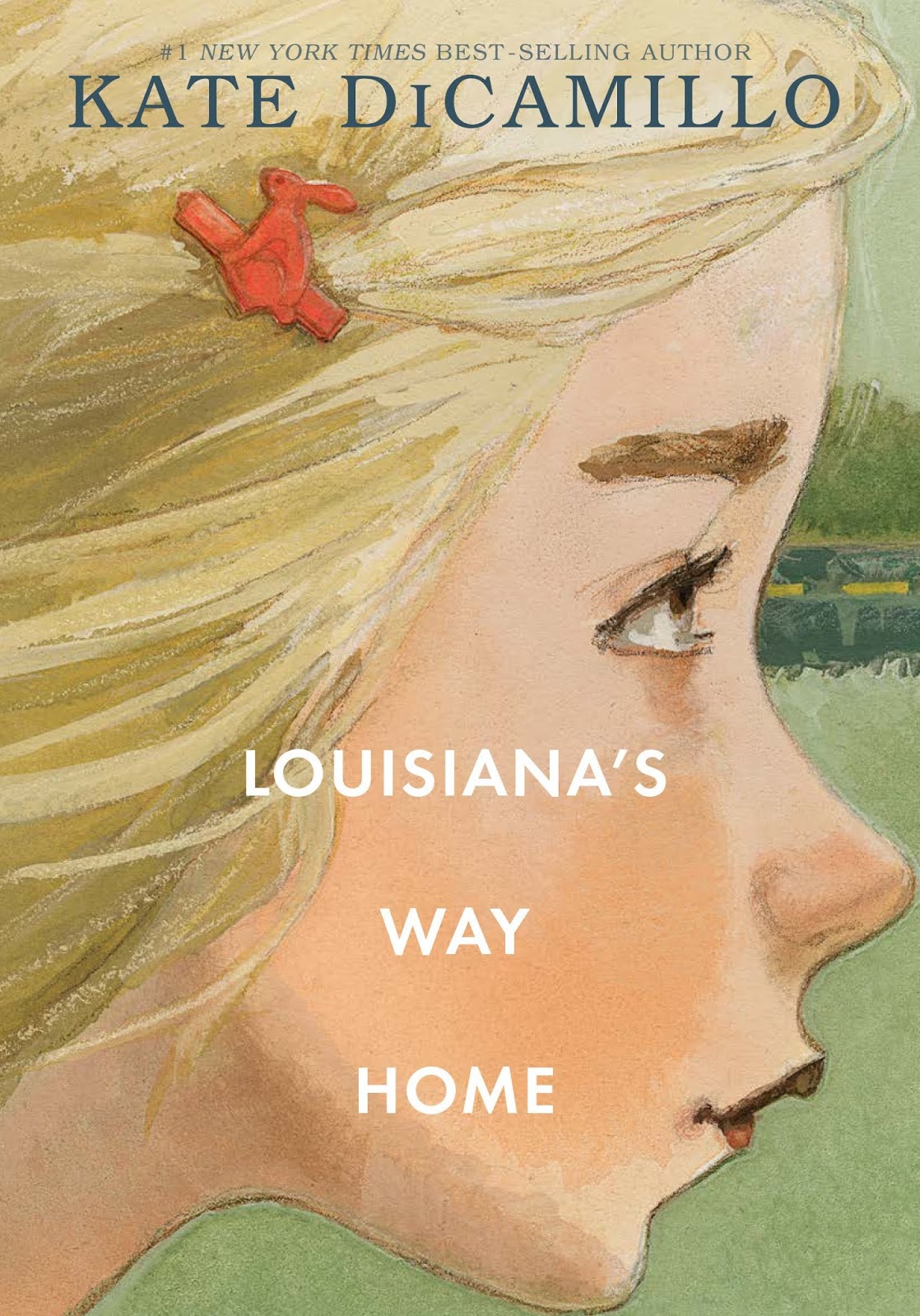
One of my new favourites though is Louisiana's Way Home by Kate DiCamillo. Her writing is stunning as always and Louisiana is a delightful, spunky creation. Suddenly, without explanation, Louisiana is on the run with her Grandma. What follows is a journey of major self discovery as Louisiana learns some painful home truths and discovers just how strong and resilient she really is.

We all, at some point, have to decide who we want to be in this world. It is a decision we make for ourselves. 

Forgiveness, hope and courage are DiCamillo's calling cards - they shine very brightly in this tender, bittersweet story. And it wouldn't be a DiCamillo story if we didn't also learn about the kindness of (some) strangers (although don't get me started on the grandmother!)

Perhaps what matters when all is said and done is not who puts us down but who picks us up.


I'm starting to loose track of ALL the princesses-turned-monster-fighting-superheroes in The Princess in Black series by Shannon Hale but #6 and the Science Fair Scare is still full of all the fun, derring-do, go-girl attitude of the earlier stories.

It's hard NOT to be charmed by these sassy young things with their alter-ego monster-fighting persona's. But I guess at some point, I'd like to see these girls (& the dashing young Goat-Boy) come out from behind their masks and let the world see who they really are all the time.

Book 6 feels like a transition point. Everyone now seems to be 'in' on the secret and it would be nice if the girls didn't have to pretend to be pretty, prim princesses in public any more.


I love junior fiction at this time of year. It's entertaining, easy reading. But they're not always light on topic or emotional impact. These books feature BIG themes with BIG heart. They are books that can be enjoyed by adults just as much as the younger people in their lives. There is way more to junior fiction than the Wimpy Kid and Dork Diaries, and I for one, am very grateful for that!

Monday, 10 December 2018

Normal People by Sally Rooney

I'm heart broken.

And I may just have read my most favourite and best book for 2018.

Sally Rooney has written a gut-wrenching, painfully poignant love story about two young damaged souls that will stay with me for a very long time. In Normal People she has captured perfectly all the angst, insecurity and missteps that dog any young relationship. Especially when the two young people involved are still trying to work out their own issues leftover from their childhood.


Marianne had the sense that her real life was happening somewhere very far away, happening without her, and she didn’t know if she would ever find out where it was and become part of it.

Rooney explores the misconceptions around 'normal' and the anxieties we inflict on ourselves in our attempts to belong, to not stand out from the crowd or to be different. On the outside both Connell and Marianne look like they have 'normal' enough family lives. But Connell is being raised by a young single mum and doesn't know who his father is (his mum has said she he has happy to discuss it with him, but he doesn't want to know).

Marianne is also being raised by a single mum (and an older brother), but her father died a number of years ago. Her family is wealthy and except for a dad, seems to have it all. Connell's mum cleans house for Marianne's family. They avoid each other at school, but strike up intense conversations in Marianne's kitchen, as Connell waits for his mum to finish.

Connell is one of the popular, sporty kids at school, who hides just how clever he is to fit in. Marianne doesn't bother hiding how smart she is and doesn't try to fit in. She actively goes about being different, disdainful and fiercely independent.

Normally, I wouldn't be drawn to a tortured romance between two YA's. I had more than enough of that in my own YA years! But this is not your normal YA love story. Rooney gets deep into the heart of this relationship. She teases out each painful nuance and she takes you on this emotional journey that feels very real and very authentic.

We soon learn that Marianne's dad was a violent, unpleasant man. Her mother and brother have dealt with their pain around this by identifying with the perpetrator. They now give back a weird, messed up mix of psychological and physical abuse to Marianne, the only one who has rebelled against this way of living a life.

And as time goes by, we realise just how insecure and anxious Connell really is once he leaves his home base to go to uni. Spending his childhood trying so hard not to stand out, now means that he doesn't know how to stand on his own two feet in the bigger world.

This is a torturous journey, a train-wreck at times, but I couldn't put it down. I cared for both of them, even as I wanted to shake them into perfect understanding. All those things unsaid, assumed and misspoken that so often plague young love (and many older loves that I know) are explored in agonising detail. My heart is broken, but there is hope.

Normal People deserves the buzz it's getting. We all need to be reminded, at times, how important it is to tell those we love how we really feel.


  • Longlisted for the 2018 Man Booker
  • Shortlisted for the 2018 Costa Book Award
  • Longlisted for the 2020 International Dublin Literary Award.

Saturday, 8 December 2018

Kitchen by Banana Yoshimoto

I've loved Japanese literature for many years now, but since visiting Japan earlier this year, my fascination and interest has exploded! Kitchen by Banana Yoshimoto popped up on several lists as a great contemporary example of Japanese literature.


Kitchen is a slim book containing two stories - Kitchen and Moonlight Shadow - both deal with death, grief, mothering and healing. Kitchen is the longer of the two and I was enchanted from page one. The language is deceptively simple and at times I worried that it was too simple. I wasn't sure if this was a translation issue or part of Yoshimoto's urban grunge charm. Except that somehow, very quickly, with no fuss or bother, Mikage's tragic tale crept into my heart and stayed. 

Yoshimoto has created two beautiful, tender tale about loss and how to move forward from it. Her writing is suffused with innocence and warmth. Although her characters experience discontent and confusion, loneliness and urban angst, ultimately there is hope and love. 

In her Preface, Yoshimoto says,
Growth and the overcoming of obstacles are inscribed on a person's soul. If I have become any better at fighting my daily battles, be they violent or quiet, I know it is only thanks to my many friends and acquaintances.

Both these stories are testimony to this belief. Friendship acts as a band aid for heartbreak. Being connected and making room for others in your life is what gets you through the tough days. For Yoshimoto's characters, this connection often occurred around the rituals of food, eating and tea drinking.

A dream-like almost mystical element imbued her work as well. Both stories have a dash of magic realism or other-worldliness, that I found to be appealing in a very Japanese way. The emotion is subtle and subdued and the cast of characters quirky and eccentric in a 1980's version of Harajuku style. I suspect that this particular version of Japanese gender fluidity might meet with some raised eyebrows by current Western thinking, however it felt culturally and historically appropriate to my burgeoning knowledge of Japanese society.

Yoshimoto said that her two main themes are 'the exhaustion of young Japanese in contemporary Japan' and 'the way in which terrible experiences shape a person’s life'.

I'm not really sure that I spotted the exhaustion of which she speaks, but there was certainly an ennui and disconnect with the more traditional values of Japanese society.


I decided to not include any quotes in this post, because when I tried, they didn't work out of context.

If you enjoy minimalist, zen-like Japanese literature, then I think this will work for you. But if Murakami, Yoko Ogawa, Hiro Arikawa or Takashi Hiraide are not your thing, they stay away from the Kitchen!

In 1987 Yoshimoto won the 6th Kaien Newcomers' Literary Prize for Kitchen. In 1988 the novel was nominated for the Mishima Yukio Prize and in 1999 it received the 39th Recommendation by the Minister of Education for Best Newcomer Artist. In 1988 she also won the 16th Izumi Kyōka Prize for Literature for the novella Moonlight Shadow, which is included in most editions of Kitchen.

First published in 1988 and translated into English by Megan Backus in 1993.

Monday, 3 December 2018

White Houses by Amy Bloom

White Houses was my latest book club pick, chosen by me. I felt a weird sense of pressure to enjoy the book on that account. But the best I could summon up in the end was a mild kind of appreciation.


It took me a while to pinpoint my disconnect. 

The first person narrative was a start. I'm not philosophically opposed to first person as a device, but I have to feel a real connect to said person to go along for the first person ride (like the young narrator in Washington Black that I'm reading and loving right now). I struggled to feel that kind of affection for Lorena Hickok. I felt a tremendous amount of compassion for her horrific childhood and admiration for her ability to rise above it. In fact, that's one of the human conditions I find most fascinating - in fiction and in real life. Why do some people with horrific childhoods, succumb to its sordidness, always the victim, yet others find a resilience and sense of agency to remake their adult selves? It's the stuff of great story. A mix of genetic predisposition, environment, the power of education (usually), luck (sometimes) and a mentor/someone who believed in them all along (often but not always). All wonderful tools for a story-teller to play with. But Bloom didn't really go there with Hickok's back story. I'm still none the wiser about the how or why she overcame her ghastly childhood.

When a story is based on someone's real life story, the fiction writer has some boundaries and proprieties that may restrict their creativity. And the reader (or this reader at least) often has some reservations and frustrations around what really happened and what's made up. Which is my usual beef with fictionalised biographies/histories. I love a good story and I love narrative non-fiction, but combining the two just doesn't seem to work for me. It seems to be a literary lesson I am slow to learn!

Second was the whole jumping around with time thing. Again, I'm happy to play with multiple timelines, but I need to know when it's changing. The second half of the book lost it's way thanks to so many unannounced jumps in my opinion.

Thirdly, the writing. I kept waiting for some sparkle that never quite arrived. The was a flatness, a dullness that sucked all the emotional possibility of the story. At first I thought this may have been a deliberate technique to illustrate the bleakness of Hick's early life (which as I said above, I found very intriguing), but when the circus story, then the romance itself also failed to come to life, I concluded that the writing was just not working for me.

My fourth problem took longer to pinpoint, until I remembered my reaction to reading Hazel Rowley's Franklin and Eleanor biography about seven years ago. By the time I got to the end of the bio, I realised that I had come to strongly dislike both Franklin and Eleanor as people. I admired their politics and public service, but they treated the people who loved them and worked for them appallingly. They both made tremendous sacrifices and compromises to the do the good that they did do, but those sacrifices and compromises usually also sacrificed and compromised those around them.


Hickok's story in White Houses brought all these thoughts flooding back.

A friend who read and loved this book, was moved by the descriptions of love, whereas I found it hard to see the love story at all. The love felt so one-sided to me. Not quite unrequited, more desperate and needy perhaps and completely controlled by Eleanor to suit her schedule and agenda. Hickok gave up so much to get the little crumbs of love and friendship that Eleanor handed out.

This one particular paragraphed moved me beyond words though,
I don't care why the light burns. I think that even if you are both old ladies riding side by side on the second Avenue subway, with one of you going home to three grandchildren and a doddering husband, you can lock eyes, and remember when you weren't. You remember that very pleasurable and surprising thing that was done to you by the wrinkly old bag of bones next to you and you breathe in memory the weight and the mortality and the sensible shoes are just costume, falling away, and your real selves rise up, briefly, dancing rosy and naked, in the middle of the subway car.

One paragraph in a whole book is not enough to sustain my interest though. I pushed myself to finish White Houses and resolved to never read any more books about Franklin or Eleanor!